Xu Collection, Middle Volume
Radical: Mound (fù)
Kangxi Strokes: 18
Page Number: 1358, Entry 24
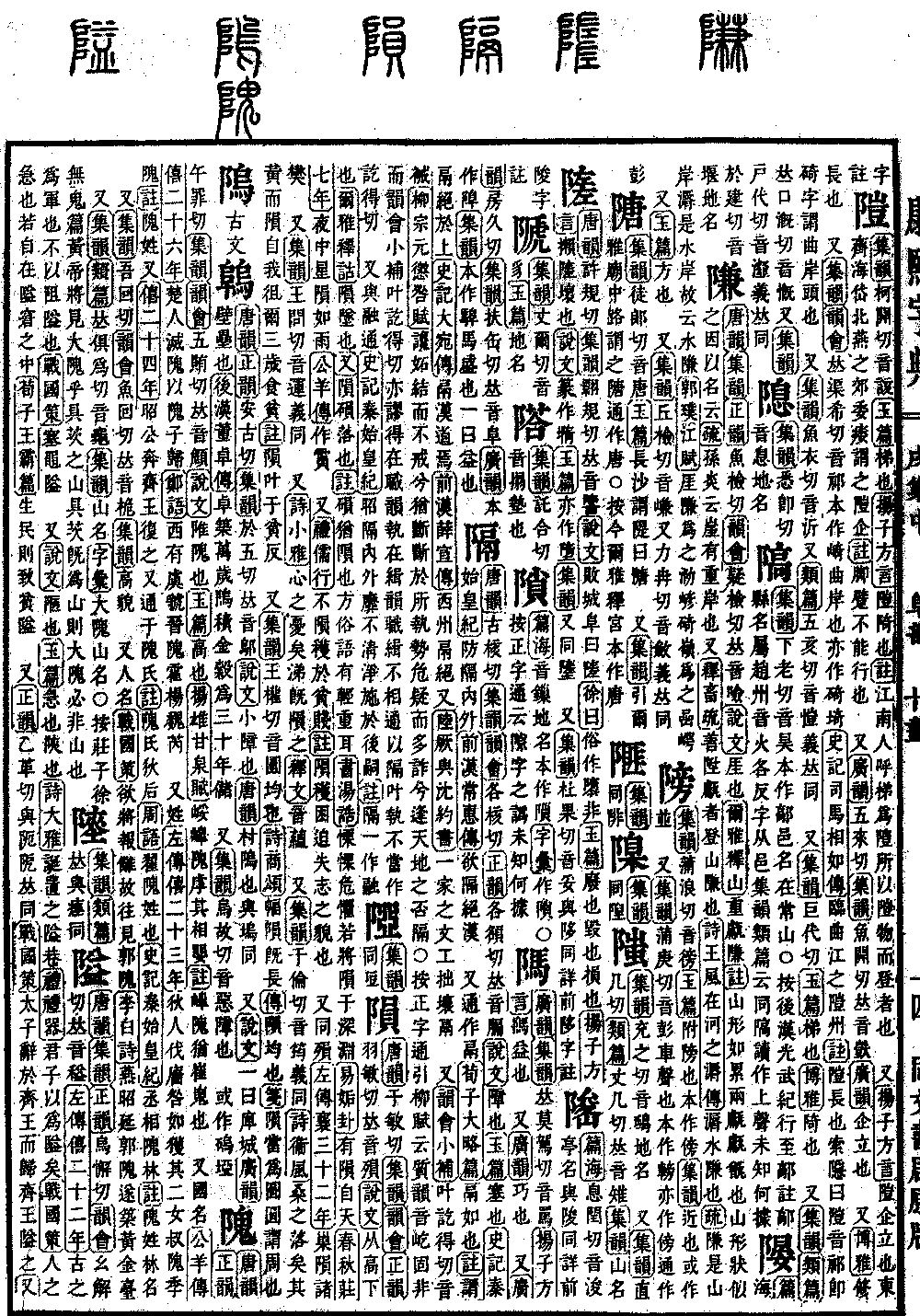
According to Tang Rhyme Book (Tangyun), Collection of Rhymes (Jiyun), and Correct Rhyme Book (Zhengyun), pronounced wū xiè qiè. According to Rhyme Compendium (Yunhui), pronounced yāo jiě qiè. The sound is ài. In Zuo Commentary (Zuozhuan), Duke Xi, 22nd year: In ancient military campaigns, victory was not reliant on treacherous and narrow terrain. In Strategies of the Warring States (Zhanguoce): Blocking the pass of Mǐn'ài. Also, according to Explaining and Analyzing Characters (Shuowen Jiezi): Means narrow. According to Jade Chapters (Yupian): Refers to urgent and narrow. In Classic of Poetry (Shijing), Greater Odes (Daya): Cast him into a narrow alley. In Book of Rites (Liji), Rites Instruments (Liqi): The gentleman considers such an action too narrow-minded. In Strategies of the Warring States (Zhanguoce): When a person is in danger, it is as if they are in a narrow and distressed situation. In Xunzi, On Kings and Hegemons (Wangba pian): Causing the common people to fall into extreme poverty and distress. Also, according to Correct Rhyme Book (Zhengyun), pronounced yǐ gé qiè. Its meaning is the same as è (obstructed) and ài (confined). In Strategies of the Warring States (Zhanguoce): The crown prince bade farewell to the King of Qi, preparing to return to his state, but the King of Qi obstructed him. Also, from the same source: The reason I closed the borders and did not communicate with envoys is that the state of Zhongshan independently assumed kingship alongside the states of Yan and Zhao, and I was not involved in or informed of this matter, hence I blocked communication. The note explains: Ài also has the meaning of being impassable. It is pronounced è. Also, rhymes with yú jì qiè, pronounced like the departing tone of yī. In Xie Zhuang's Eulogy for Emperor Xiaowu of Song: The auspicious carriage approached the carriage railing; the emperor reined in his horse and looked around. All quarters were solemn facing north; the spiritual mountain's winding slopes were both deep and narrow. Also, rhymes with yī xí qiè, pronounced like yì. In Qu Yuan's Encountering Sorrow (Lisao): Those who form cliques for selfish gain merely seek temporary peace; the path ahead is dark, dangerous, and narrow. Is it that I fear misfortune befalling myself? I am concerned about the overthrow and ruin of the ruler's carriage. According to Explaining and Analyzing Characters (Shuowen Jiezi): The greater seal script (zhouwen) form exists. According to Jade Chapters (Yupian): The original character is è. According to Collection of Rhymes (Jiyun): Sometimes also written as è. According to Sea of Characters (Pianhai): Also written in a variant form.