Hai Collection, Lower Volume
Radical: Tooth (chǐ)
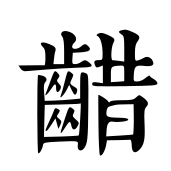
Character: Zé
Kangxi strokes: 23
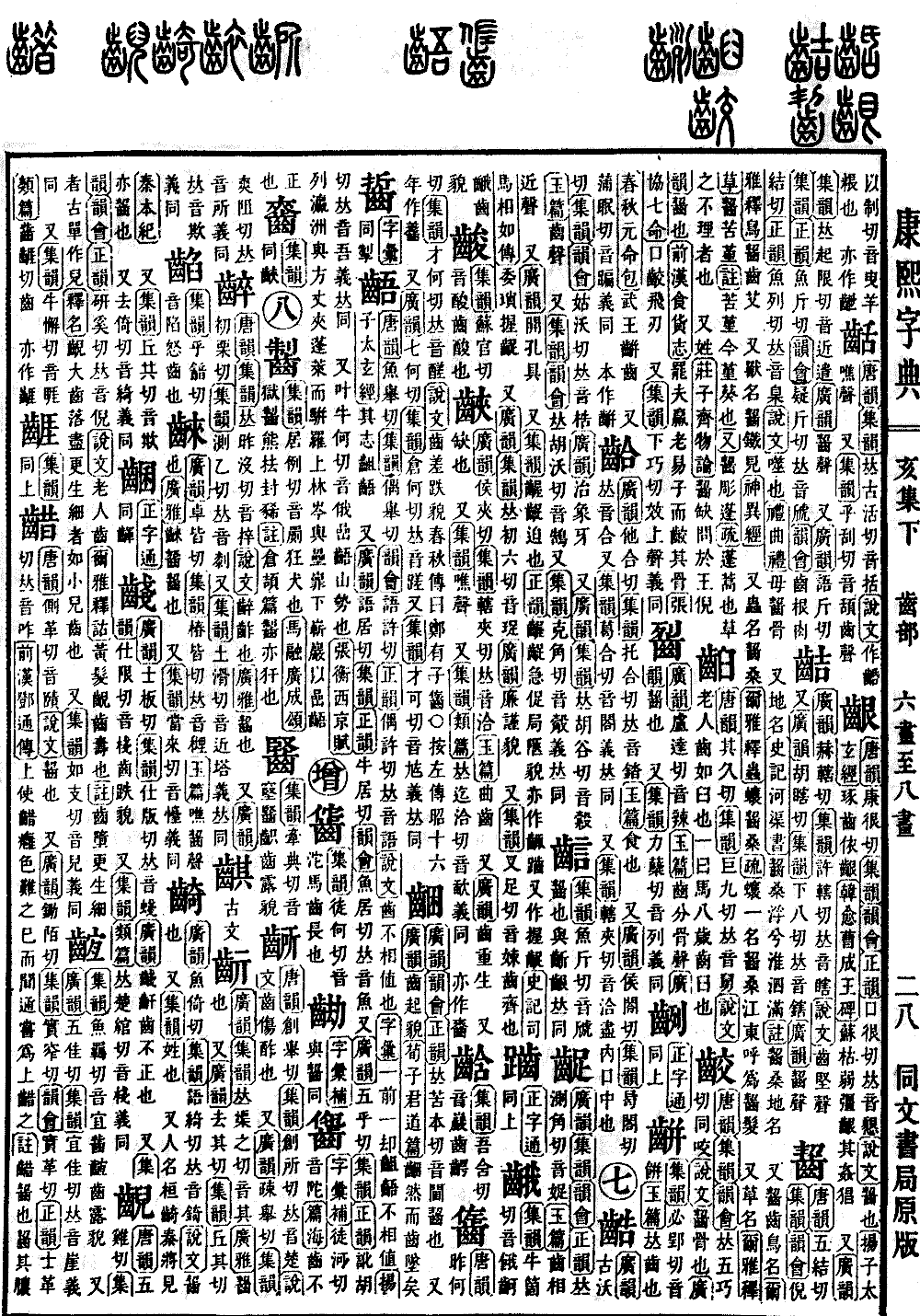
Page 1534, Entry 41
According to the Tang Dynasty Rhyme Dictionary (Tangyun), pronounced ze. According to the Explanation of Simple and Compound Characters (Shuowen), it means to bite. Also, according to the Extensive Rhyme Dictionary (Guangyun), it is pronounced chu mo; according to the Collected Rhymes (Jiyun), it is pronounced shi zhai; according to the Rhyme Collection (Yunhui), it is pronounced shi ge; according to the Corrected Rhymes (Zhengyun), it is pronounced za. According to the Biography of Deng Tong in the History of the Former Han (Qianhan shu), the Emperor commanded him to bite the abscess; he appeared pained and hesitant, but later it was learned that he had indeed bitten it for the Emperor. The commentary notes that this means to bite, specifically to bite and suck out pus and blood. According to the Rhapsody on the Wind (Feng fu) by Song Yu, it refers to chewing or consuming. Also, according to the Extensive Rhyme Dictionary (Guangyun), it is pronounced chu jia; according to the Collected Rhymes (Jiyun), it is pronounced zhu jia, and is pronounced zha. Additionally, according to the Collected Rhymes (Jiyun) and the Rhyme Collection (Yunhui), it is pronounced ze. The meaning is the same. Furthermore, according to the Collected Rhymes (Jiyun), it is pronounced ce, meaning the teeth striking together.