Wu Collection, Upper Volume
Radical: Mysterious (xuán)
Zi
Kangxi Strokes: 10
Page 725, Entry 03
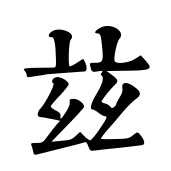
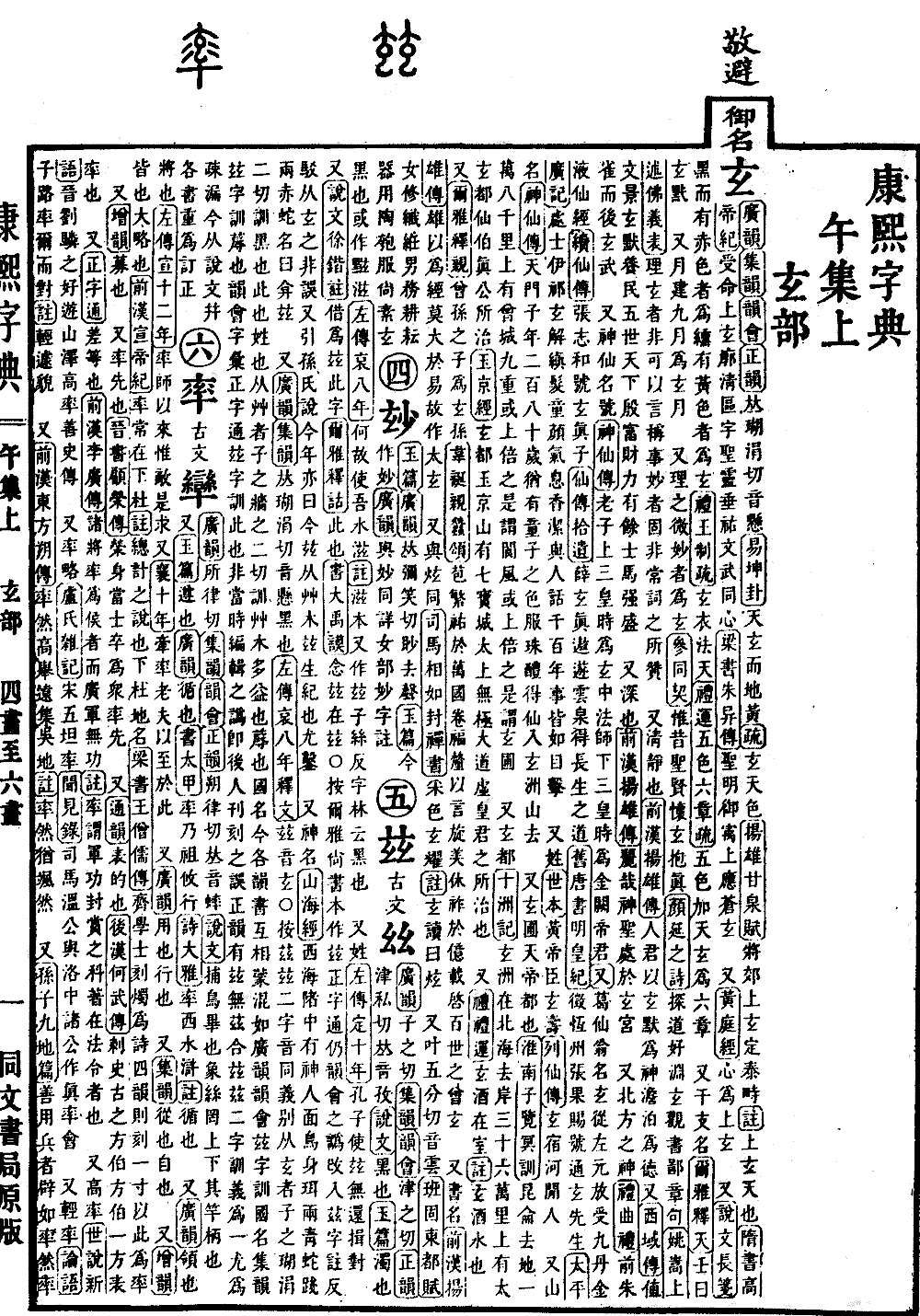
Ancient text. Pronounced zi.
According to the Explaining Graphs and Analyzing Characters (Shuowen Jiezi), it means black. According to the Jade Chapters (Yupian), it means murky or black. Sometimes written as the variant form (zi). In the Zuo Tradition (Zuo Zhuan), Eighth Year of Duke Ai, it is written: Why did you make our water murky. The commentary notes that this word is also written as a variant. Pronounced zi. The Dictionary of Characters (Zilin) states it means black. Also a surname. In the Zuo Tradition (Zuo Zhuan), Tenth Year of Duke Ding, it is written: Confucius sent Zi Wuhuan to bow and respond. According to the Xu Kai commentary on the Explaining Graphs and Analyzing Characters (Shuowen Jiezi), it is borrowed to represent the word for this. According to the Literary Expositor (Erya), it means this. In the Book of Documents (Shangshu), Great Plan of Yu, it is written: Think of this, reside in this. Note that in the Literary Expositor and the Book of Documents, the original text used the variant character. The Collection of Rectified Characters (Zhengzitong) persists in the error of the Collection of Rhymes (Yunhui), moving this into the entry for the variant character and erroneously refuting the proper usage. It further cites the theory of Mr. Sun that this year is also called this year, derived from the growth of grass and trees, which is especially far-fetched. Also the name of a deity. In the Classic of Mountains and Seas (Shanhaijing), it is written: On an island in the Western Sea there is a deity with a human face and bird body, wearing two green snakes as earrings and stepping on two red snakes, named Yanzi.
Pronounced xuan. Means black. According to the Explanation of Texts in the Zuo Tradition (Zuo Zhuan Shiwen), Eighth Year of Duke Ai, the pronunciation is given. Note that the character for this and the character for the variant form are identical in pronunciation but distinct in meaning. The character radicalized with this refers to the pronunciations listed above and denotes black, this, or a surname. The character radicalized with grass refers to the abundance of grass and trees, a mat, or a country name. Modern rhyme dictionaries often confuse the two; for example, the Wide Rhymes (Guangyun) and the Collection of Rhymes (Yunhui) attribute the meaning of a country name to this character, the Collected Rhymes (Jiyun) attributes the meaning of a mat, and the Collection of Rhymes (Yunhui), the Compendium of Characters (Zihui), and the Collection of Rectified Characters (Zhengzitong) attribute the meaning of this to this character. This is either an error from the original compilation or a mistake made by later engravers. The Corrected Rhymes (Zhengyun) lists this character but not the variant, combining the definitions of both into one, which is particularly negligent. Following the Explaining Graphs and Analyzing Characters (Shuowen Jiezi) and other books, this entry has been revised.