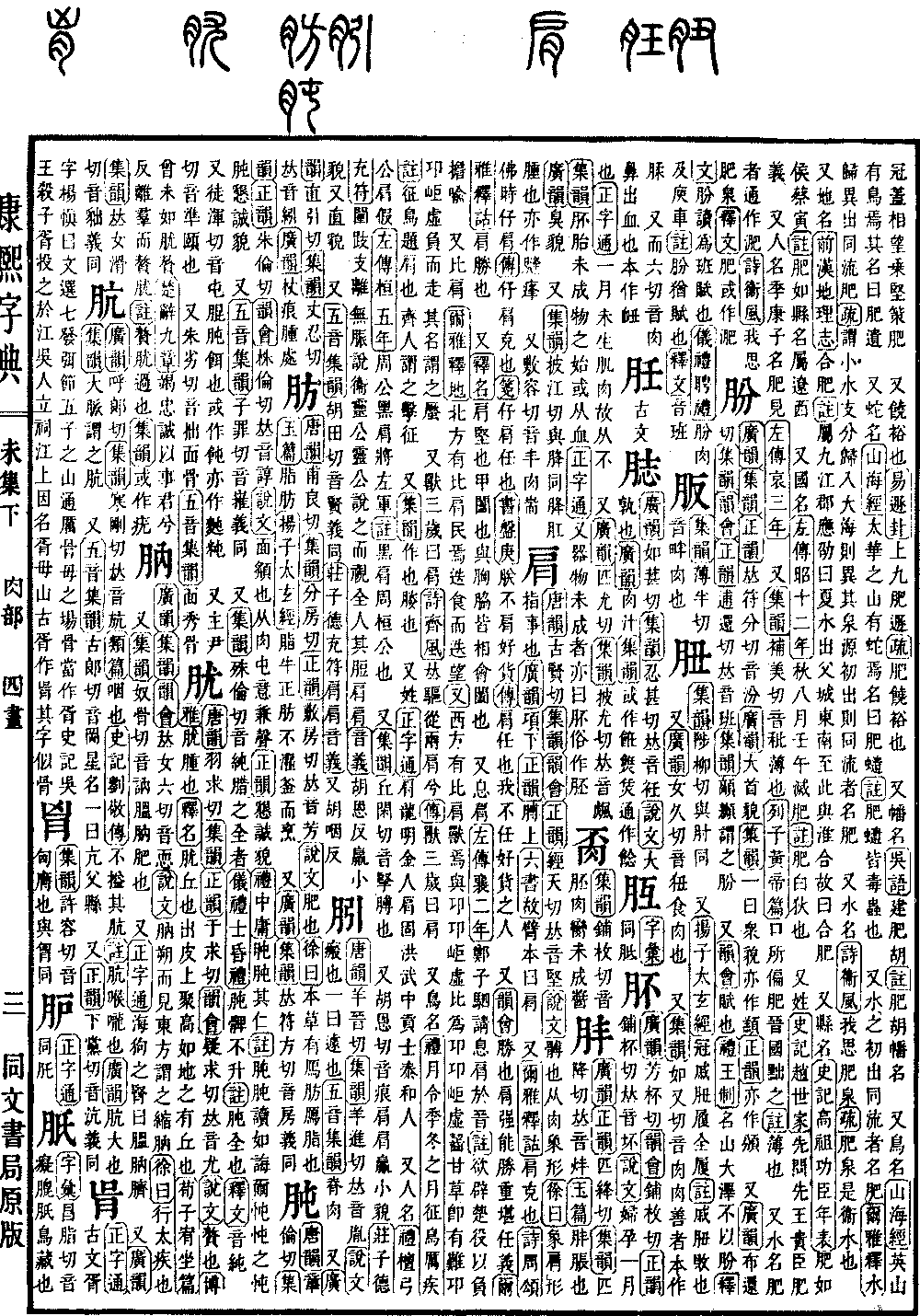
Wei Collection, Lower Volume
Radical: Meat (ròu)
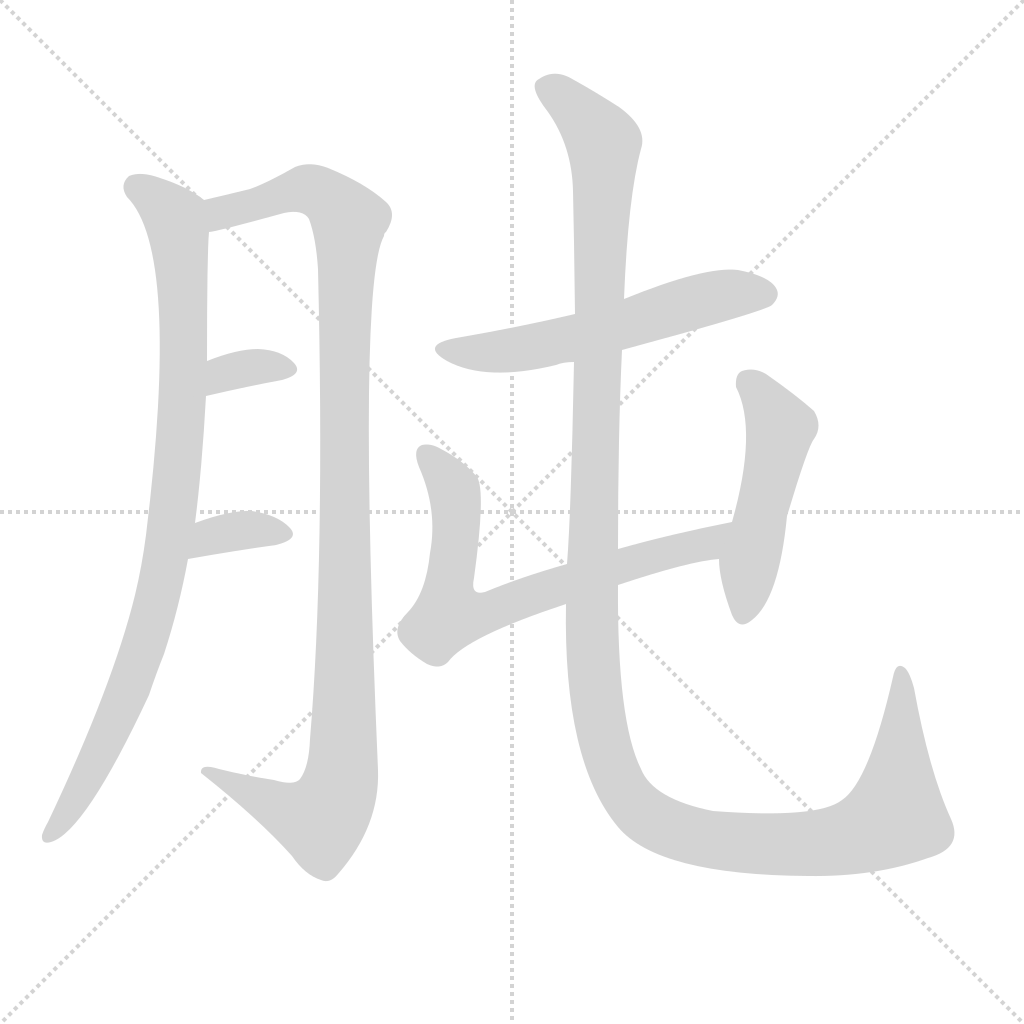
Zhūn
Kangxi stroke count: 10
Page 975, Entry 13
According to the Tang Rhymes (Tangyun), the collection of rhyme dictionaries (Jiyun), and the Correct Rhymes (Zhengyun), it is pronounced zhun. According to the Collection of Rhymes (Yunhui), it is pronounced zhun.
Shuowen Jiezi states: The cheekbones. Composed of the radical for meat, with the character tun acting as a semantic and phonetic indicator.
The Correct Rhymes (Zhengyun) states: An appearance of sincerity.
Book of Rites (Liji), Doctrine of the Mean (Zhongyong): His benevolence is sincere and earnest. The commentary states: Zhunzhun is read like the tun in the phrase huier tuntun. Zhun refers to an appearance of sincerity.
Also, according to the Five Sounds Collection of Rhymes (Wuyin Jiyun), it is pronounced zui. The meaning is the same.
Also, according to the collection of rhyme dictionaries (Jiyun), it is pronounced chun. Refers to whole dried meat.
Ceremonial Rites (Yili), Marriage Rites of the Scholars (Shihunli): The whole dried meat and the thigh are not offered. The commentary states: Zhun means whole. The explanation of the text states: Pronounced chun.
Also pronounced tun. Zhun refers to a type of pasta. Sometimes also written in a variant form (tun). Also written in a variant form.
Also pronounced zhun. The cheekbones.
Also pronounced zhuo. The facial bones. According to the Five Sounds Collection of Rhymes (Wuyin Jiyun), the beautiful bones of the face.