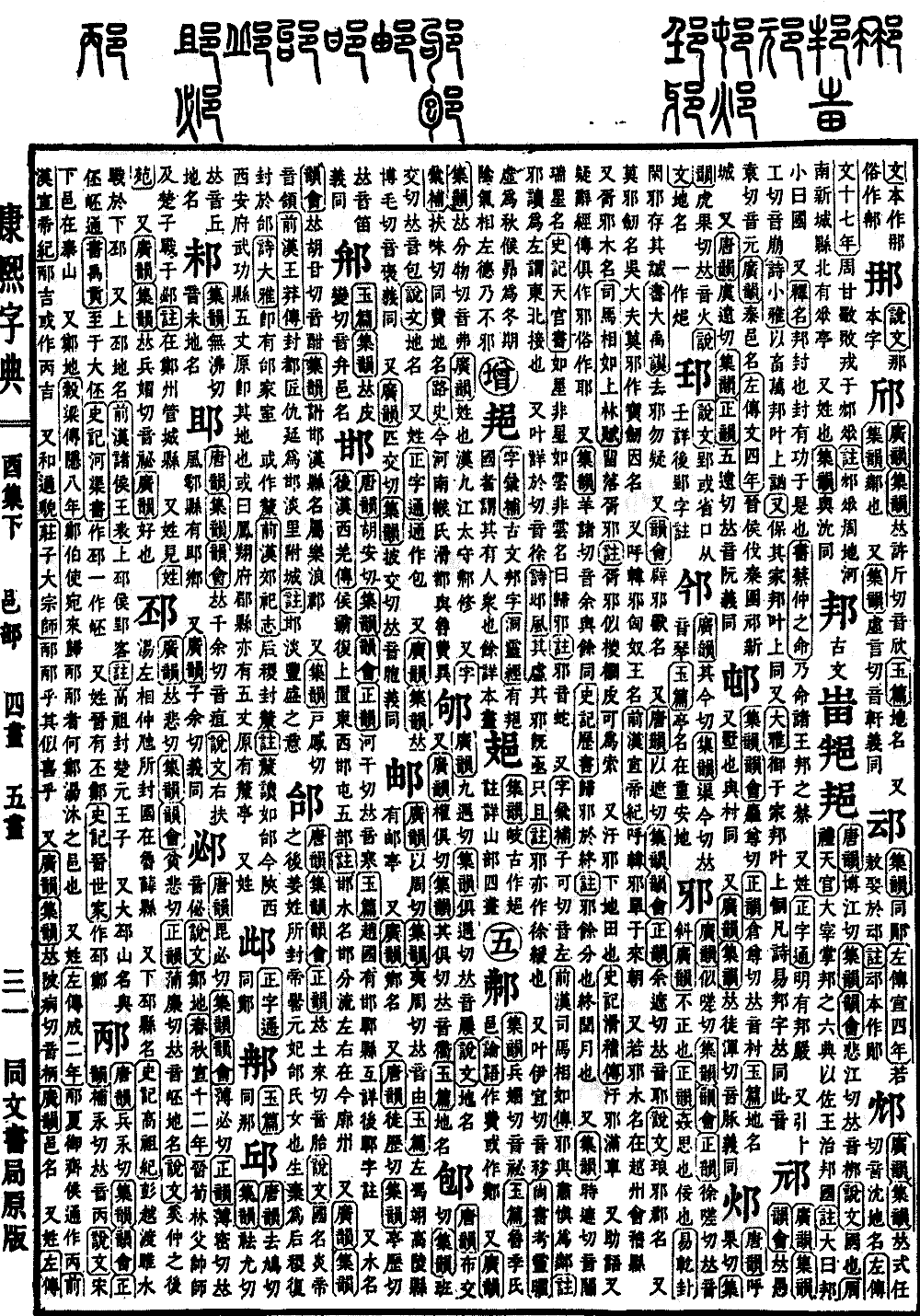
You Collection, Lower Volume
Radical: City (yì)
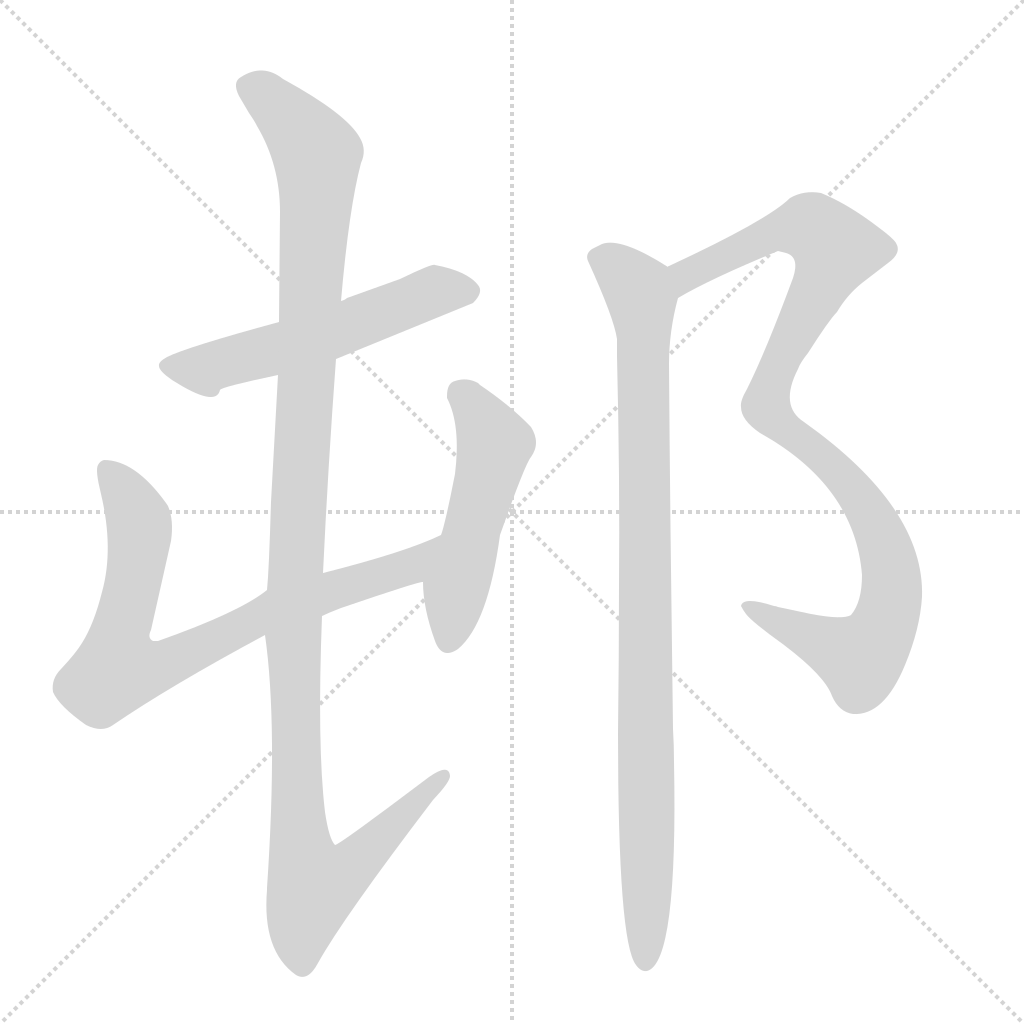
Character: cūn
Kangxi stroke count: 11
Page 1269, number 10
According to Collected Rimes (Jiyun) and Rime Collection (Yunhui), the fanqie pronunciation is cū and zūn. In Correct Rimes (Zhengyun), the fanqie is cāng and zūn. It is pronounced the same as cūn. According to Jade Chapters (Yupian), it is a place name. It also refers to a country villa and is the same as the character cūn. Furthermore, in Broad Rimes (Guangyun) and Collected Rimes (Jiyun), it is given the fanqie tú and hún, sounding the same as tún, with the same meaning. Regarding the character cūn: in Tang Rimes (Tangyun), the fanqie is cǐ and zūn; in Collected Rimes (Jiyun), it is cū and zūn; and in Correct Rimes (Zhengyun), it is cāng and zūn, all in the level tone of the rime cūn. Broad Rimes (Guangyun) defines it as a country villa. Augmented Rimes (Zengyun) defines it as a settlement. The character is composed of the components for city (yì) and mound (tún). The character cūn does not appear in the Classics or Histories and is used as a common vulgar form. Dimly seen is the distant village of men — Returning to My Garden and Field (Gui tianyuan shi). In the village, having heard of this person, everyone came to inquire for news — Record of the Peach Blossom Spring (Taohuayuan ji).