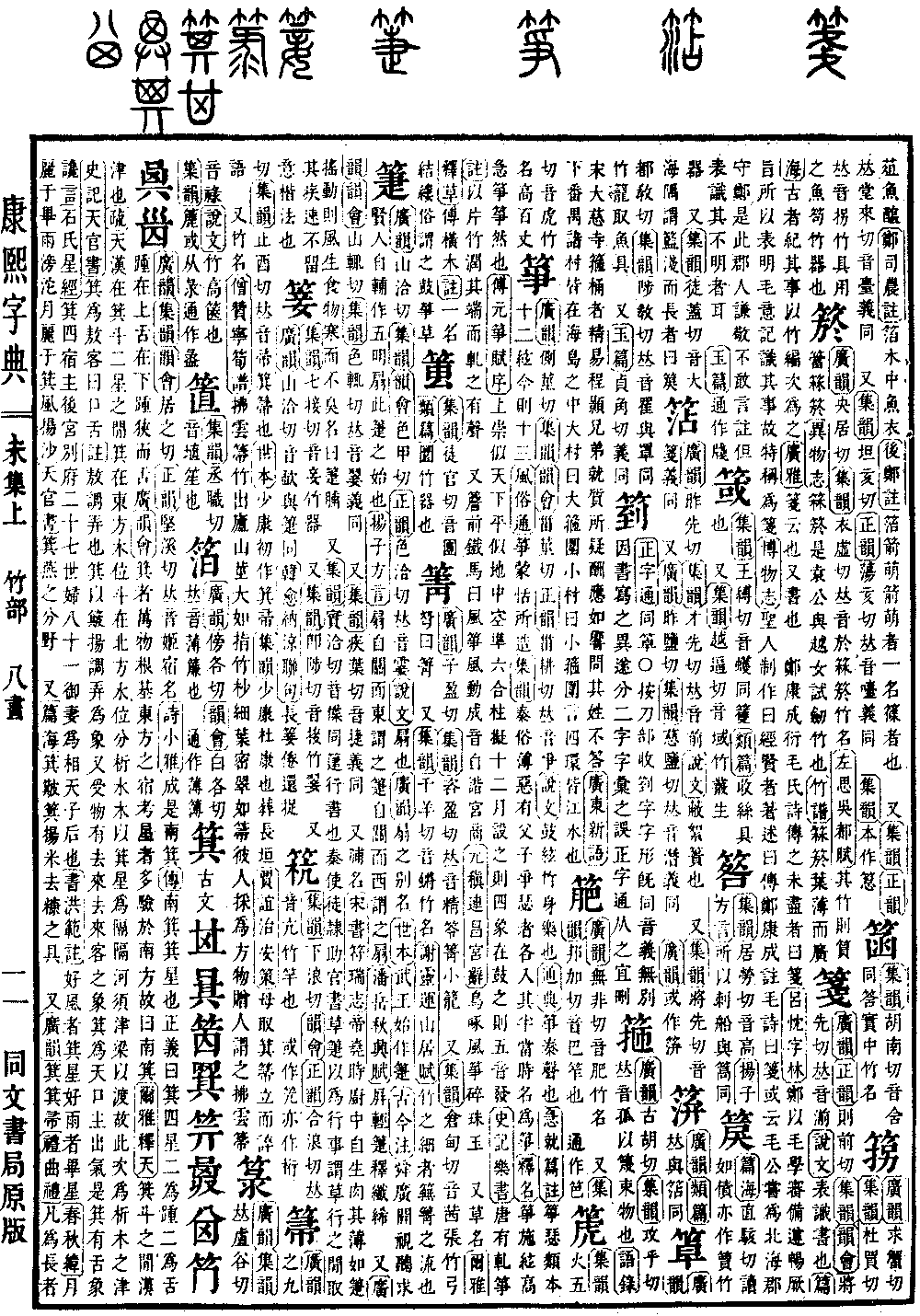
Wei Collection, Upper Volume
Radical: Bamboo (zhú)
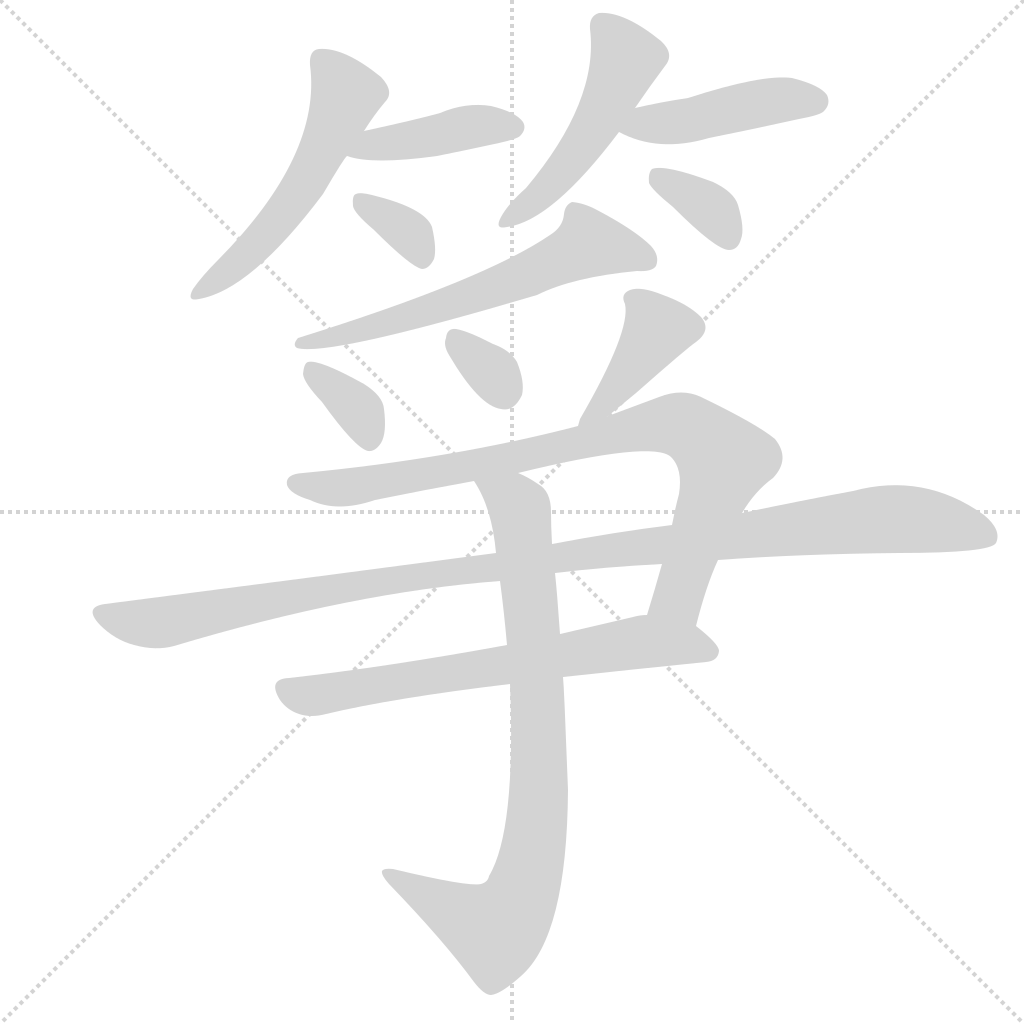
Zheng
Kangxi strokes: 14
Page 887, Entry 15
Guangyun: Pronounced zheng. Jiyun, Yunhui: Pronounced zheng. Zhengyun: Pronounced zheng.
Shuowen: A musical instrument made of bamboo with strings. Tongdian: The zheng is music of the Qin state. Notes on the Jijiupian: The zheng is a type of zither, originally with twelve strings, now thirteen. Fengsutong: The zheng was created by Meng Tian. Jiyun: During the customs of the Qin era, which were thin and mean, there was a father and son who fought over a zither, each taking half; at the time it was named zheng, meaning struggle. Shiming: The zheng, its strings are stretched high and taut, sounding zheng-zheng. Fu Xuan, Preface to the Zheng Rhapsody: The top is curved like the sky, the bottom is flat like the earth, the middle is hollow to conform to the six directions, the bridges imitate the twelve months, it is set up to represent the four images, and when played, the five musical notes are released. Records of the Grand Historian, Treatise on Music: In the Tang dynasty, there was the ya-zheng (friction zheng). Note: A piece of bamboo is polished at the tip and rubbed against the strings to create sound.
Also, iron bells hung under eaves are called fengzheng (wind zheng). When the wind blows, they make sound, harmonizing with the gong and shang musical scales. Yuan Zhen, Lianchang Palace Song: Birds peck at the wind-zheng, shattering pearls and jade.
Also, the name of a plant. Erya, Explanation of Grasses: Fu is a cross-timber. Note: Also known as knot-creeper, commonly called zheng-drumming grass.