Xu Collection, Upper Volume
Radical: Metal (jīn)
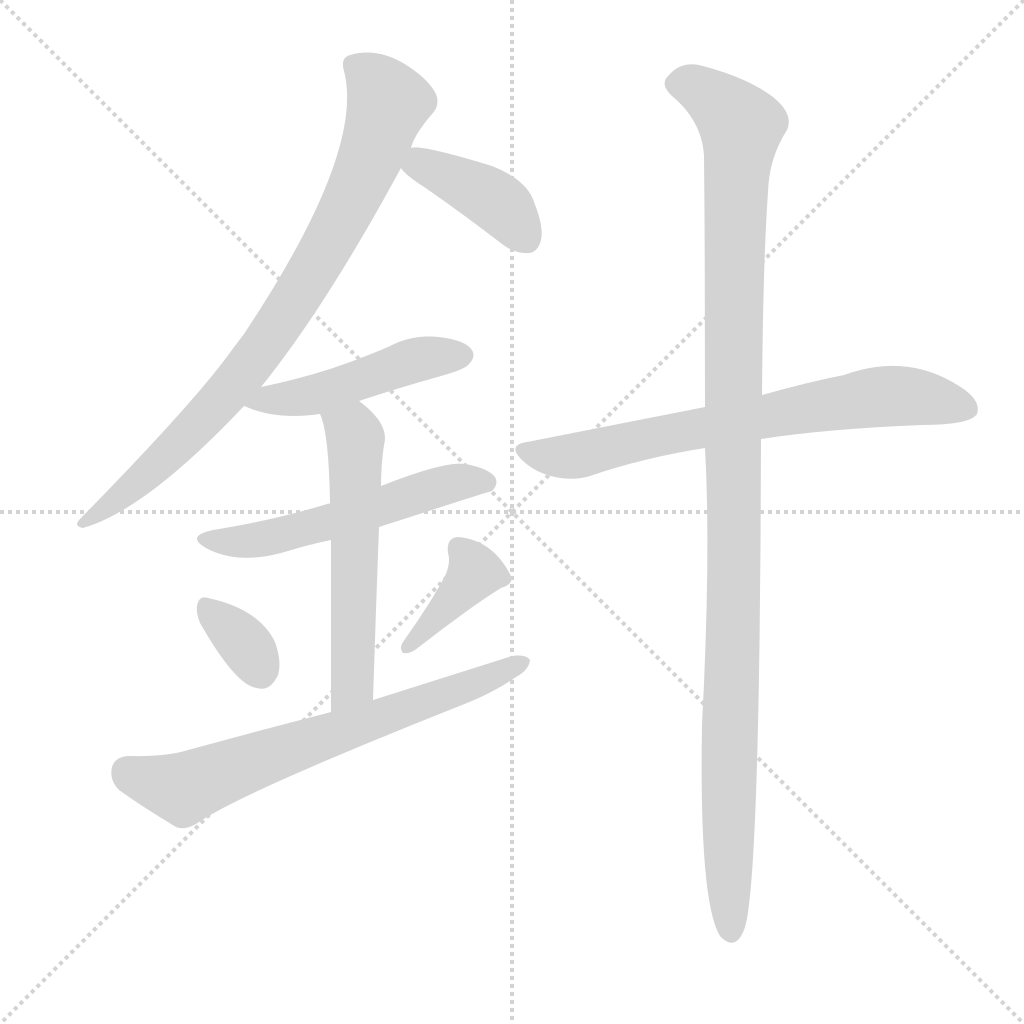
Needle
Kangxi stroke count: 10
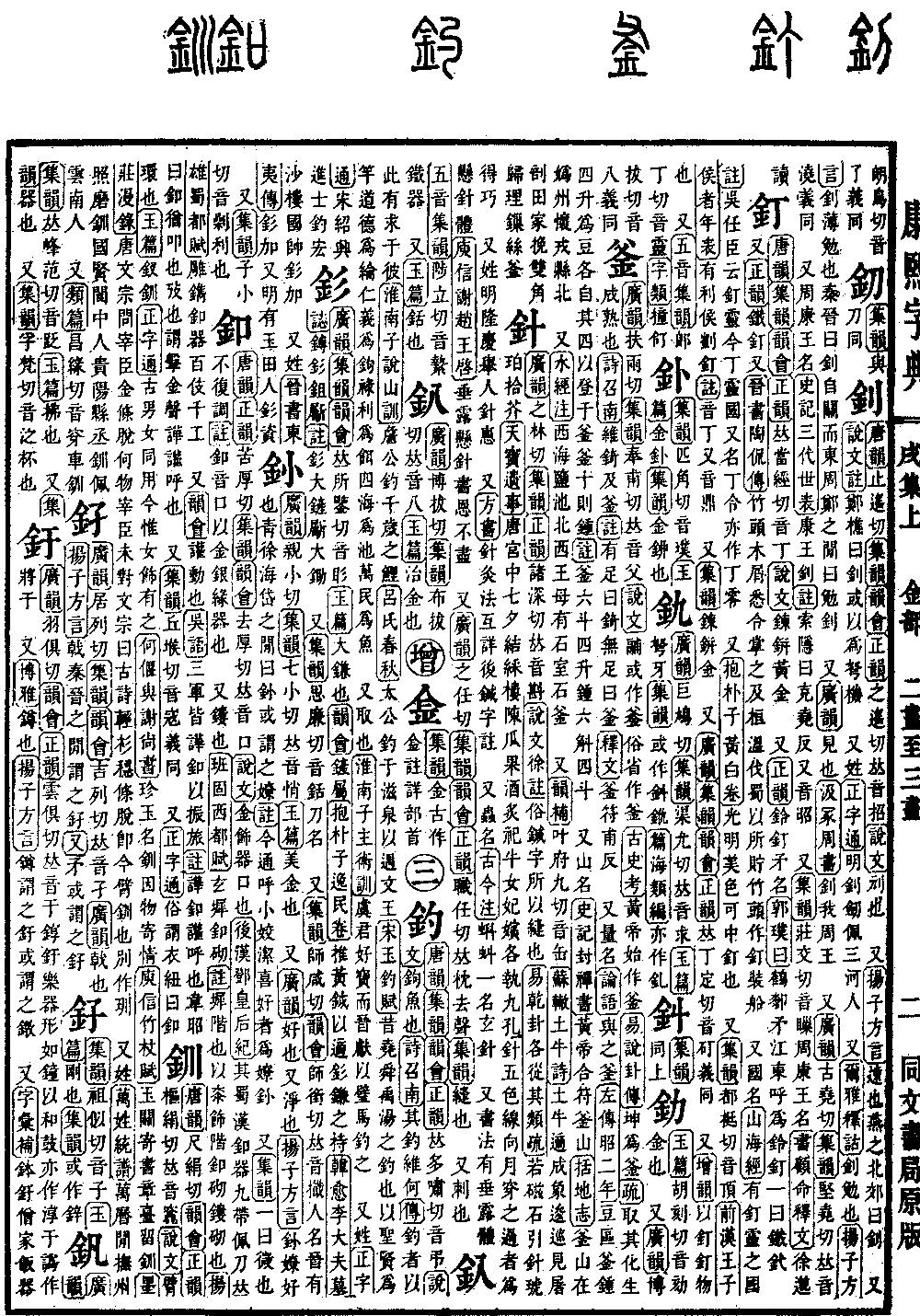
Page 1296, Entry 09
According to the Rhyme Dictionary (Guangyun), pronounced zhen (level tone). According to the Collection of Rhymes (Jiyun) and Correct Rhymes (Zhengyun), pronounced zhen (level tone), with the sound of zhen. According to the Xu Annotations to the Explaining Graphs (Shuowen Xuzhu), this is the common form of the character for needle. It refers to a tool used for sewing.
As stated in the Commentary on the Book of Changes (Yijing), Qian hexagram, everything follows its own kind: it is like a magnet attracting a needle, or amber attracting blades of grass.
According to the Anecdotes of the Heavenly Treasure Era (Tianbao Yishi), during the Tang dynasty, palace women would erect colorful pavilions on the seventh night of the seventh month, setting out melons, fruits, and wine to offer sacrifices to the Cowherd and the Weaver Girl. Consorts and court ladies would each take needles with nine eyes and five-colored threads, facing the moon to thread them; those who succeeded were considered to have attained skillful arts.
It is also used as a surname. During the Longqing era of the Ming dynasty, there was a provincial graduate named Zhen Hui.
Also, in medical texts, it refers to acupuncture therapy. See the entry for the character "zhen" (later variant) for further details.
Also, the name of an insect. According to the Records of Old and New Things (Gujin Zhu), tadpoles are also called needles.
Also, in calligraphy, there are the "hanging dew" style and the "suspended needle" style. As expressed in the petition by Yu Xin thanking the Prince of Zhao: "With hanging dew and suspended needle, the brushwork expresses gratitude that words cannot exhaust."
Also, according to the Rhyme Dictionary (Guangyun), pronounced zhen (departing tone). According to the Collection of Rhymes (Jiyun), the Rhyme Collection (Yunhui), and Correct Rhymes (Zhengyun), pronounced zhen (departing tone), read as the departing tone of the character for pillow. According to the Collection of Rhymes (Jiyun), it refers to sewing. Also, it refers to acupuncture.