Chou Collection, Upper Volume
Radical: Mouth (kǒu)
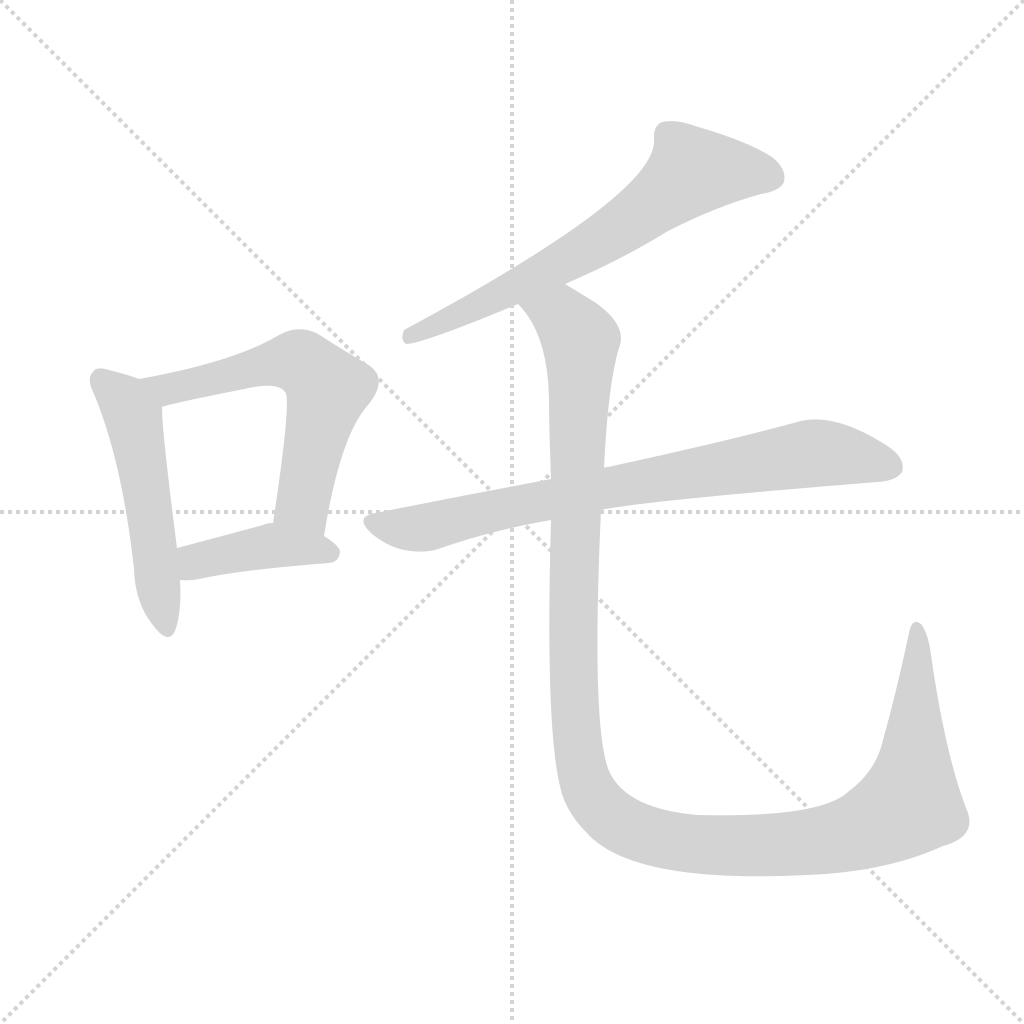
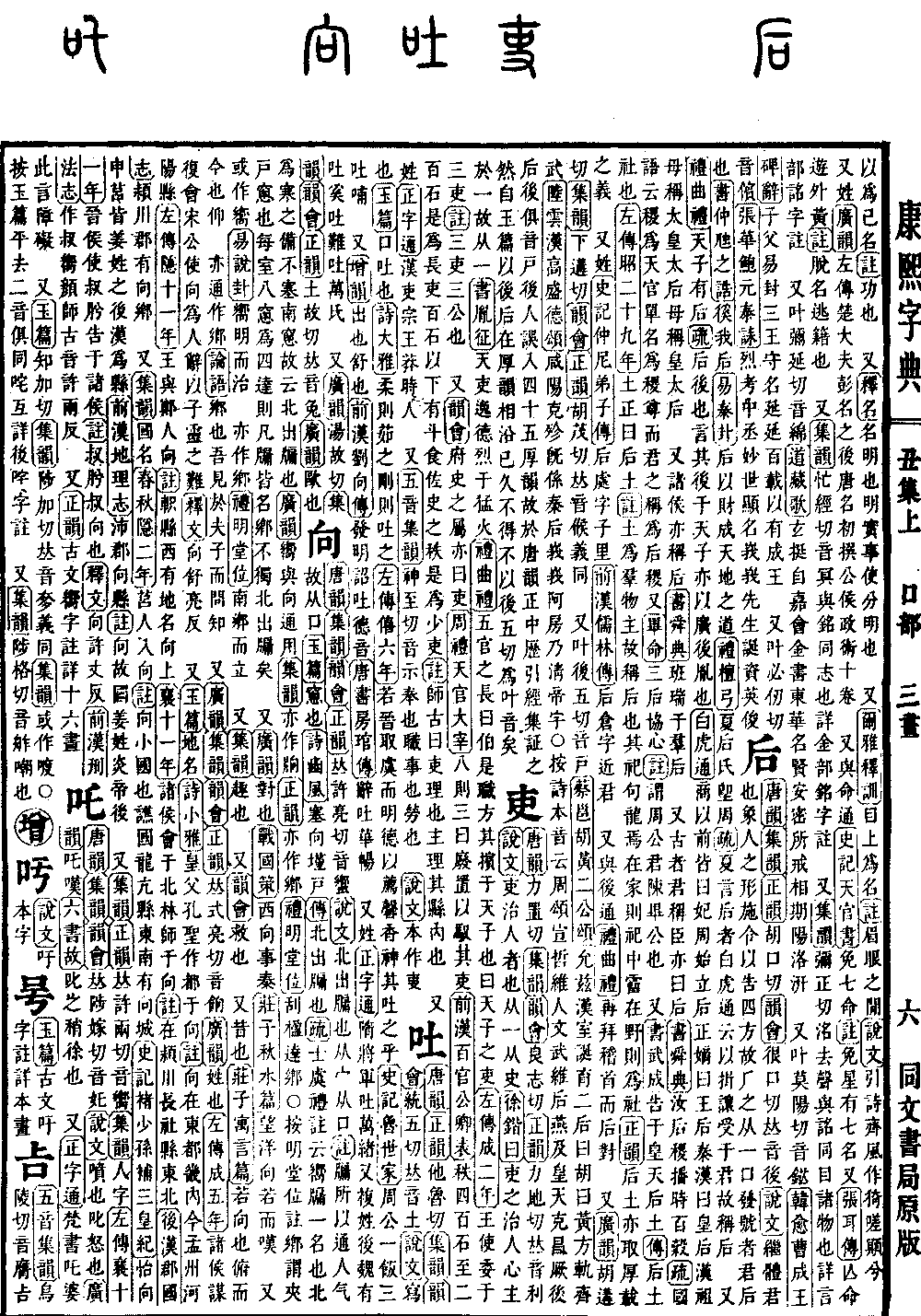
Zha; Kangxi Strokes: 6; Page 176, Entry 05
Tang Rhymes (Tangyun), Collected Rhymes (Jiyun), and Dictionary of Rhymes (Yunhui) record the pronunciation as zha (falling tone), sounding the same as zha (falling tone).
Explanation of Signs and Characters (Shuowen Jiezi) defines it as to spout forth, to scold in anger.
Broad Rhymes (Guangyun) defines it as a sigh of exclamation.
Foundations of the Six Writings (Liushu Gu) refers to a relatively slow scolding.
Furthermore, True Character Thoroughness (Zhengzitong) notes that in Buddhist scriptures, the term zha po refers to an obstacle.
Additionally, Jade Chapter (Yupian) records the pronunciation as zha (level tone), and Collected Rhymes (Jiyun) records it as zha (level tone), sounding the same as zha (level tone), with the same meaning.
Collected Rhymes (Jiyun) notes it is sometimes written in a variant form (duo).
According to the records in Jade Chapter (Yupian), both the level tone and falling tone pronunciations are identical to the character zha. Refer to the comments under the entry for the character zha.
Furthermore, Collected Rhymes (Jiyun) records the pronunciation as ze (entering tone), sounding the same as ze (entering tone). The meaning is to mock or ridicule.