Xu Collection, Upper Volume
Radical: Metal (jīn)
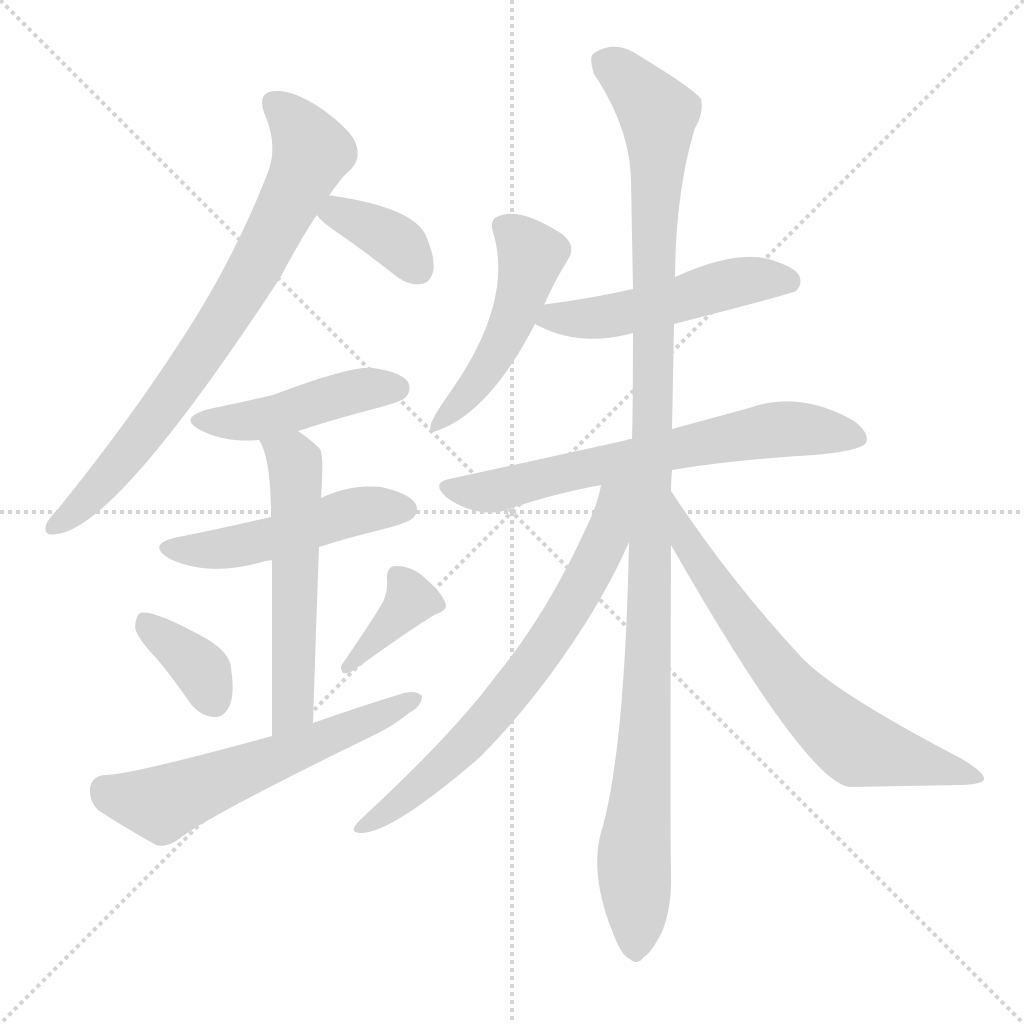
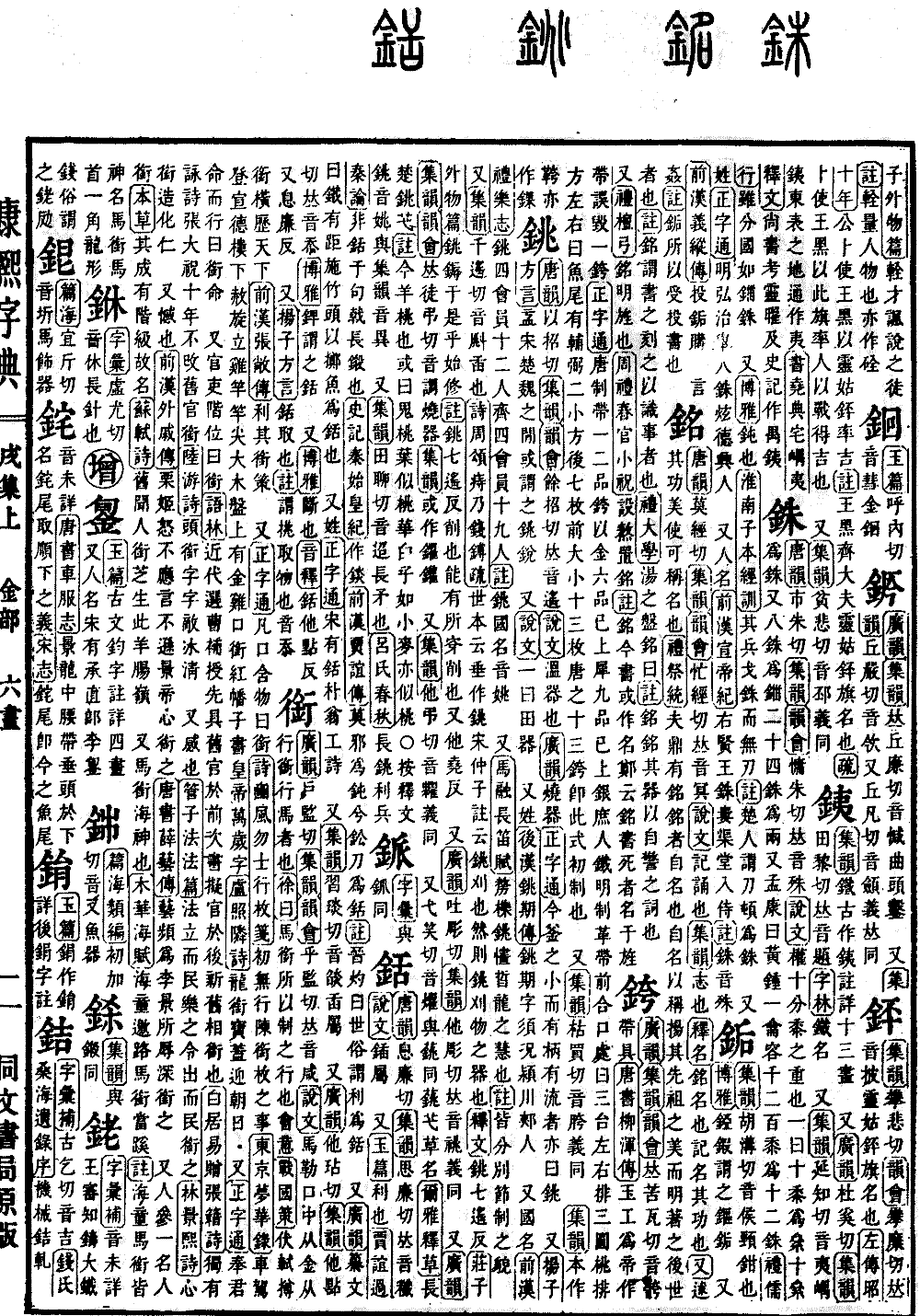
Zhu
Kangxi strokes: 14
Page 1305, Entry 05
Pronounced zhu
Shuowen Jiezi explains this as a unit of weight, equivalent to one-tenth of the weight of a millet grain. Another theory states: the weight of ten millet grains is one lei, and the weight of ten lei is one zhu. Furthermore, eight zhu make one zi, and twenty-four zhu make one liang. Additionally, Meng Kang states: the capacity of one yue of the Huangzhong pitch pipe can hold one thousand two hundred grains of millet, and its weight is twelve zhu.
Book of Rites (Liji), Chapter on the Conduct of Scholars: Even when enfeoffing a state, one considers it as light as a zi or a zhu.
According to the Guangya, it also means blunt.
Huainanzi, Treatise on the Basic Path: Its weapons are zhu and blunt, lacking sharp edges.
Note: People in the Chu region refer to knives that are not sharp as zhu.
Also used as a surname.
Zhengzitong records: During the Hongzhi period of the Ming dynasty, the provincial graduate Chengxuan was a native of Dexing.
Also used as a personal name.
Book of Han (Hanshu), Annals of Emperor Xuan: The Right Wise King Chenglouqutang came to court to serve.
Note: Cheng is pronounced the same as shu.