Chen Collection, Middle Volume
Radical: Tree (mù)
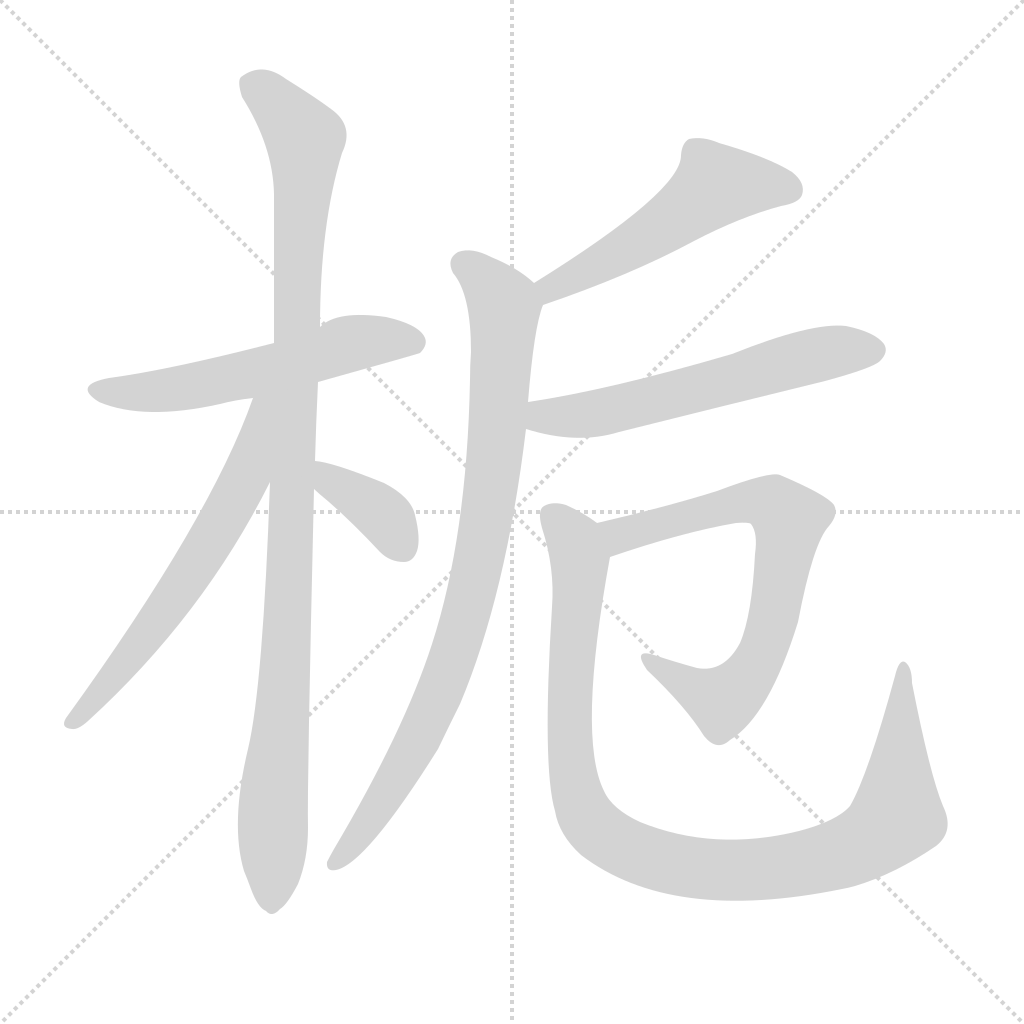
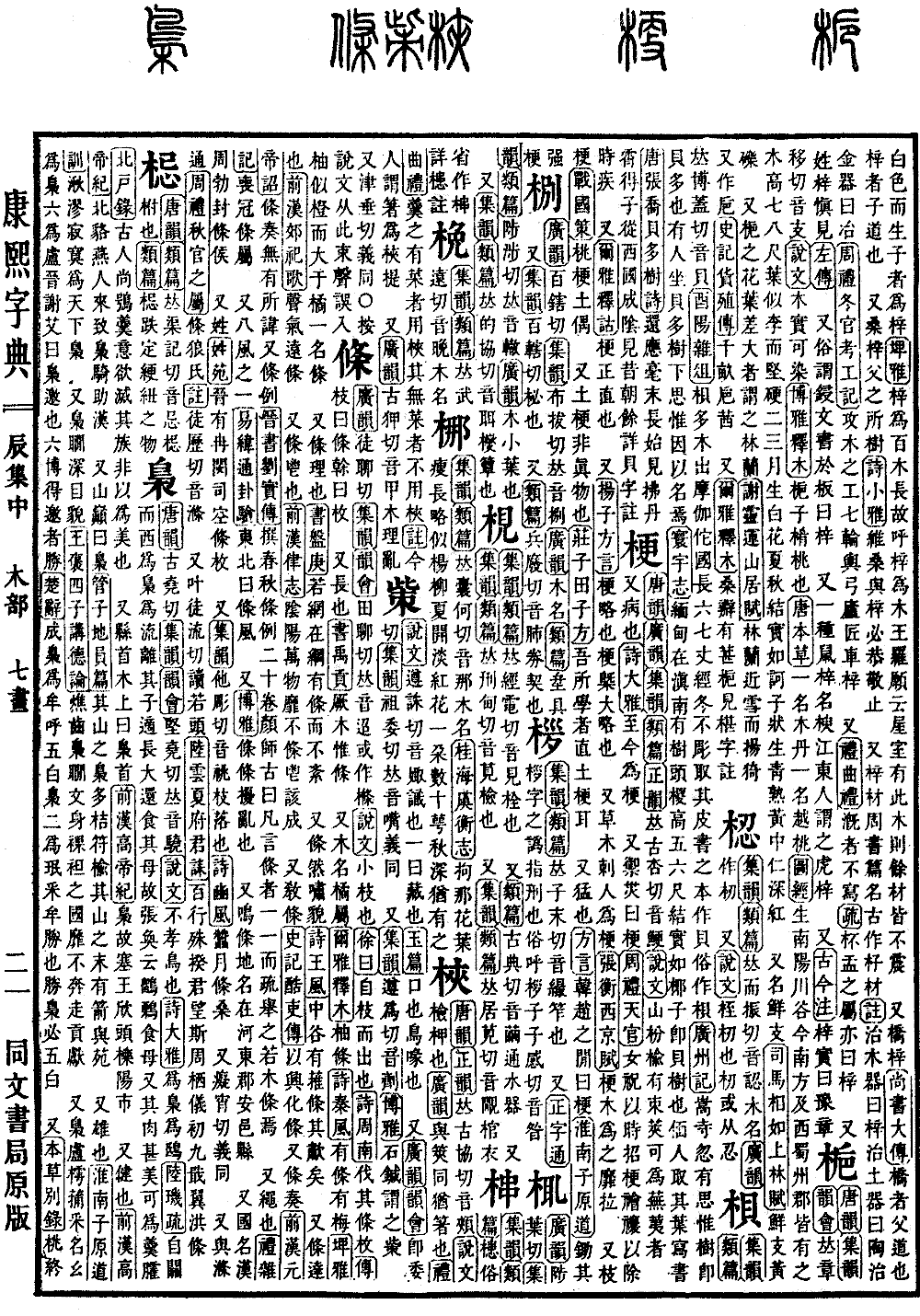
Zhi
Kangxi Stroke Count: 11
Page 529, Entry 02
Tangyun, Jiyun, Yunhui: Pronounced zhi.
Shuowen: A yellow wood that can be used for dyeing.
Boya, Interpretation of Trees: The zhi plant is a type of peach.
Tang Materia Medica (Tang bencao): Also known as mudan, and also known as yuetao.
Illustrated Classic (Tujing): Grows in the valleys of Nanyang; currently found in all southern regions and the prefectures of Western Shu. The tree grows seven or eight feet tall, with leaves resembling those of a plum tree but harder and more rigid. In the second or third month, it produces white flowers. In summer and autumn, it bears fruit shaped like an ink nut (hezi); green when unripe, yellow when ripe, with a deep red kernel inside. Also known as xianzhi.
Sima Xiangru, Rhapsody on the Shanglin Park (Shanglin fu): Xianzhi and yellow gravel.
Also, the variety with larger flowers and leaves is called linlan.
Xie Lingyun, Rhapsody on Mountain Living (Shanju fu): Linlan, near the snow, swaying and fluttering.
Also written as zhi.
Records of the Grand Historian (Shiji), Biographies of Money-makers (Huozhi zhuan): One thousand mu of zhi and madder.
Also, Erya, Interpretation of Trees: The mulberry tree has fruit called zhi. See the note under the character for mulberry fruit (shen).
Textual Research: Shuowen: The original text states yellow wood that can be used for dyeing, corrected to match the original text as yellow wood.