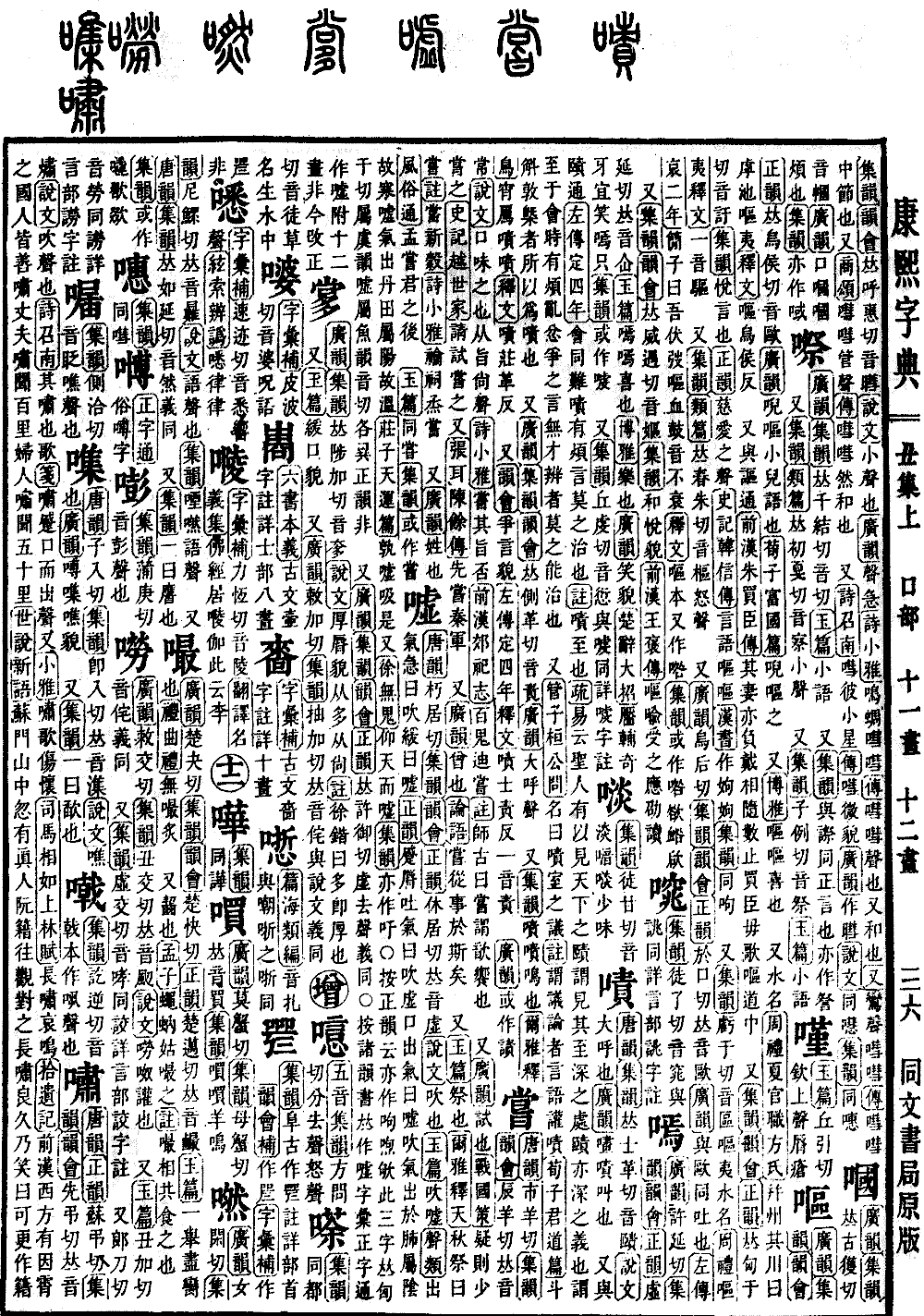
Chou Collection, Upper Volume
Radical: Mouth (kǒu)
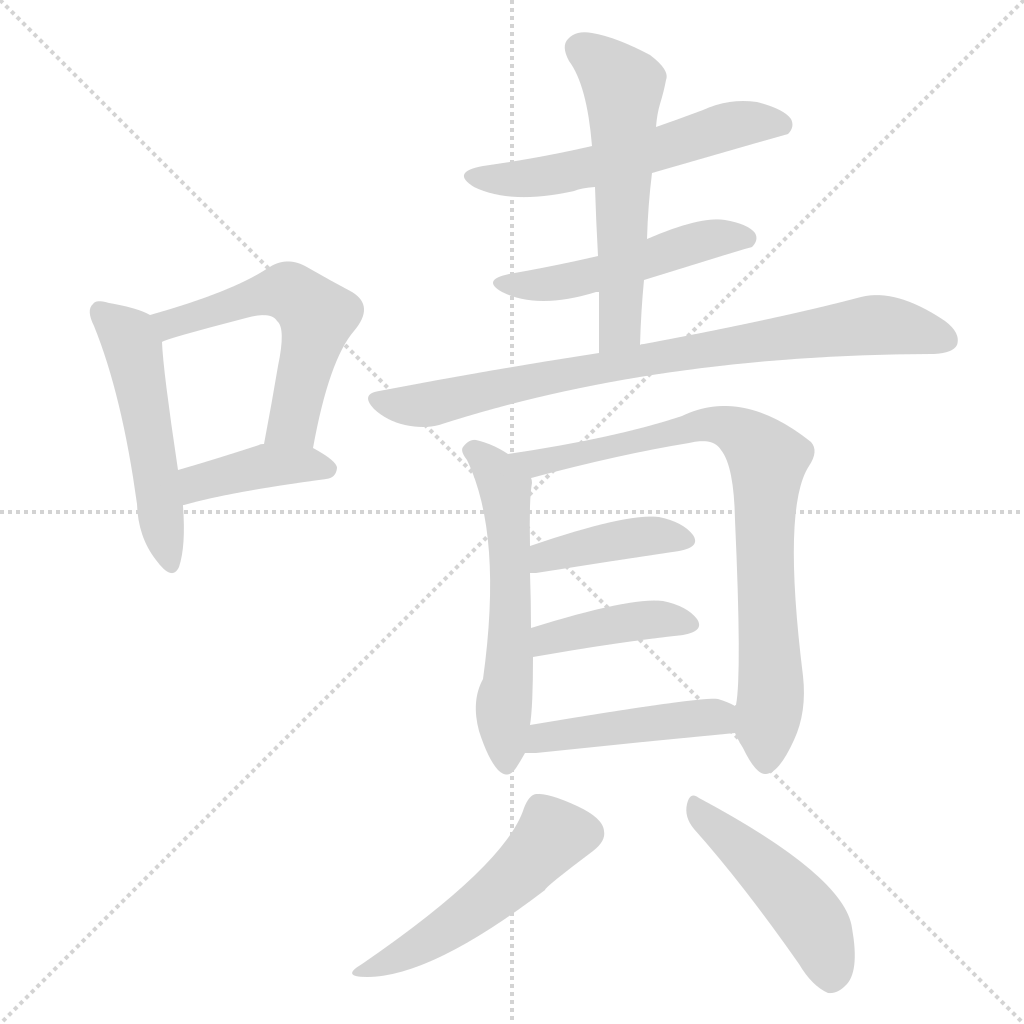
Character: ze
Kangxi strokes: 14
Page 206, Entry 08
From Tang Rhymes (Tangyun) and Collected Rhymes (Jiyun): pronounced ze.
From Explanation of Simple and Compound Characters (Shuowen): to shout loudly.
From Extensive Rhymes (Guangyun): ze means to call out.
Also interchangeable with ze (mysterious/abstruse).
From Zuo Tradition (Zuozhuan), Fourth Year of Duke Ding: When meeting and gathering, there are difficult clamors and troublesome words, and no one can reconcile them.
Commentary: ze means to reach or arrive.
Sub-commentary: The Book of Changes (Yijing) states: The sage is able to perceive the deepest things (ze) of the world, which refers to seeing the deepest places. ze also carries the meaning of deep. It refers to the time of the meeting, when there are chaotic and contentious words, and without someone with talent and analytical ability, no one can govern them.
Also from Guanzi, Inquiry of Duke Huan: It is called the deliberation of the ze chamber.
Commentary: This refers to those who are debating with loud and clamorous voices.
From Xunzi, Way of the Ruler: The peck and the bushel, the weights and measures, are used to serve as a standard (ze).
Also from Extensive Rhymes (Guangyun), Collected Rhymes (Jiyun), and Collection of Rhymes (Yunhui): pronounced ze.
From Extensive Rhymes (Guangyun): the sound of a loud shout.
Also from Collected Rhymes (Jiyun): ze-ze, the sound of birds chirping.
From Literary Expositor (Erya), Interpretation of Birds: The nocturnal bird chirps (ze-ze).
Explication of Text: ze is pronounced ze.
Also from Collection of Rhymes (Yunhui): the appearance of arguing and speaking.
From Zuo Tradition (Zuozhuan), Fourth Year of Duke Ding, Explication of Text: ze is pronounced ze. Also pronounced ze.
From Extensive Rhymes (Guangyun): sometimes written as ze.