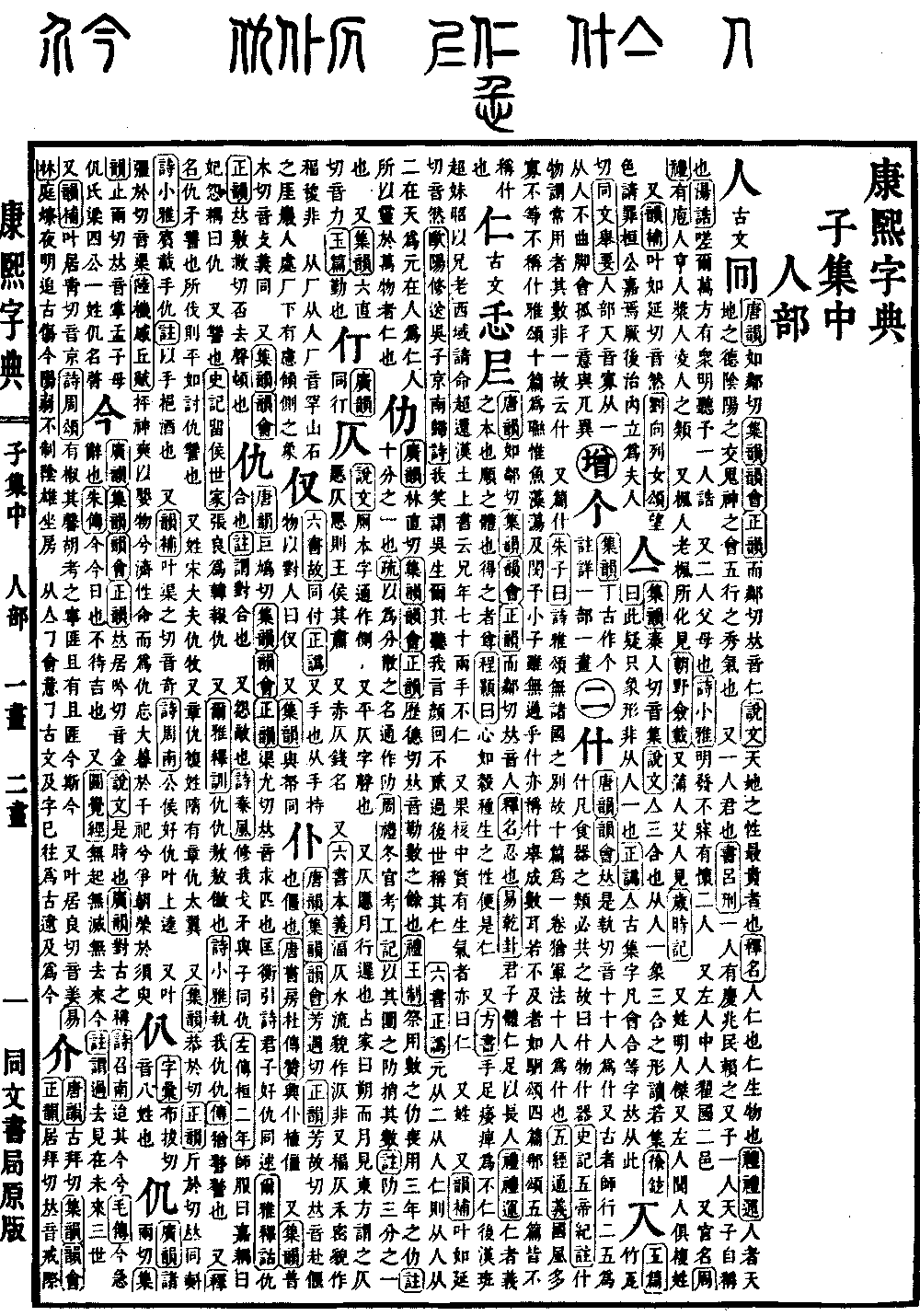
Zi Collection, Middle Volume
Radical: Person (rén)
Kangxi strokes: 4; Page: 91, entry 12
The character is zè. According to Shuowen Jiezi (Shuowen), this is the original form of the character cè, meaning 'latrine'. It is commonly written as cè, meaning 'side' or 'inclined'. It also refers to píng-zè, the tonal patterns of characters in classical Chinese poetry. It also refers to zètè, meaning the slow movement of the moon. Diviners say: When the moon appears in the east on the new moon day, it is called zètè. If zètè occurs, princes and nobles must be solemn and cautious. It also refers to chizè, the name of a type of coin. According to Liushu Benyi (Liushu Benyi), it also refers to bìzè, describing the appearance of flowing water. Writing it as an alternative character is incorrect. It also refers to fúzè, describing the dense appearance of seedlings. Writing it as fúlèng is incorrect. The character form is composed of the components chǎng and rén. The component chǎng, pronounced hǎn in this context, refers to the cliff face of a mountain rock. A person situated beneath this cliff (hǎn) evokes the imagery of concern about tilting or toppling over.