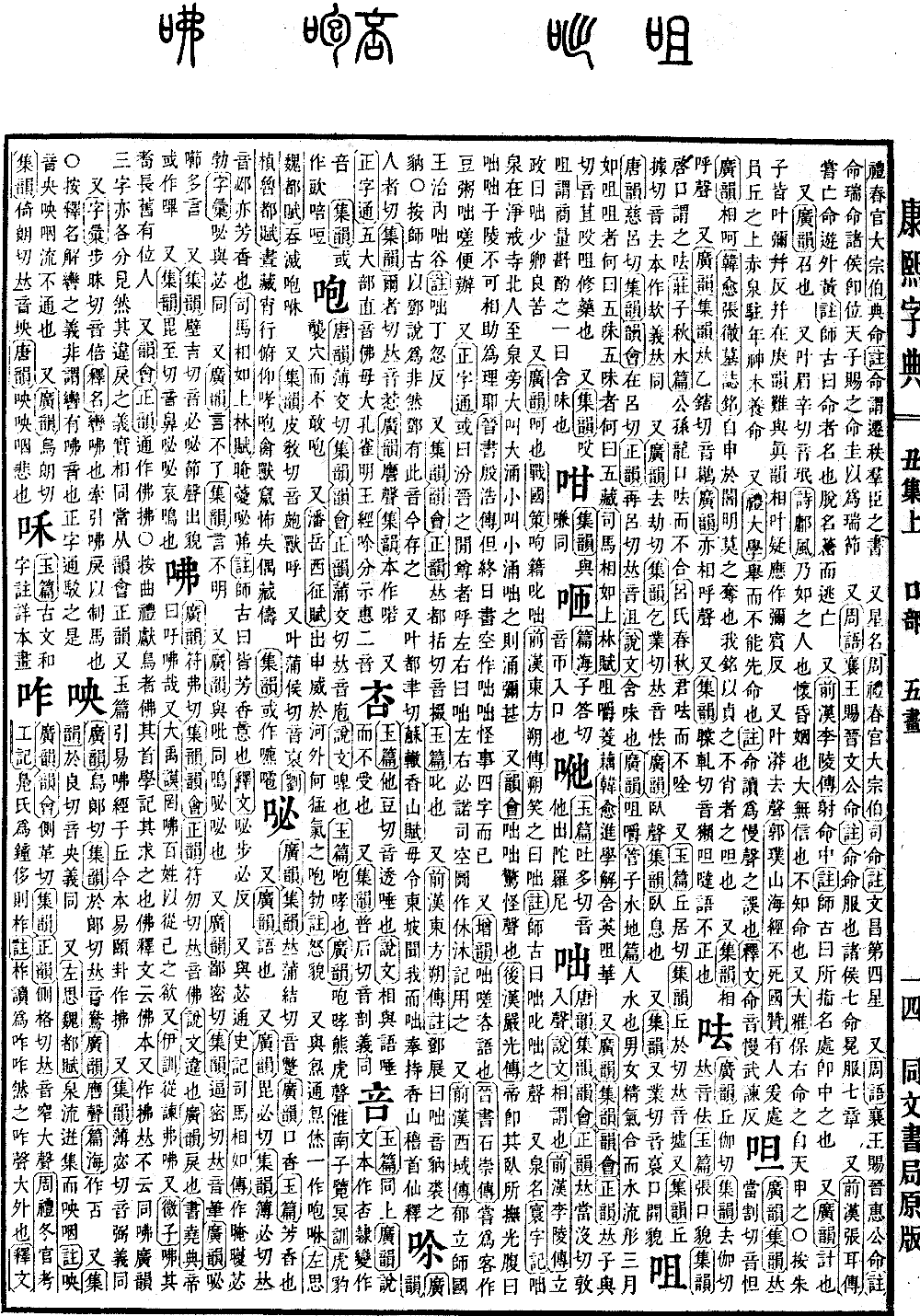
Chou Collection, Upper Volume
Radical: Mouth (kǒu)
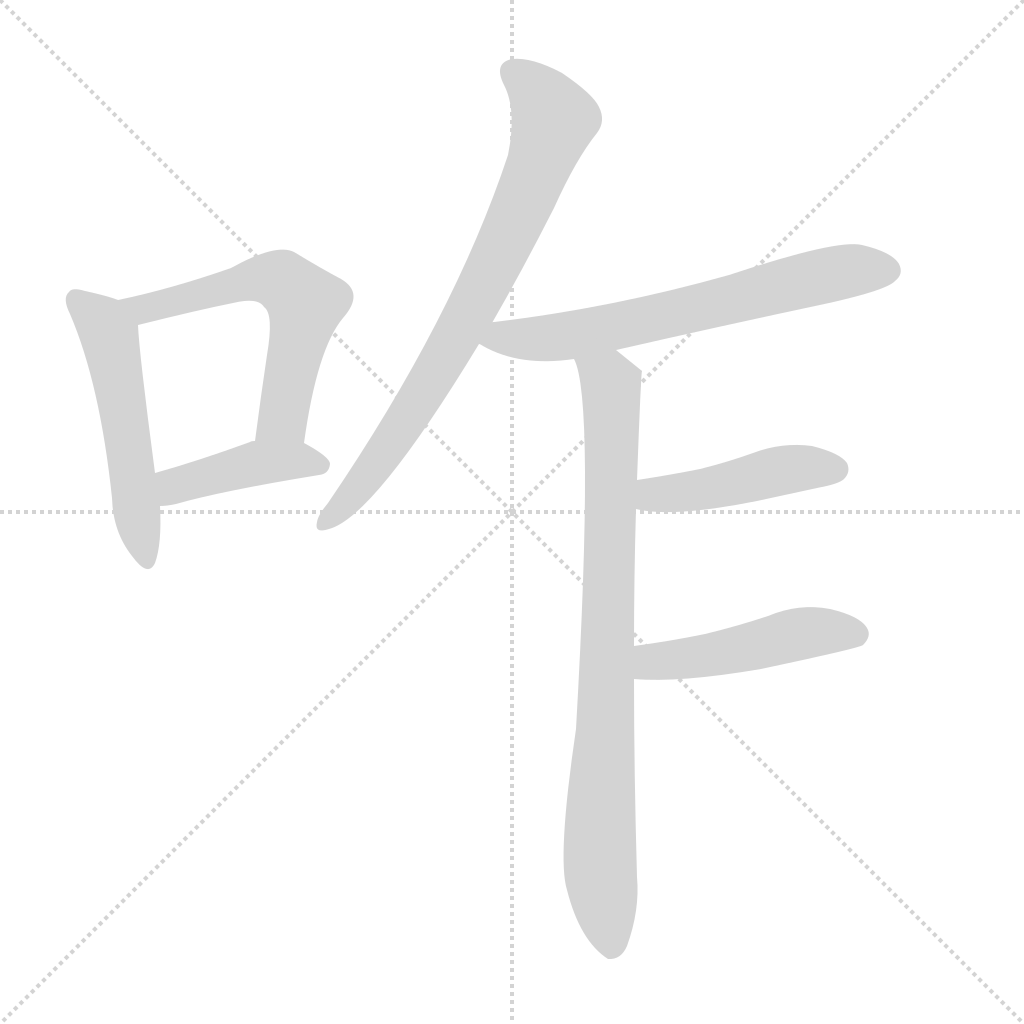
Character: za
Kangxi stroke count: 8
Page 184, Entry 16
Guangyun (Broad Rhymes) and Yunhui (Collection of Rhymes): Pronounced ze (entering tone). Large sound. Book of Rites (Zhouli), section Winter Offices (Dongguan Kaogongji): When the wild duck master casts a bell, if it is wide, it is zha. Commentary: Zha is read as the zha in zha-zha-ran, meaning the sound is loud and external. Explanation of Texts: Zha, pronounced bai (entering tone).
Also: Correct Rhymes (Zhengyun): To eat.
Also: Guangyun: Pronounced ze (entering tone). Guangyun: Zha, many sounds.
Also: Correct Rhymes: To bite. History of the Former Han (Qianhan), Biography of Dongfang Shuo: A lone pig biting a tiger. Commentary: Shigu says: Zha means to bite, pronounced ke (entering tone). History of the Later Han (Houhan), Biography of Ma Yuan: Jiang Shen biting the tongue. Classic of Divine Marvels (Shenyijing): Biting to draw its juice.
Also: Guangyun, Jiyun (Collection of Rhymes), and Yunhui: Pronounced zha (falling tone). Guangyun: The sound of chattering.
Also: Jiyun: One meaning is temporarily.
Also: Jiyun and Leipian (Classified Chapters): Pronounced zha (falling tone). Zuo Zhuan (Commentary on the Spring and Autumn Annals), eighth year of Duke Ding: Huanzi spoke briefly to Lin Chu saying: Your ancestors were all virtuous men of the Ji family. Commentary: Zha means temporarily. Explanation of Texts: Zha, pronounced jia (falling tone). Also pronounced zha (falling tone).