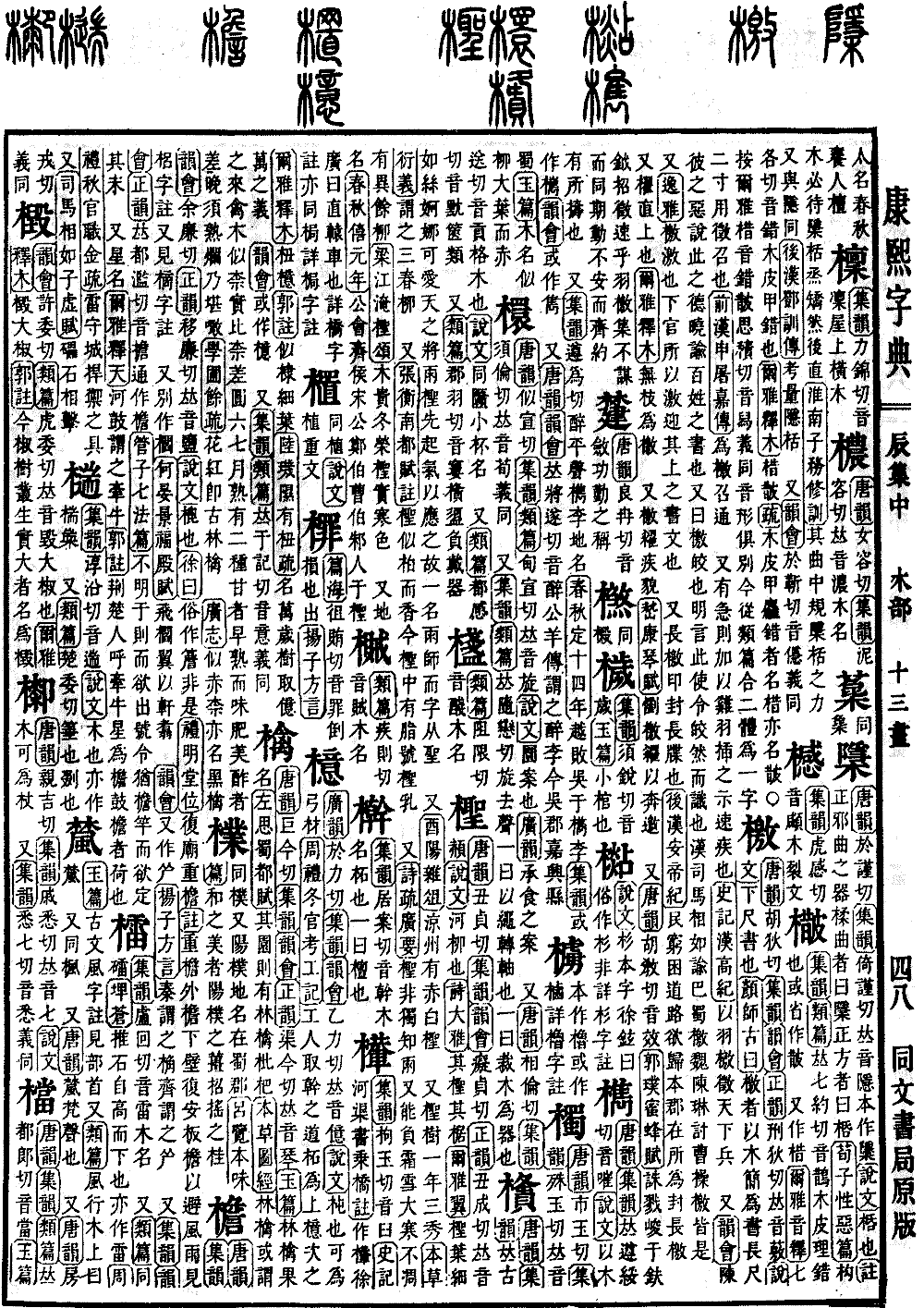
Chen Collection, Middle Volume
Radical: Tree (mù)
Kangxi stroke count: 17
Page 556, Entry 04
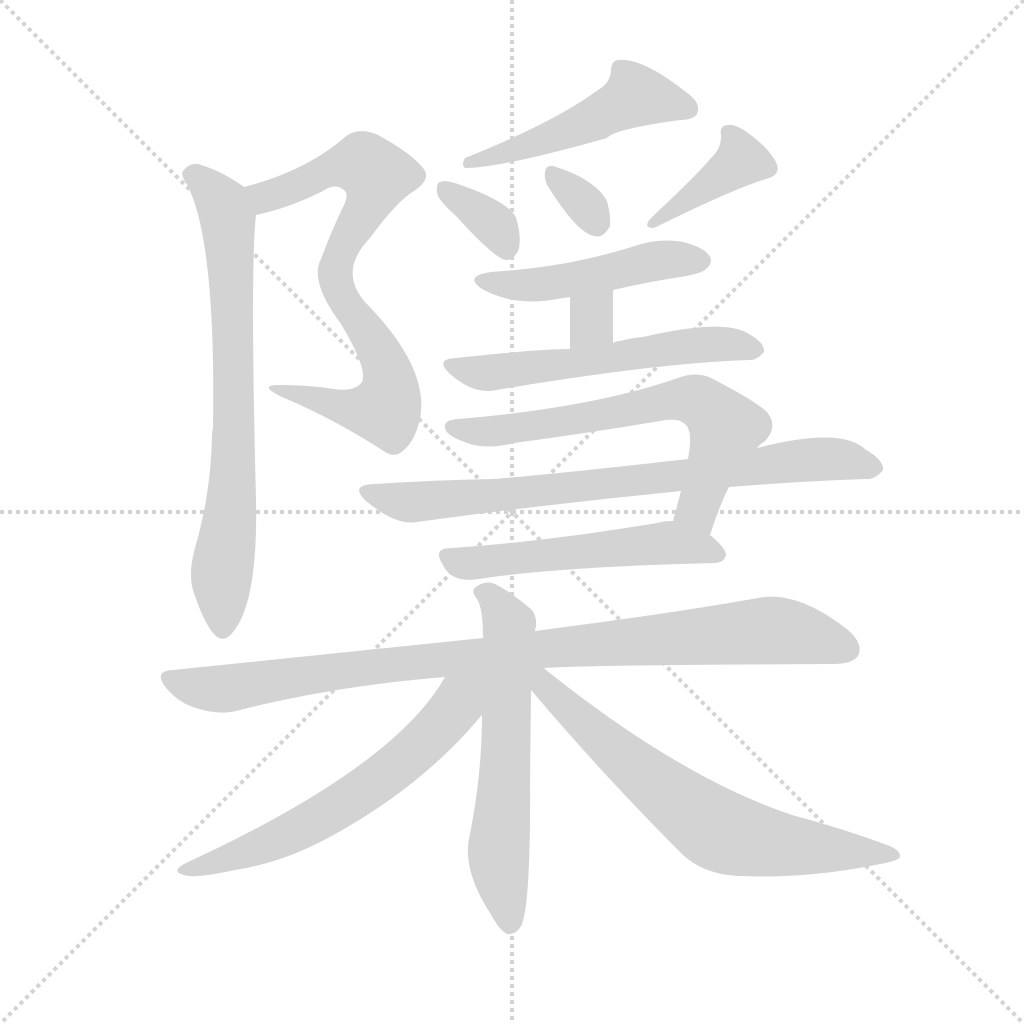
Pronounced yin (rising tone). Originally written in a variant form. Explained in the Discussion of Writing (Shuowen Jiezi) as a tool for shaping timber. Note: This is an instrument used to correct curves and straighten wood; the device used to straighten the curved is called yin, and the device used to shape the square is called kuo.
As stated in the Book of Master Xun (Xunzi), Nature is Bad chapter: Bent wood must rely on the yin-kuo press and heat treatment to become straight. According to the Master of Huainan (Huainanzi), Cultivating Endeavors chapter: Wood that is bent to fit a compass is the result of the yin-kuo.
Also used interchangeably with the term yin (hidden). According to the History of the Later Han (Houhanshu), Biography of Deng Xun: To examine and regulate using the yin-kuo.
Additionally, according to the Collection of Rhymes (Yunhui), pronounced jin (falling tone). The meaning remains the same.
Textual research: In the citation for the Master of Huainan (Huainanzi), the section title Cultivating Endeavors (Xiuwu Xun) has been corrected from the original text's erroneous Endeavors Cultivating (Wuxiu Xun).