Wei Collection, Middle Volume
Radical: Plow (lěi)
Kangxi Strokes: 10
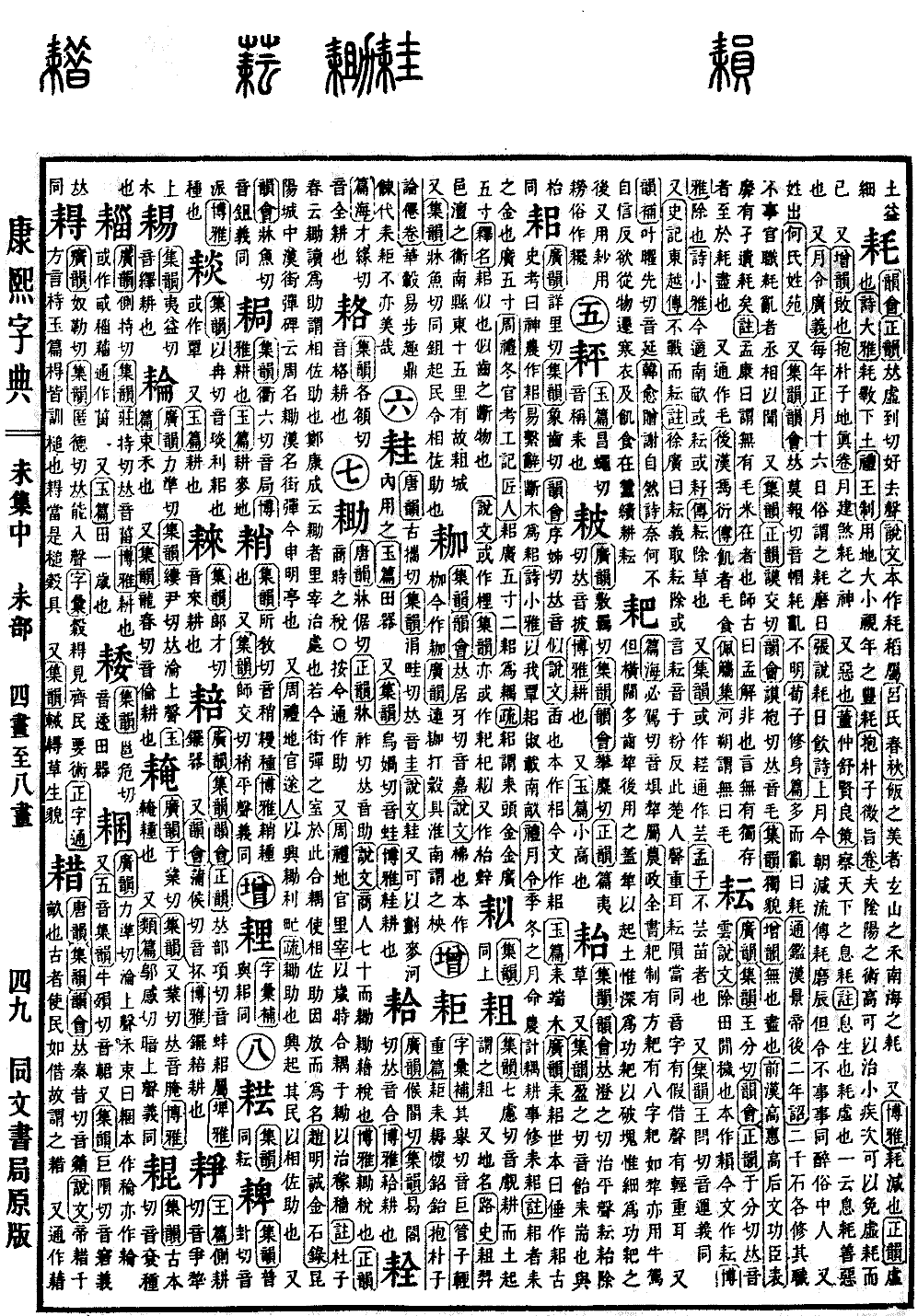
Page 963, Entry 02
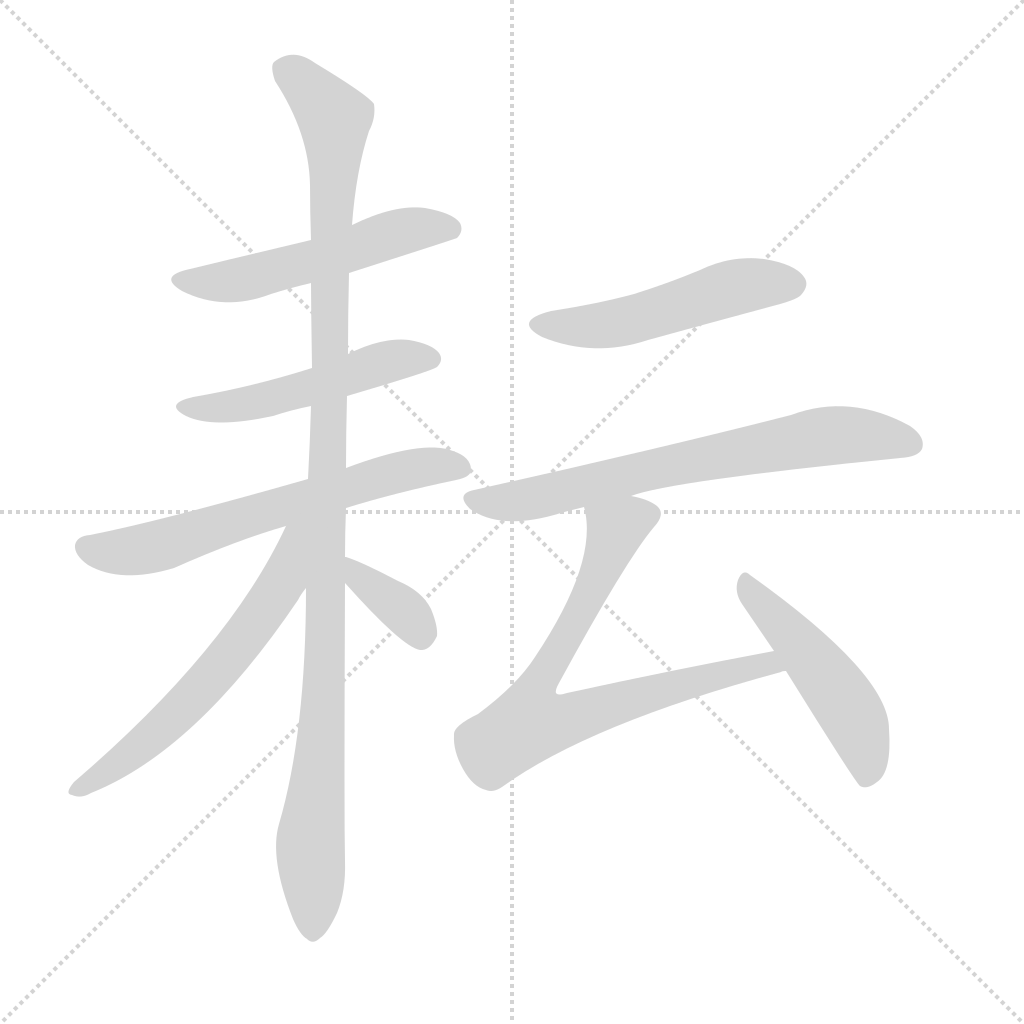
Broad Rimes (Guangyun) and Collected Rimes (Jiyun) state the pronunciation is wang fen; Rime Compilation (Yunhui) and Correct Rimes (Zhengyun) state the pronunciation is yu fen; pronounced yun. According to the Explaining Graphs and Analyzing Characters (Shuowen), it means to remove weeds from a field. It was originally written as a different character. The current standard text uses yun. According to the Broad Elegance (Boya), it means to clear away. According to the Book of Odes (Shijing), Small Elegantiae (Xiao Ya): Now we come to the southern fields, some are weeding, some are banking up the soil. The Commentary (Zhuan) states that yun means to weed. According to the Collected Rimes (Jiyun), it is sometimes written as another variant. It is used interchangeably with yun. According to Mencius (Mengzi), it refers to those who do not weed the seedlings. According to the Collected Rimes (Jiyun), it is also pronounced wang wen, pronounced yun. The meaning is the same. According to the Records of the Grand Historian (Shiji), Account of the Eastern Yue: To perish of one's own accord without engaging in battle. The Annotation (Zhu) says: Xu Guang stated that yun takes its meaning from clearing away. Some say yun is pronounced yu fen, which is due to the heavy pronunciation of the people of the Chu region. Yun and yun should have the same pronunciation; characters are borrowed, and there are variations in the lightness or heaviness of the pronunciation. According to the Rime Supplements (Yunbu), it rhymes with yao xian, pronounced yan. In the poem by Han Yu, Gift for Xie Ziran: Why do you not trust yourself, instead following external things? Clothing for protection against the cold and food for hunger all depend on sericulture, weaving, and plowing and weeding.