Yin Collection, Middle Volume
Radical: Mountain (shān)
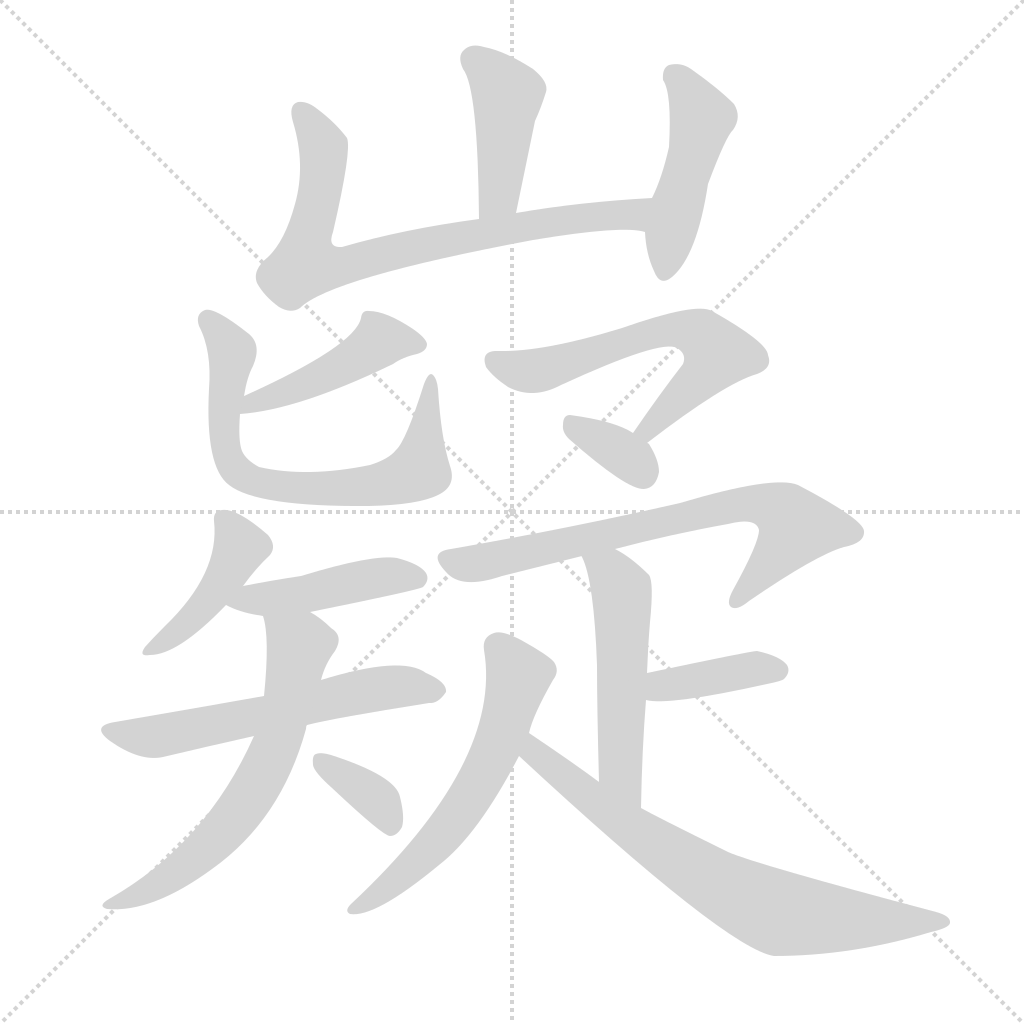
嶷
Kangxi Stroke Count: 17
Page 321, Entry 09
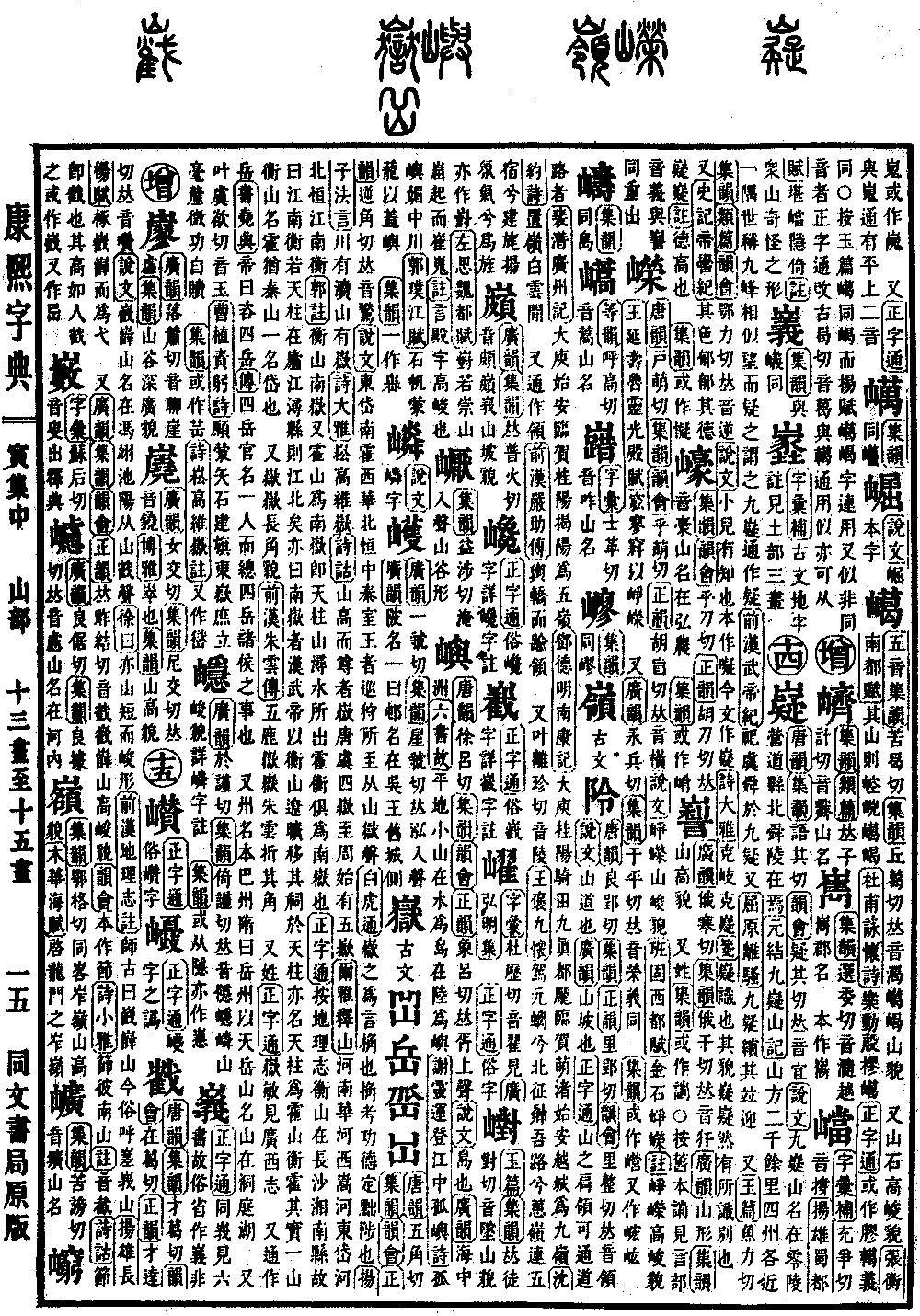
Tang Dynasty Rhyme Dictionary (Tangyun) and Collection of Rhymes (Jiyun) state it is pronounced yi (rising tone). Collection of Rhymes (Yunhui) states it is pronounced yi (rising tone). According to Explanation of Script and Elucidation of Characters (Shuowen), Mount Jiuyi is where Emperor Shun was buried, located in Lingling Yingdao. The character is composed of the radical for mountain and the phonetic element yi. Yuan Jie in Record of Mount Jiuyi writes that the mountain is over two thousand li in circumference, with four prefectures adjacent to its corners. People say the nine peaks appear similar, causing observers from afar to feel doubt, hence the name Nine Doubts (Jiuyi). It is also written as a variant form (yi). In the History of the Former Han (Qianhan shu), Chapter on Emperor Wu, it is noted that sacrifices to Emperor Shun were held at Mount Jiuyi. In Qu Yuan's Encountering Sorrow (Lisao), it mentions the gods of Mount Jiuyi coming together to welcome the speaker.
Also, according to Jade Chapters (Yupian), it is pronounced ni (entering tone). Collection of Rhymes (Jiyun), Classified Chapters (Leipian), and Collection of Rhymes (Yunhui) state it is pronounced ni (entering tone). Explanation of Script and Elucidation of Characters (Shuowen) states it refers to a child who possesses wisdom. Originally written as the variant form. Now written as yi. In the Book of Odes (Shijing), Great Odes (Daya), it refers to the ability to distinguish things and the capacity for recognition. Commentary (Jian) states that yi signifies discernment; one's demeanor is grave and focused, capable of making distinctions. Furthermore, in the Records of the Grand Historian (Shiji), Annals of Emperor Ku, it is stated that his appearance was grave and his virtue was lofty. The commentary notes this refers to high moral character. Collection of Rhymes (Jiyun) notes it is sometimes written as a variant form (ai).
Textual Research: Explanation of Script and Elucidation of Characters states Nine Doubts is a mountain name. It is located north of Lingling Yingdao County, and the mausoleum of Emperor Shun is here. Based on the original text, this has been corrected to: Mount Jiuyi is where Emperor Shun was buried, located in Lingling Yingdao. The character is composed of the radical for mountain and the phonetic element yi.