Shen Collection, Upper Volume
Radical: Grass (cǎo)
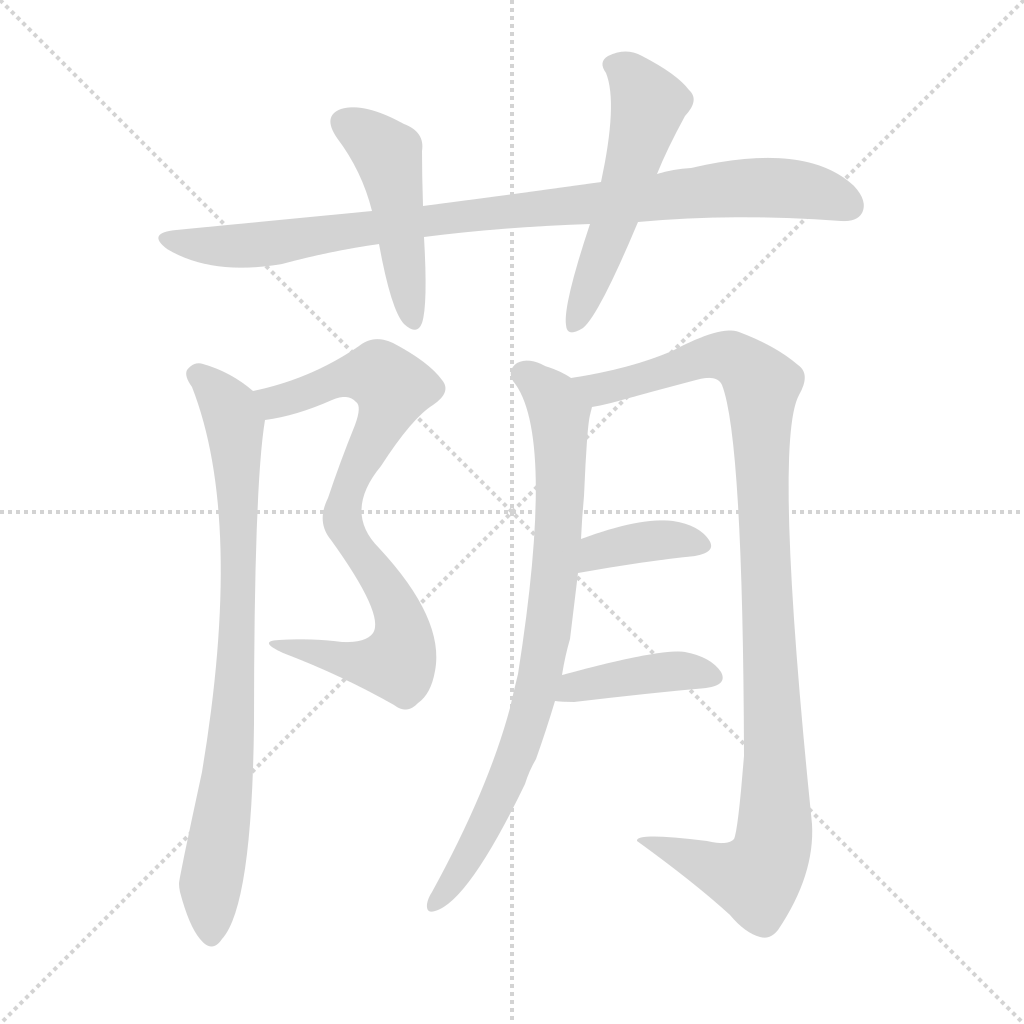
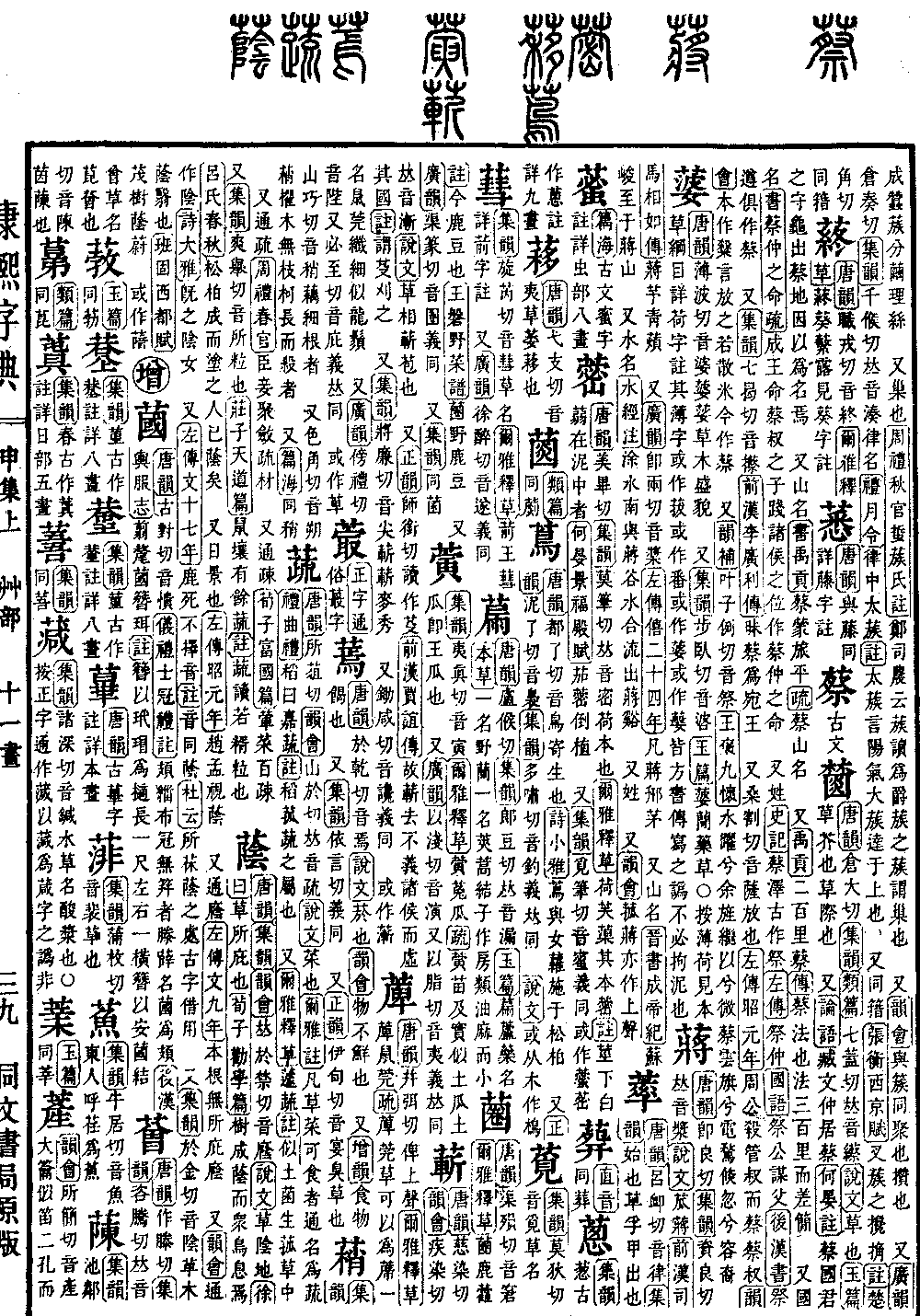
Yin; Kangxi strokes: 17; Page 1055
Pronounced yin (falling tone).
According to Explaining Graphs and Analysis of Characters (Shuowen Jiezi), it refers to the shade of grass. Xu says it is that which is sheltered by grass.
From Xunzi, Encouraging Learning (Quanxue Pian): When a tree creates shade, the birds rest there.
From Lu's Spring and Autumn Annals (Lüshi Chunqiu): When the pine and cypress have matured, the people on the road already have shade.
Also refers to the shadow cast by the sun.
From Zuo Tradition (Zuozhuan), Year 1 of Duke Zhao: Zhao Meng inspected the shadows.
Also written in a variant form (yin).
From Zuo Tradition (Zuozhuan), Year 9 of Duke Wen: The roots and base have no place for shelter.
Also, according to the Collection of Rhymes (Yunhui), it is commonly used as a variant of yin (shade).
From Book of Odes (Shijing), Greater Odes (Daya): Already gone to provide you shade.
Also, from Zuo Tradition (Zuozhuan), Year 17 of Duke Wen: A dying deer does not choose its shade. The commentary notes that shade is the same as yin. Du Yu says it refers to the place where one rests or seeks shelter. An archaic character used as a loan.
Also, according to the Collection of Rhymes (Yunhui), pronounced yin (level tone).
Refers to the shading and obscuring of grass and trees.
From Ban Gu, Western Capital Rhapsody (Xidu Fu): Dense trees cast a lush shade.
Sometimes also written in a variant form.