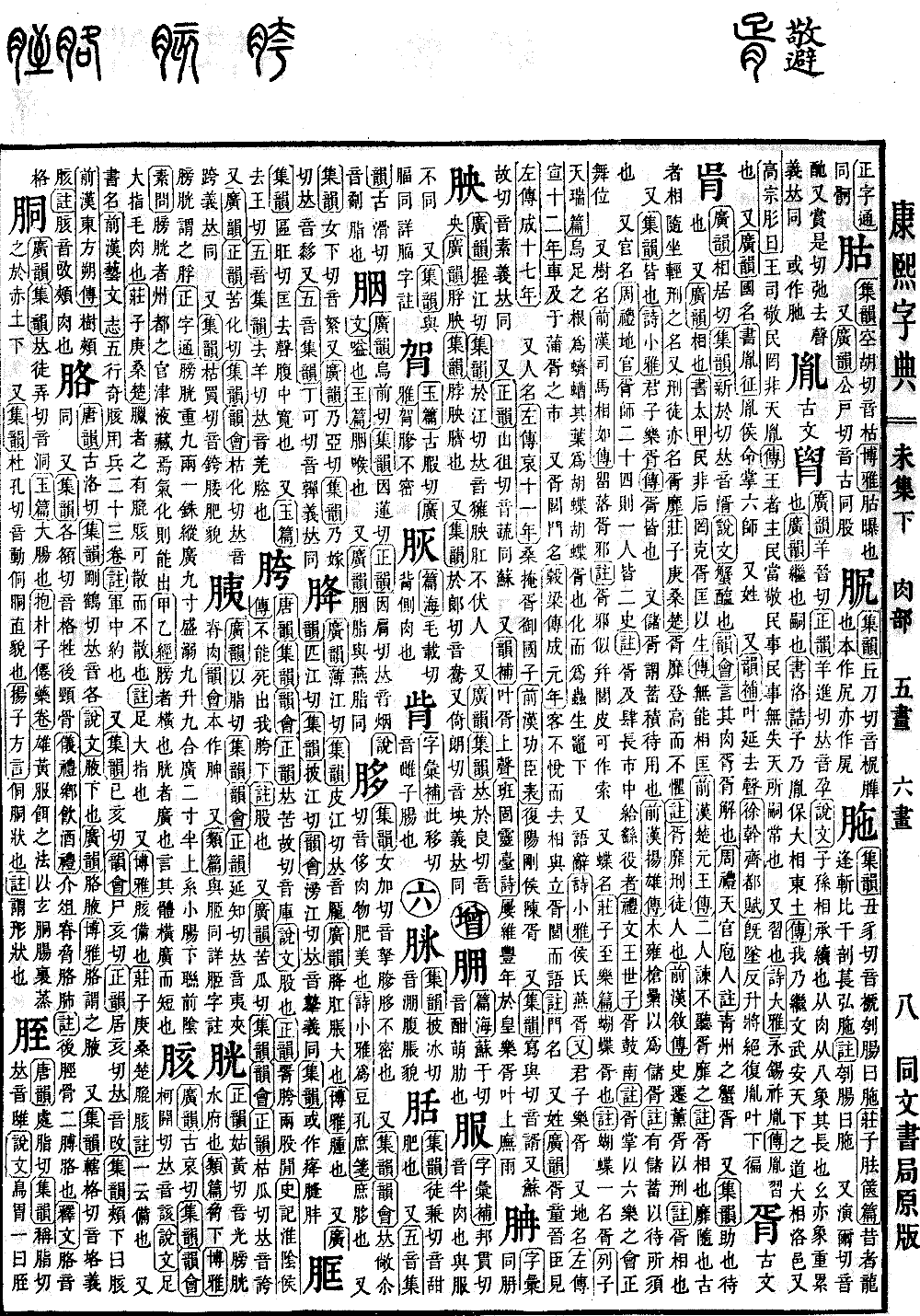
Wei Collection, Lower Volume
Radical: Meat (ròu)
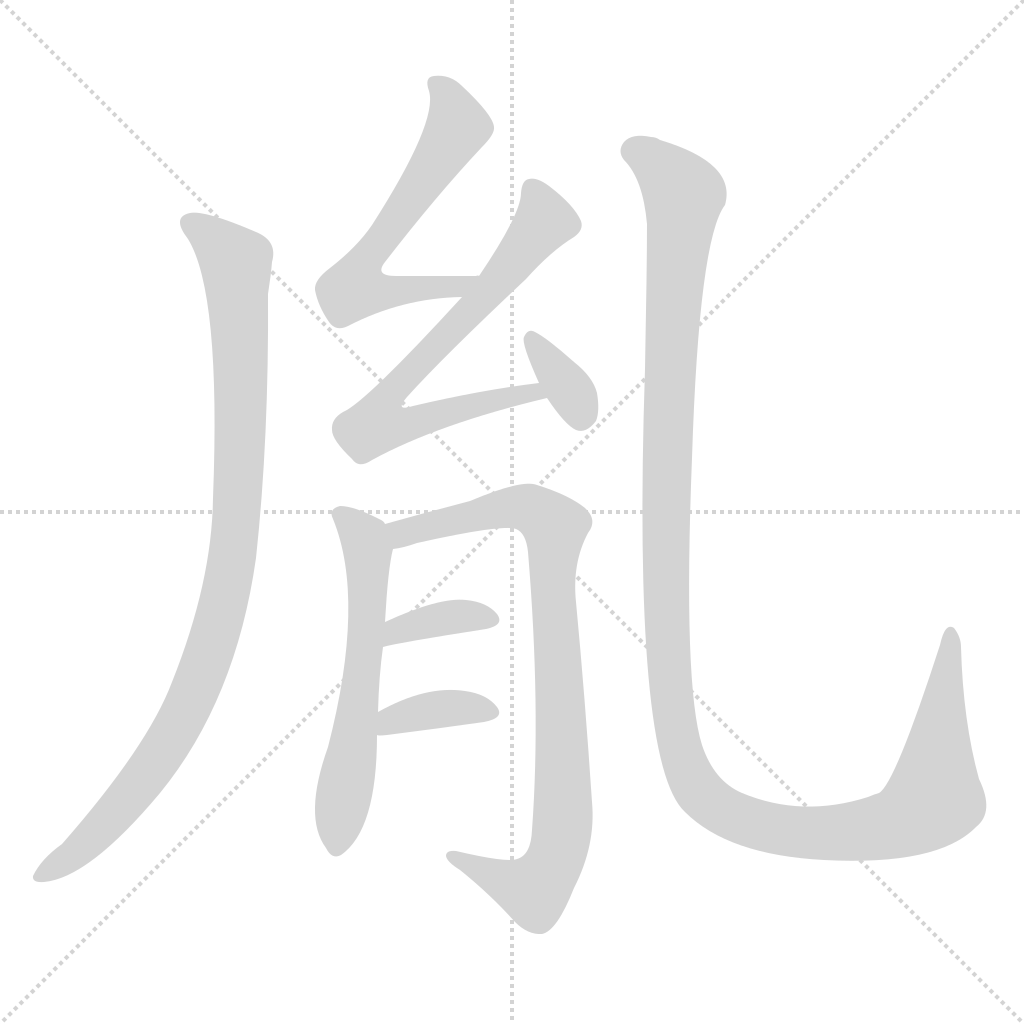
胤
Kangxi strokes: 11
Page 980, Entry 04
Ancient text variant. According to the Guangyun (Guangyun), pronounced yin (falling tone), according to the Zheng Yun (Zheng Yun), pronounced yin (falling tone).
According to the Shuo Wen (Shuowen Jiezi), it refers to descendants succeeding one another in a line. Formed from Meat and Eight, representing the continuation of length. The component meaning small (yao) also represents layers being stacked.
According to the Guangyun (Guangyun), it means to continue or to inherit.
In the Book of Documents (Shangshu), specifically the Announcement of Luo (Luogao), it states: I shall continue to protect and greatly assist in the eastern lands. The commentary states: I shall continue the path of King Wen and King Wu to stabilize the world and greatly assist in the city of Luo.
Also in the Day of the Sacrificial Offering to Gaozong (Gaozong Rongri), it states: The King manages the respectful people, none of whom are not the successors of Heaven. The commentary states: The King is the master of the people and should respect the affairs of the people; the affairs of the people should not lose the norms inherited from Heaven.
It also means to practice or to be familiar with. In the Book of Odes (Shijing), specifically the Greater Odes (Daya), it states: Forever bestowing blessings and habits. The commentary states: Yin means habit.
Also, according to the Guangyun (Guangyun), it is the name of a state. In the Book of Documents (Shangshu), specifically the Punitive Expedition of Yin (Yinzheng), it states: The Marquis of Yin was ordered to command the six armies.
It is also a surname.
According to the Yun Bu (Yunbu), it rhymes with the word yan in the falling tone. In the Rhapsody on the Capital of Qi (Qi Du Fu) by Xu Gan, it states: Since it has fallen and returned to rise, it will be cut off and then resumed. This rhymes with the word bian below.