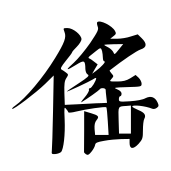
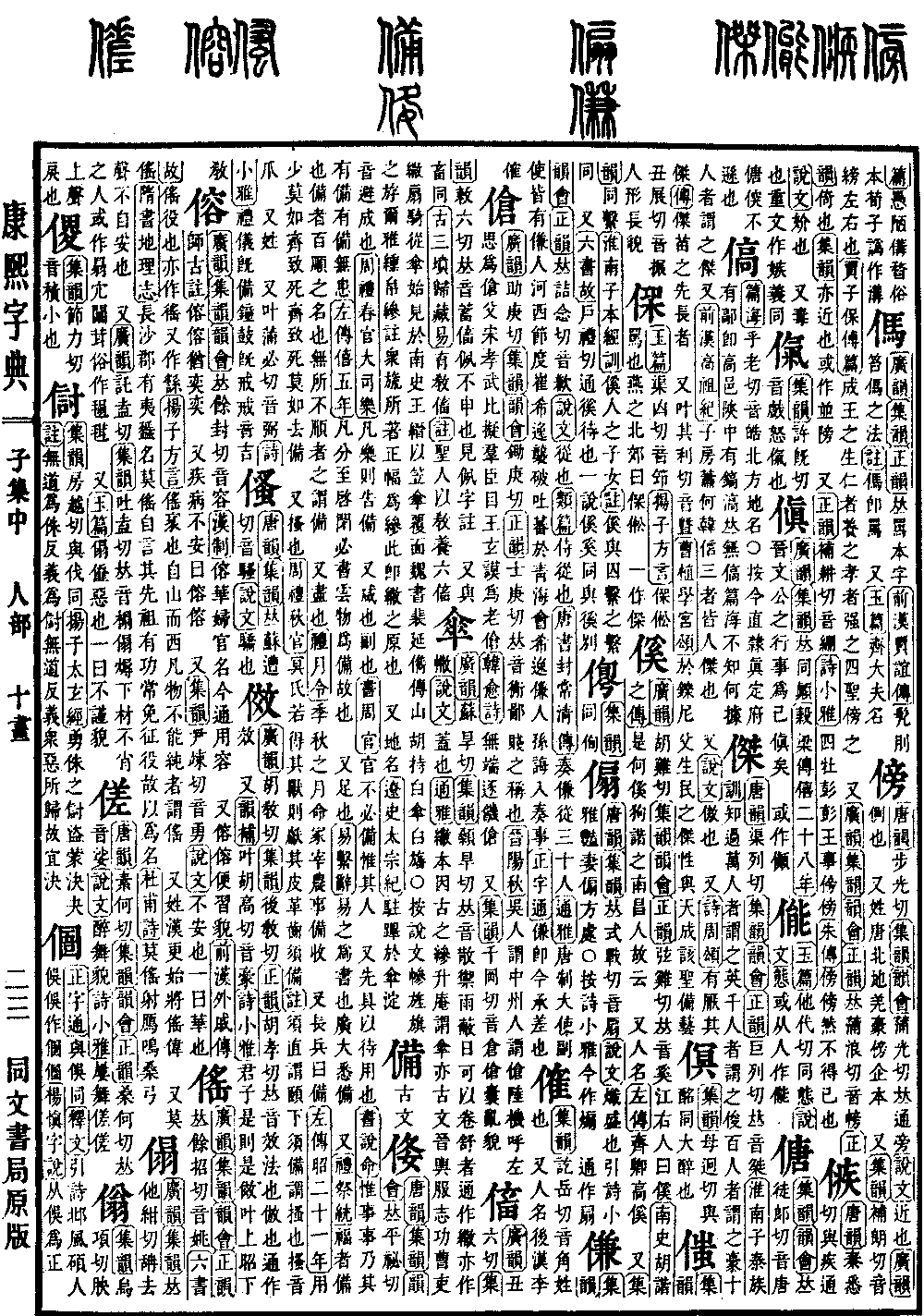
Zi Collection, Middle Volume. Radical: Person (ren). Yao. Kangxi Stroke Count: 12. Page 113, Number 26. According to the Extensive Rhymes (Guangyun), Collected Rhymes (Jiyun), Collected Rhymes (Yunhui), and Standard Rhymes (Zhengyun), the pronunciation is formed by the initial of yu and the final of zhao, sounding like yao. The Origin of the Six Scripts (Liushugu) states that yao refers to labor service. It is also written in the variant forms yao or yao. The Dialects (Fangyan) by Yangzi states that yao means slanting or irregular; west of the mountains, objects that are not uniform in size or thickness are called yao. Also a surname; Yao Wei was a general during the Gengshi era of the Han Dynasty. Also found in the name Mo Yao. The Treatise on Geography in the Book of Sui (Suishu) states that in Changsha Commandery there were ethnic groups called Mo Yao who claimed their ancestors performed great deeds and were thus permanently exempt from labor service, which is how they acquired their name. A poem by Du Fu states: The Mo Yao shoot at wild geese with their mulberry bows sounding. Textual Research: The citation from The Dialects (Fangyan) by Yangzi originally stated that yao means slanting, and that west of the mountains objects that cannot be pure are called yao. This has been corrected according to the original source text to: for any objects whose size and thickness are not uniform, they are called yao.