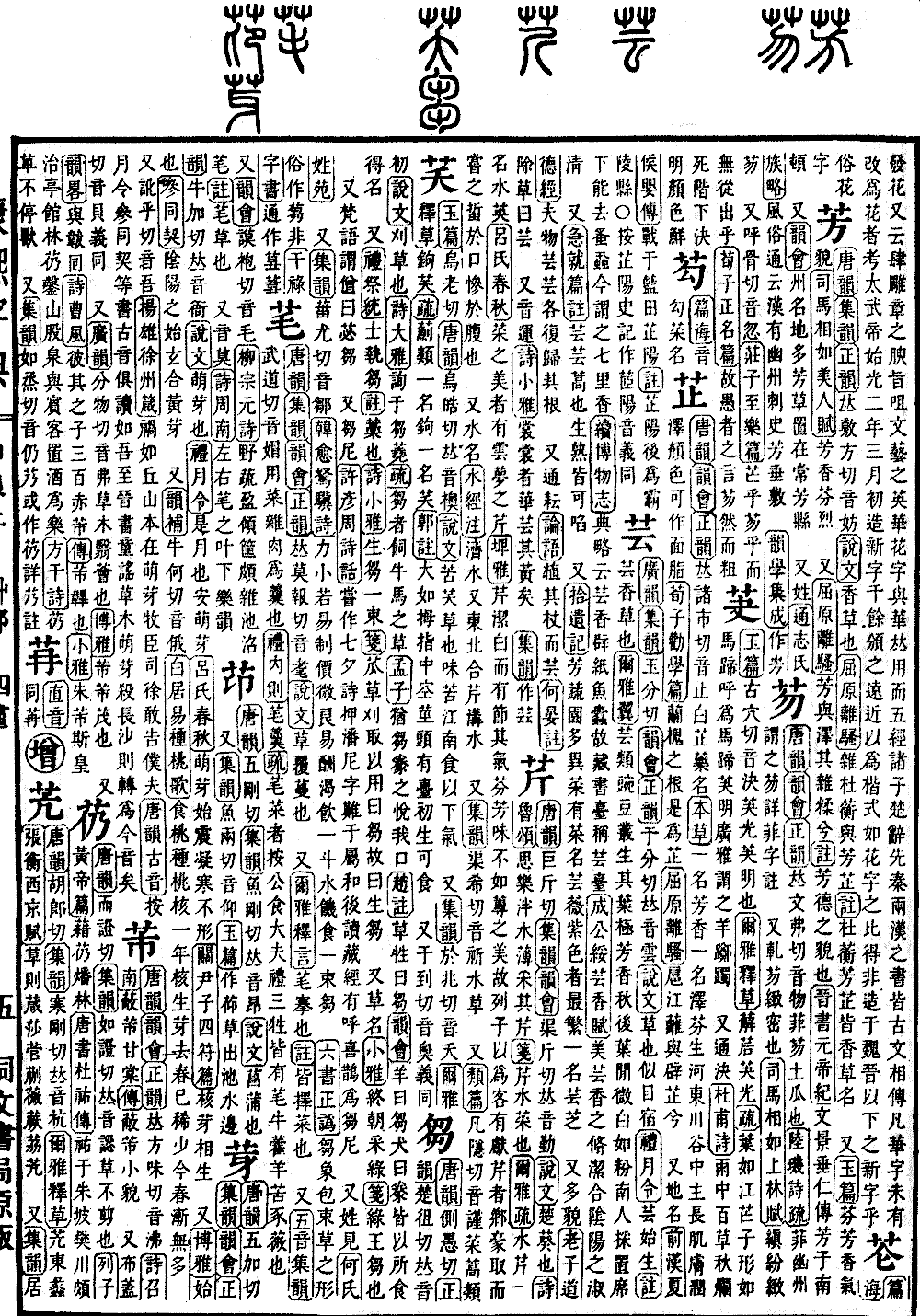
Shen Collection, Upper Volume
Radical: Grass (cǎo)
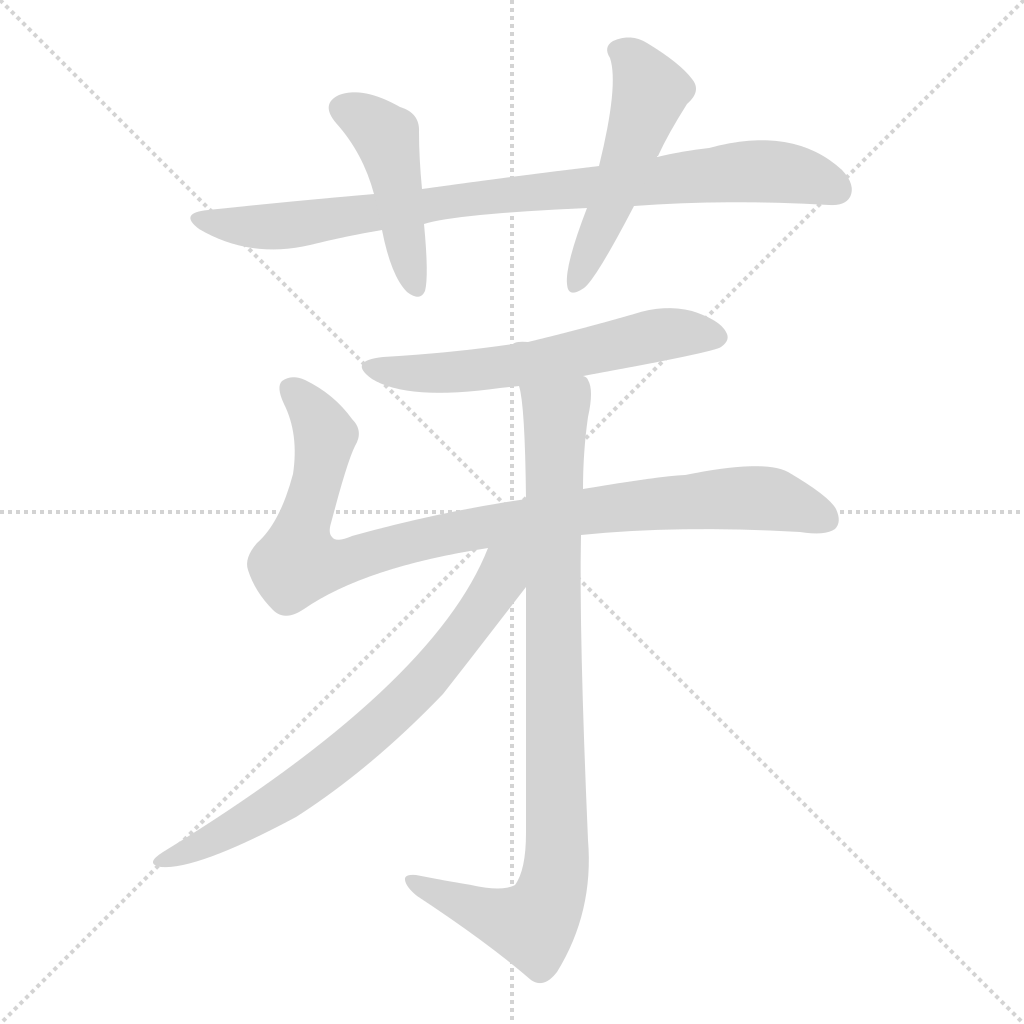
芽
Kangxi strokes: 10
Page 1021, Entry 13
Pronounced ya.
According to the Explaining Graphs and Analyzing Characters (Shuowen Jiezi), it refers to a sprout.
Book of Rites (Liji), Monthly Ordinances (Yueling): This month, one must ensure that sprouts grow securely.
Annals of Lu (Lu Shi Chunqiu): The sprouts begin to stir, though the harsh cold has not yet taken shape.
Guan Yinzi, Four Talismans Chapter: Fruit pits and young sprouts transform and produce one another.
Also, according to the Erudite Refinements (Boya), it means the initial stage.
Token of the Unification of the Three (Cantong Qi): Yin and Yang are first born, combining to form the yellow sprout.
Also, according to the Rhyme Supplement (Yunbu), pronounced e.
Bai Juyi, Song of Planting Peaches: I ate the peach and planted the pit; after one year, a sprout grew from the pit. Last spring they were already sparse, this spring there are even fewer.
Also pronounced wu.
Yang Xiong, Admonition to Xuzhou: Calamity as large as a mountain has its roots in the initial sprout. The pastoral official governing Xuzhou rashly informs the servant.
Regarding the ancient sounds in the Tang Rhyme (Tangyun), the texts such as the Monthly Ordinances and the Token of the Unification of the Three all read it as wu in ancient times, but by the time of the folk song in the Book of Jin (Jinshu) stating "grass and trees sprout to kill Changsha," it had shifted to the current pronunciation.