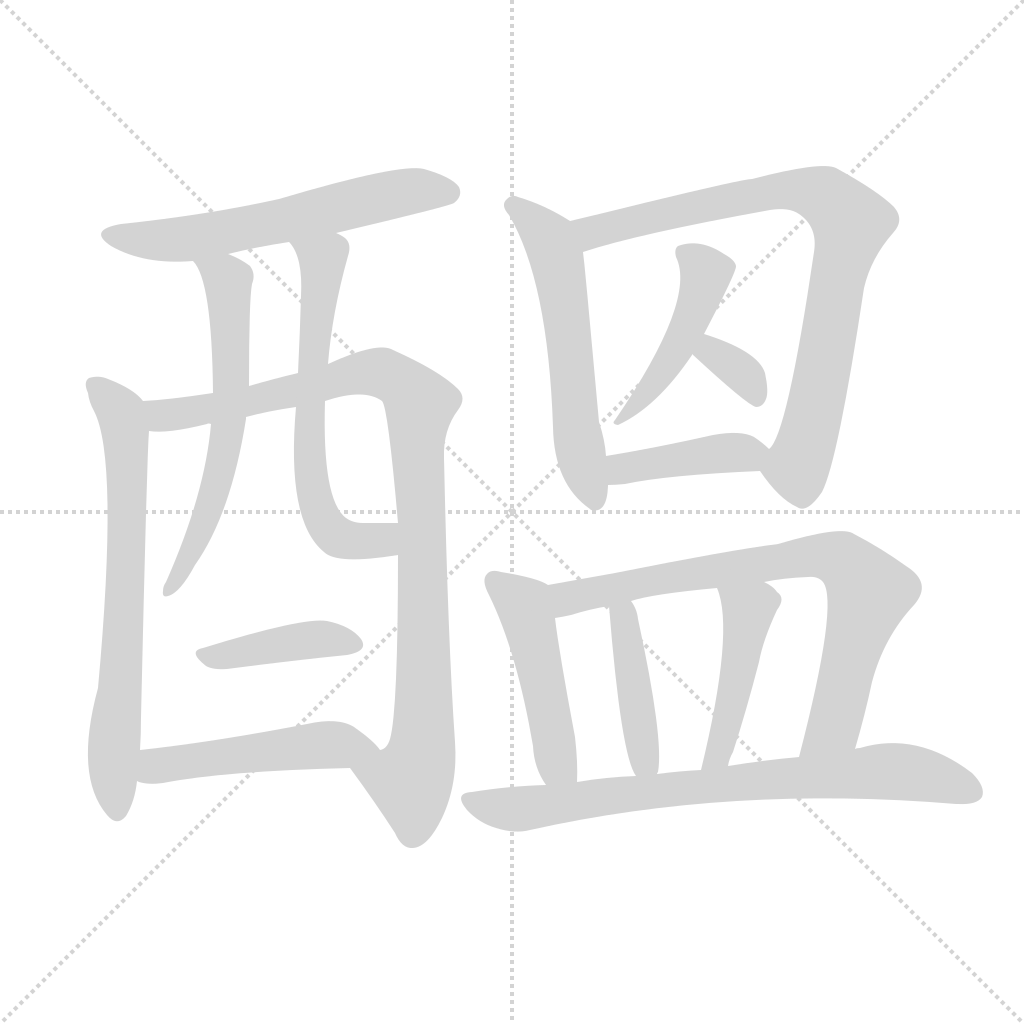
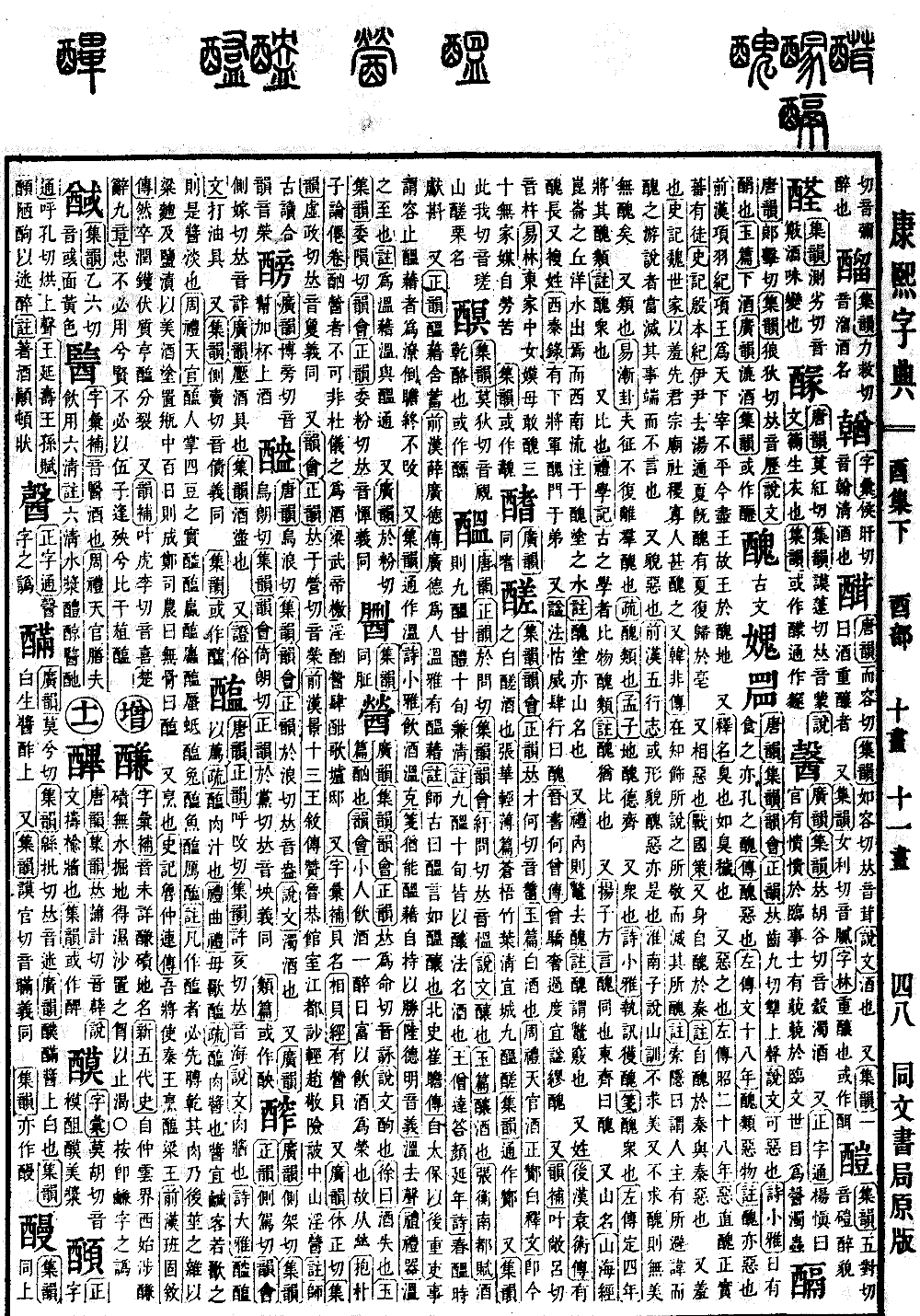
You Collection, Lower Volume
Radical: Wine (yǒu)
Kangxi strokes: 17
Page 1286, Entry 15
Pronounced yun (falling tone).
According to the Explaining and Analyzing Characters (Shuowen Jiezi), it means to brew.
According to the Jade Chapters (Yupian), it means to brew wine.
In the Southern Capital Rhapsody (Nandu Fu) by Zhang Heng: The wine is referred to as nine-brew sweet nectar, and ten-cycle pure vintage.
Note: Nine-brew and ten-cycle are both names for wine based on the brewing method.
In the poem A Response to Yan Yanni by Wang Sengda: Spring brews are poured at the time of offering.
Also, in the Correct Rhymes (Zhengyun), it means to be reserved and subtle.
In the Biography of Xue Guangde in the History of the Former Han (Qianhan Shu): Guangde was a person of gentle elegance and subtlety.
Note: Shigu says: The word implies a sense of brewing and fermentation.
In the Biography of Cui Zhan in the History of the Northern Dynasties (Beishi): From the time of the Grand Guardian onward, officials valued administrative affairs; those who were reserved and subtle in their demeanor were called sluggish, yet Zhan would never change his ways.
Also, according to the Collected Rhymes (Jiyun), it is interchangeable with the character meaning warm.
In the Book of Odes (Shijing), Odes of Lesser Elegant: Drinking wine with gentle self-restraint.
Note: The commentary says: This refers to being able to maintain self-restraint and composure.
Lu Deming, in his Pronunciation and Meaning (Yinyi), notes: The character for warm is read in the falling tone.
In the Book of Rites (Liji), Ritual Vessels: The height of gentleness.
Note: This refers to being gentle and accommodating; here, warm is interchangeable with brew.
Also, according to the Extended Rhymes (Guangyun), it is pronounced yun (falling tone).
The meaning is the same.