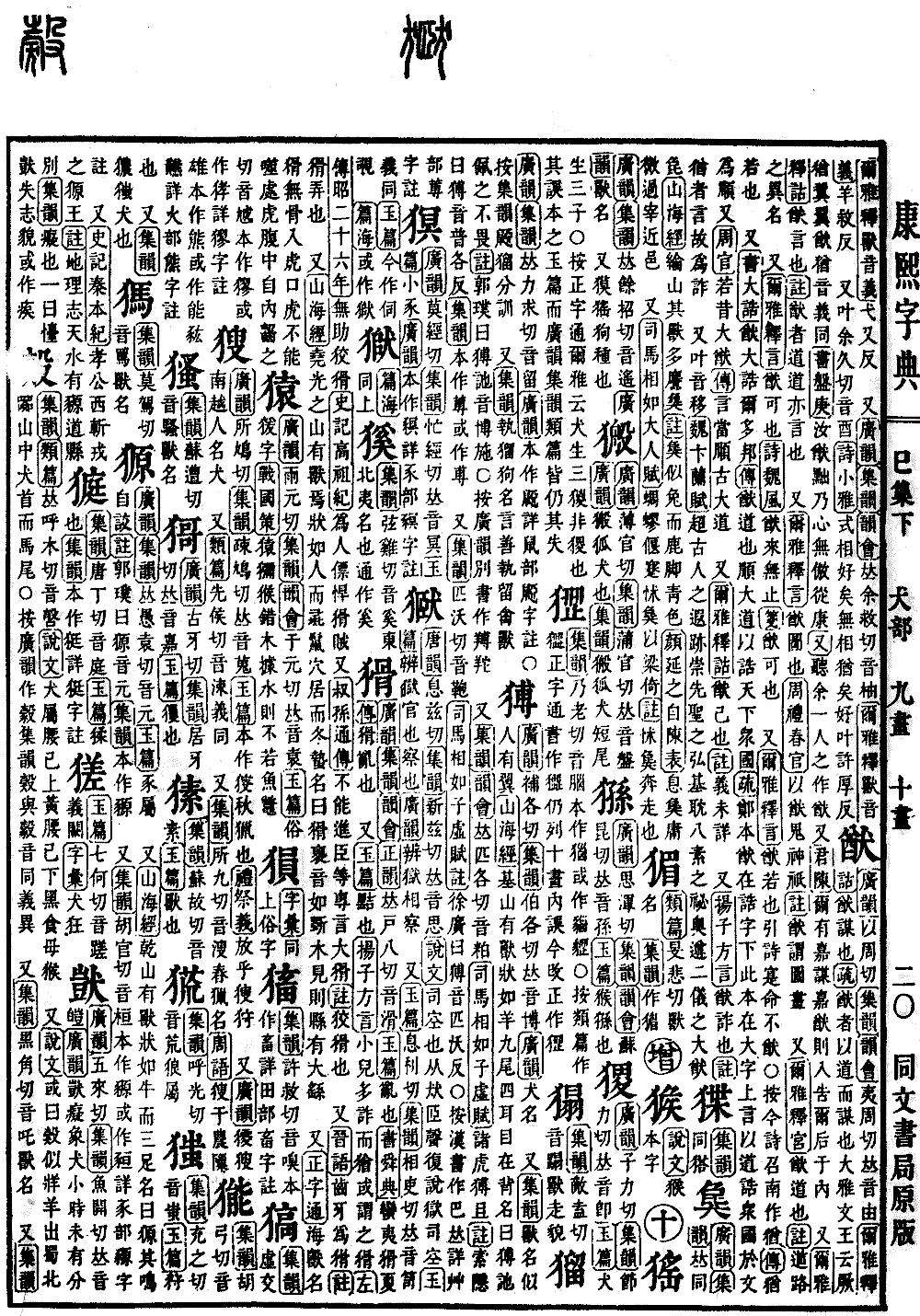
Si Collection, Lower Volume
Radical: Dog (quǎn)
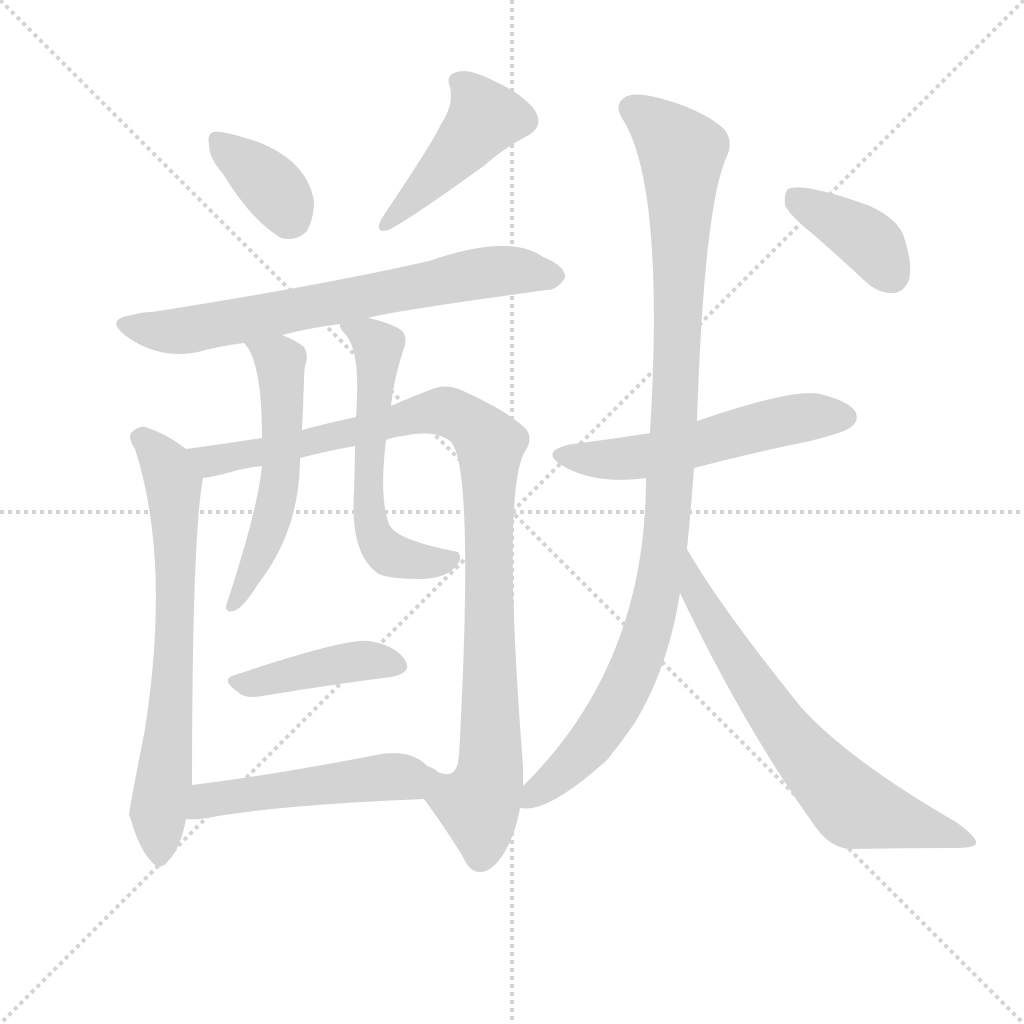
猷
Kangxi strokes: 13
Page 716, Entry 01
Guangyun (Comprehensive Rhymes) pronunciation: you. Jiyun (Collected Rhymes) and Yunhui (Treasury of Rhymes) pronunciation: you. The pronunciation is the same as you.
Erya (Approaching Elegance), Interpretation of Ancient Words: You means to plan. The Commentary explains: You refers to planning based on the correct path. Book of Odes (Shijing), Greater Odes, King Wen says: Their plans are respectful and cautious. Here, you and this word have the same pronunciation and meaning.
Book of Documents (Shangshu), Pan Geng records: You should remove your selfishness and not be arrogant, indulgent, or seek comfort. Also records: Follow my singular plan.
Also, Book of Documents (Shangshu), Jun Chen records: If you have good strategies and good plans, you should enter and inform your ruler.
Also, Erya, Interpretation of Ancient Words: You means language. The Annotation explains: You refers to principle, and principle is also language.
Also, Erya, Interpretation of Words: You means to draw or picture. Rites of Zhou (Zhouli), Spring Officials records: Used to illustrate spirits and deities. The Annotation explains: You refers to a drawing or illustration.
Also, Erya, Interpretation of Palaces: You means road. The Annotation explains: This is another name for a road.
Also, Erya, Interpretation of Words: You means to be able to or may. Book of Odes (Shijing), Odes of Wei says: May you come and not stop. The Commentary explains: You means may.
Also, Erya, Interpretation of Words: You means to be like or similar to. It cites the Book of Odes saying: Truly the mandate is not similar. Note: Currently, in the Odes of Shao, this is written as the variant form (you). The Commentary explains: This word means to be like.
Also, Book of Documents (Shangshu), Great Announcement records: Follow the great path and instruct your many vassal states. The Commentary explains: You means path. To follow the great path to instruct the many states of the world. The Sub-commentary explains: In the version of Zheng Xuan, this word appears below the word announcement; in this version, it appears above the word great, stating that one uses the path to instruct the many states, which flows better in terms of meaning.
Also, Rites of Zhou (Zhouli) records: Like the great plans of the past. The Commentary explains: It refers to the fact that one should follow the ancient path.
Also, Erya, Interpretation of Ancient Words: You means already. The Annotation explains: Meaning is unclear.
Also, Yangzi, Dialects: You means to deceive or cheat. The Annotation explains: This word refers to intentionally committing a deceptive act.
Also, rhyming sound yi (rhymes and is pronounced like the sound yi). Wei Dynasty, Bian Lan Rhapsody writes: Surpassing the distant deeds of the ancients, honoring the great foundation of the former sages. Intoxicated by the profound mysteries of the eight elements, following the great rules of heaven and earth.