You Collection, Upper Volume
Radical: Speech (yán)
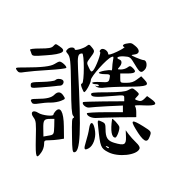
讔
Kangxi stroke count: 24
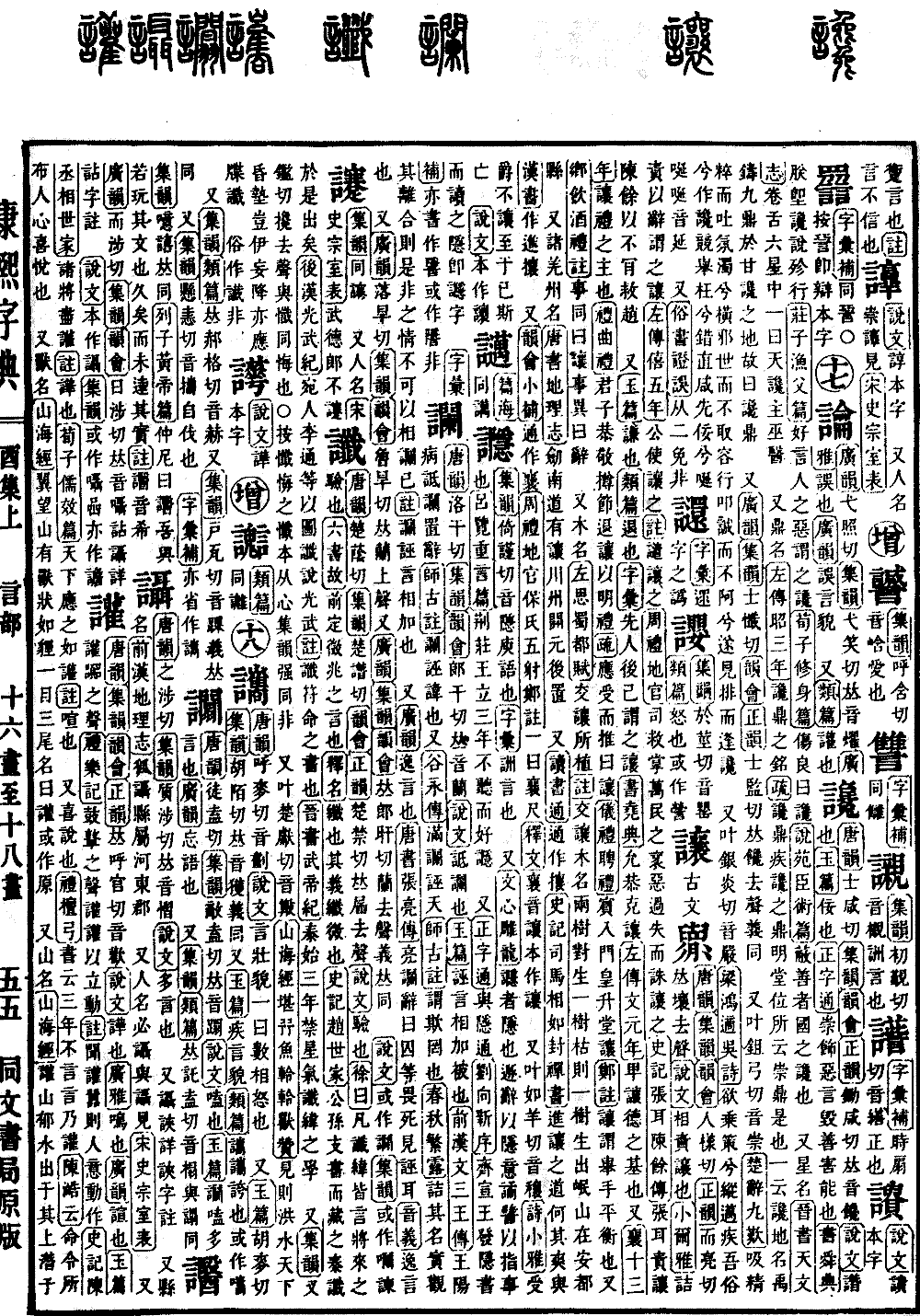
Page 1187, Entry 15
Collected Rhymes (Jiyun): Pronounced yin (third tone). It refers to riddles or cryptic language.
Compendium of Characters (Zihui): It refers to words used in reciprocating responses.
Literary Mind and the Carving of Dragons (Wenxin Diaolong): A cryptic statement is a hidden meaning. It uses convoluted language to conceal meanings and employs clever metaphors to represent things.
Master Lu's Spring and Autumn Annals (Lüshi Chunqiu), Section on Weighty Words: When King Zhuang of Chu ascended the throne, for three years he issued no decrees and was fond of using riddles.
Correct Meaning (Zhengzitong): It is interchangeable with the character meaning hidden (yin).
Liu Xiang's New Preface (Xinxu): King Xuan of Qi opened a book of riddles to read. The term for hidden is written with this character.
Supplement to the Compendium of Characters (Zihuibu): Also written as variant forms. Some write it as other variants, which is incorrect. The character is composed with the radical for mound (fù) and has a left-right structure.
Textual Research: Collected Rhymes (Jiyun) states it is pronounced yin (third tone). Originally written as cryptic words (yǔ), corrected to hidden words (sōuyǔ) based on the original text.