Wu Collection, Upper Volume
Radical: Foot (pǐ)
Kangxi Strokes: 5
Page 767, Entry 16
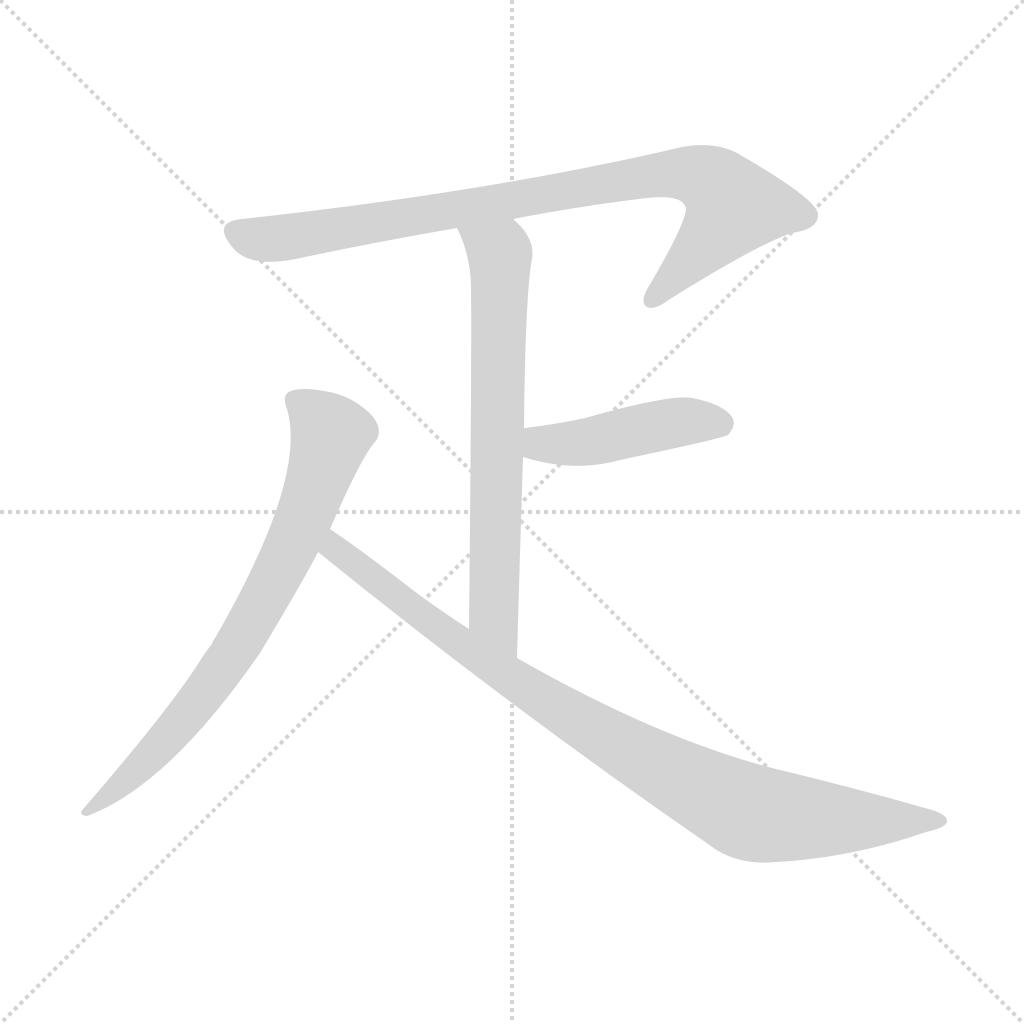
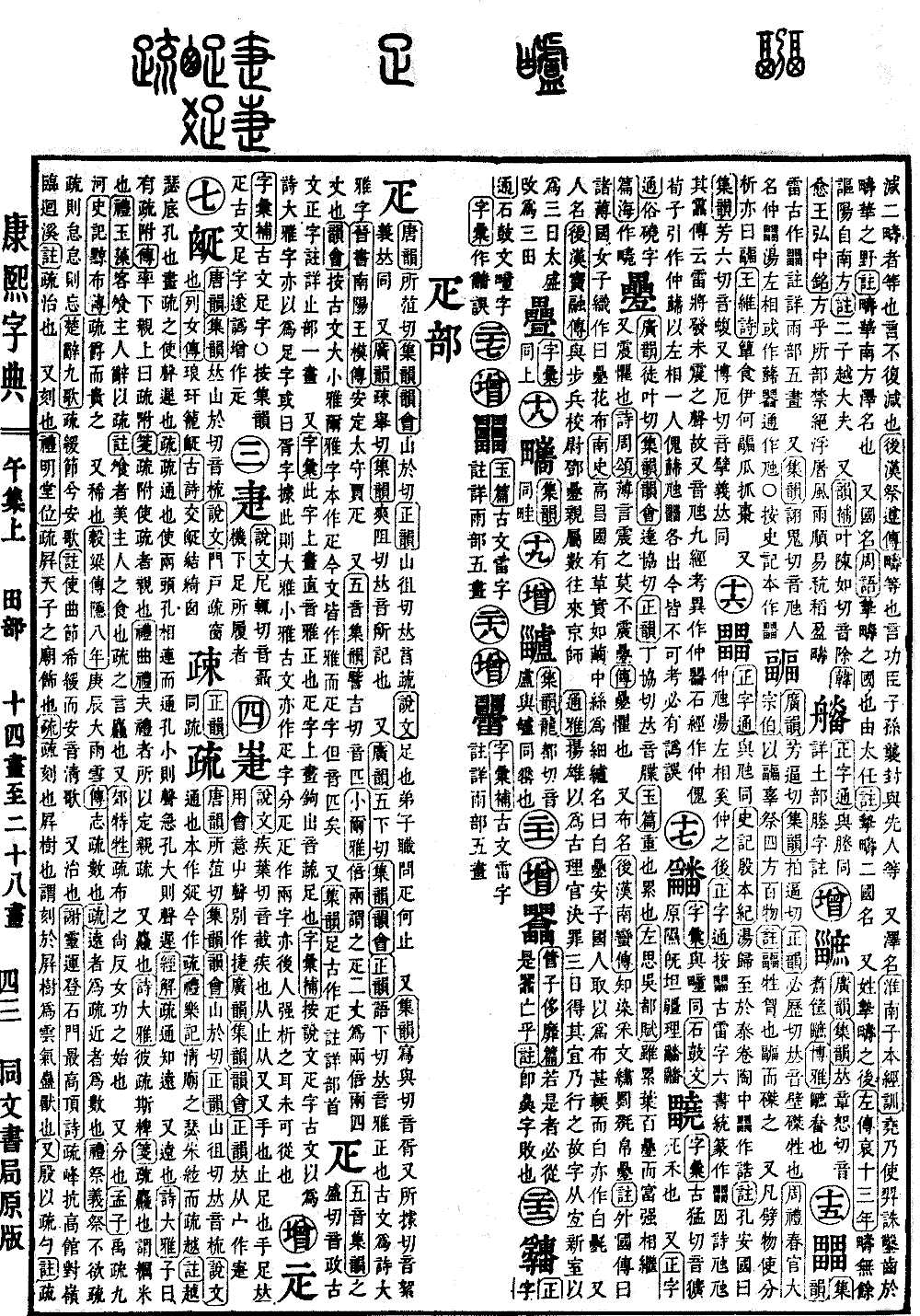
Pronounced shu. According to Tang Rhymes (Tangyun), Collected Rhymes (Jiyun), and Rhyme Meeting (Yunhui), it is pronounced shu. According to Correct Rhymes (Zhengyun), it is also pronounced shu. The sound is the same as the word for vegetable. Explained in Explaining Graphs and Analyzing Characters (Shuowen Jiezi) as a foot. Recorded in Disciplines of the Disciple (Dizhi): "Ask where the feet are placed."
Also, according to Collected Rhymes (Jiyun), it is pronounced xu.
Also, it is pronounced xu. The meaning is the same.
Also, according to Extensive Rhymes (Guangyun) and Collected Rhymes (Jiyun), it is pronounced suo. The meaning is to record.
Also, according to Extensive Rhymes (Guangyun), Collected Rhymes (Jiyun), Rhyme Meeting (Yunhui), and Correct Rhymes (Zhengyun), it is pronounced ya. The meaning is upright. In classical texts, it is used as the character ya in the Greater Ya section of the Classic of Poetry (Shijing). In the Book of Jin (Jinshu), Biography of Prince Mo of Nanyang, there is mention of Jia Pi, the Administrator of Anding.
Also, according to Five Sounds Collected Rhymes (Wuyin Jiyun), it is pronounced pi. According to Lesser Erya (Xiao Erya), it is explained: two times two is called one pi. Two zhang (a unit of measure) is one liang, and double that is four zhang.
Rhyme Meeting (Yunhui) notes: In ancient texts, the character ya in the Greater and Lesser Ya and the Erya was originally written as pi, but now they are all written as ya, and the character pi is only read as pi.
Also, according to Collected Rhymes (Jiyun), the character for foot was written as pi in ancient times. For detailed explanations, see the radical section.