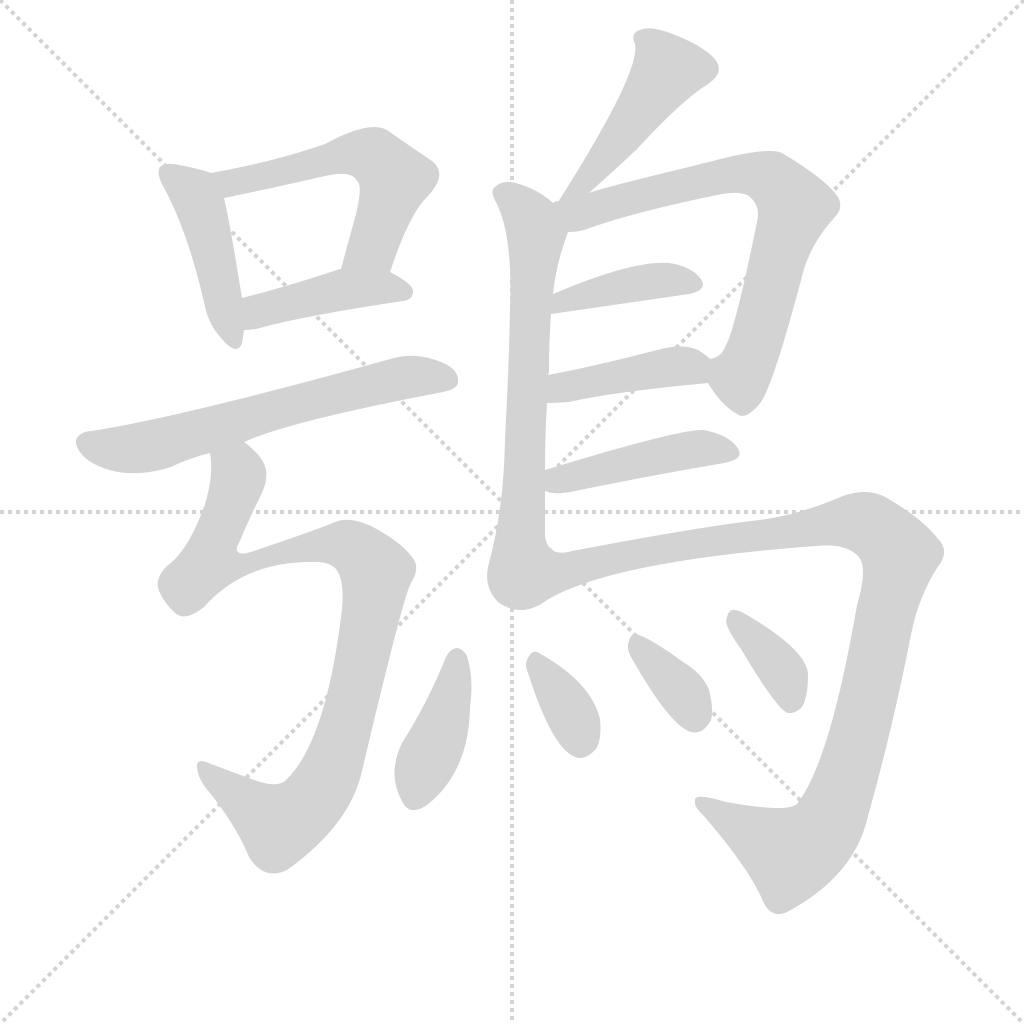
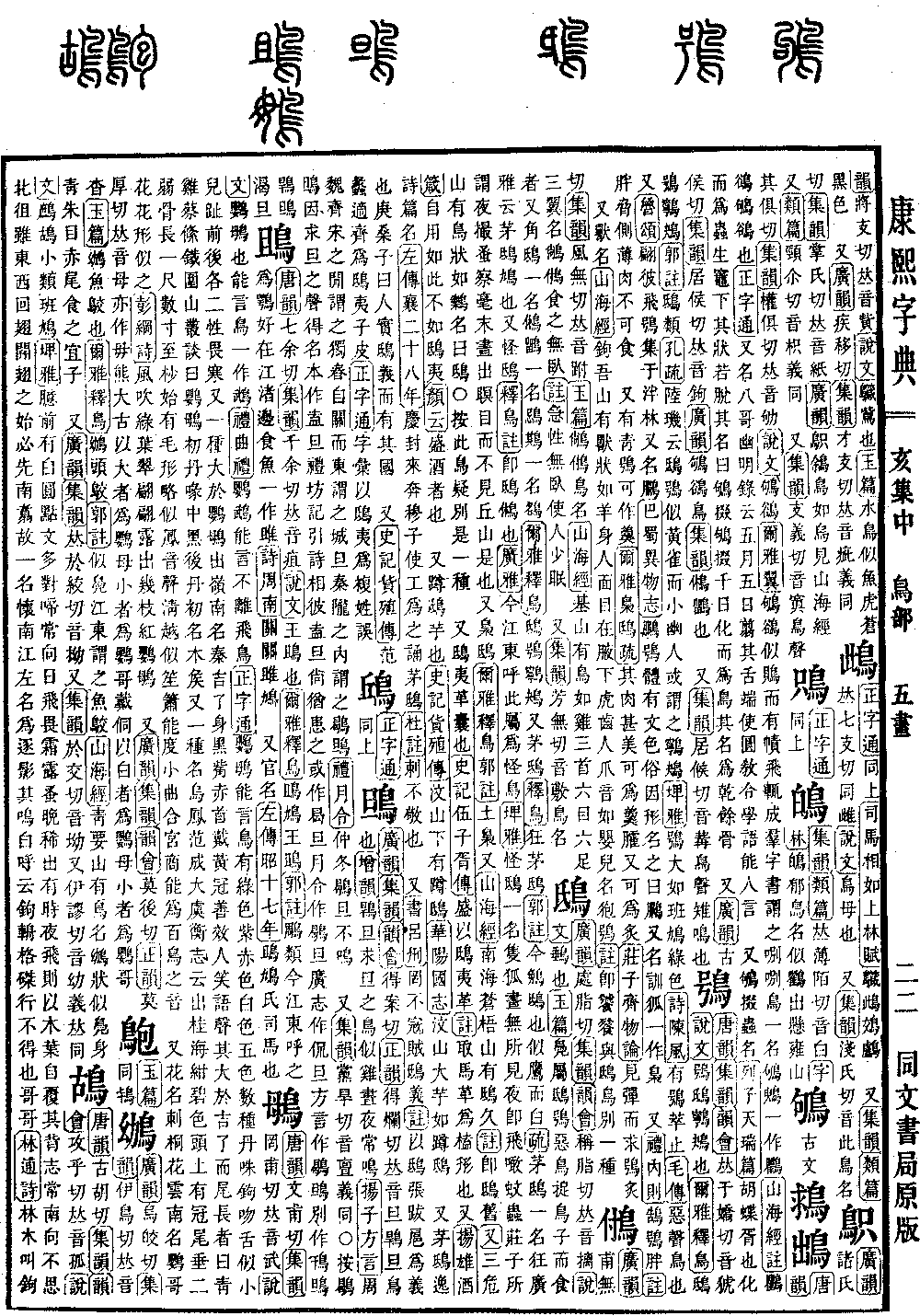
Hai Collection, Middle Volume. Radical: Bird (niǎo). Kangxi strokes: 16. Page 1486, Entry 08.
Tang Dynasty Rhyme Dictionary (Tangyun), Collected Rhymes (Jiyun), and Rhyme Meeting (Yunhui): Pronounced xiao.
Explication of Written Characters (Shuowen): The xiao-chi owl is also known as the ning-jue.
Approaching Elegance (Erya), Explanation of Birds: The chi-xiao owl is the ning-jue. Guo comment: A type of hawk-owl. Kong subcommentary: Lu Ji says: The chi-xiao is like a yellow sparrow but smaller; recluses sometimes call it the ning-jue.
Enlarged Eulogies (Piya): The xiao is as large as a turtle dove and is green in color.
Book of Odes (Shijing), Odes of Chen: The owl gathers there. Mao commentary: A bird with an ominous cry. Also, Odes of Lu: Flying is the owl, gathering in the forest of the university pond.
Also known as the fu owl. Records of Strange Objects in Ba and Shu: The fu-xiao has patterns and colors on its body, and people name it fu based on its appearance. Also known as the xun-hu. One variant form is written as xiao (xīāo).
Book of Rites (Liji), Inner Morality: Swan and owl meat along the ribs. Commentary: The meat on the side of the ribs is thin and should not be eaten. There is also the green owl, which can be made into soup.
Approaching Elegance (Erya), Commentary on the Owl and Kite: Its meat is very delicious; it can be made into soups and thick stews, or it can be roasted.
Zhuangzi, Discussion on Making All Things Equal: To see a slingshot and wish for roasted owl.
Also the name of a beast. Classic of Mountains and Seas (Shanhaijing): On Gouwu Mountain there is a beast shaped like a sheep with a human face, with eyes under its armpits, tiger teeth, and human claws; its voice is like an infant. It is named pao-xiao. Commentary: It is the taotie. It is a different species from the chi bird.