Wu Collection, Upper Volume
Radical: Jade (yù)
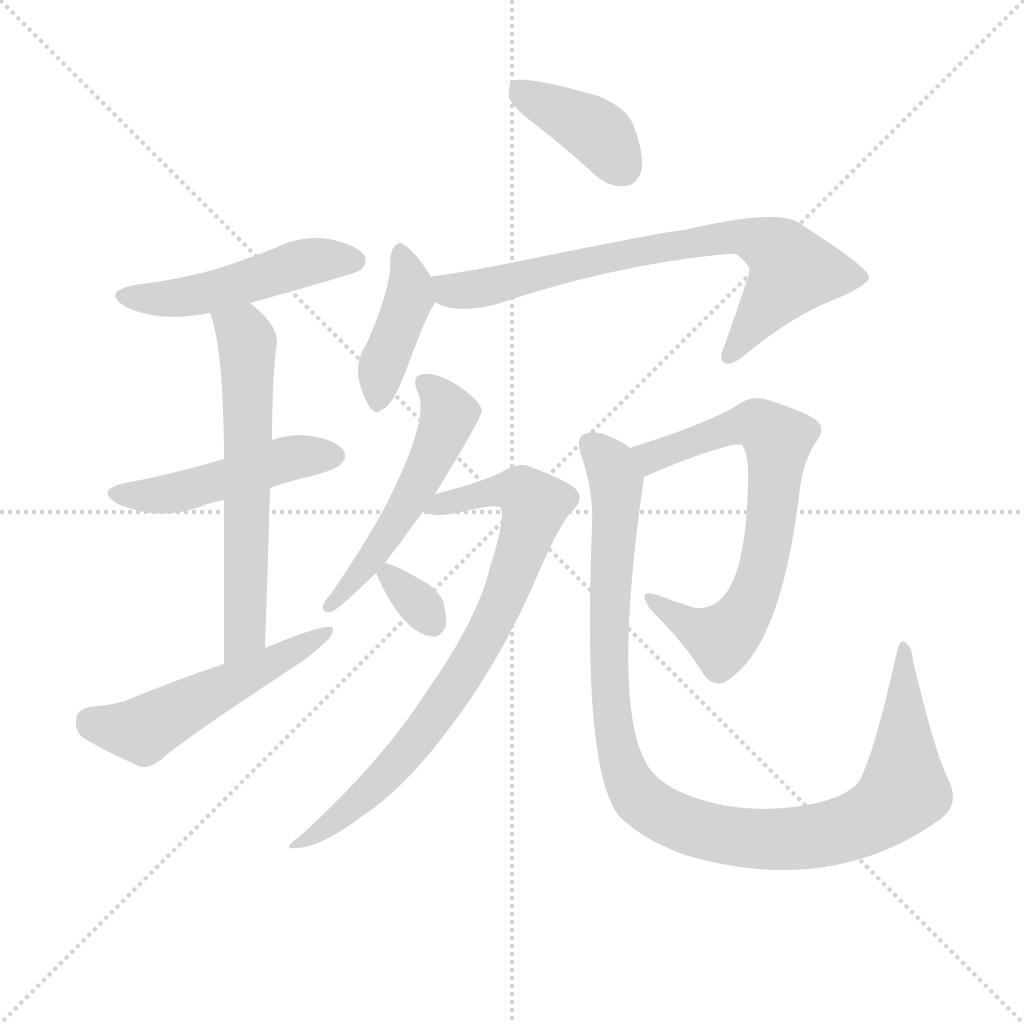
Wan
Kangxi Strokes: 13
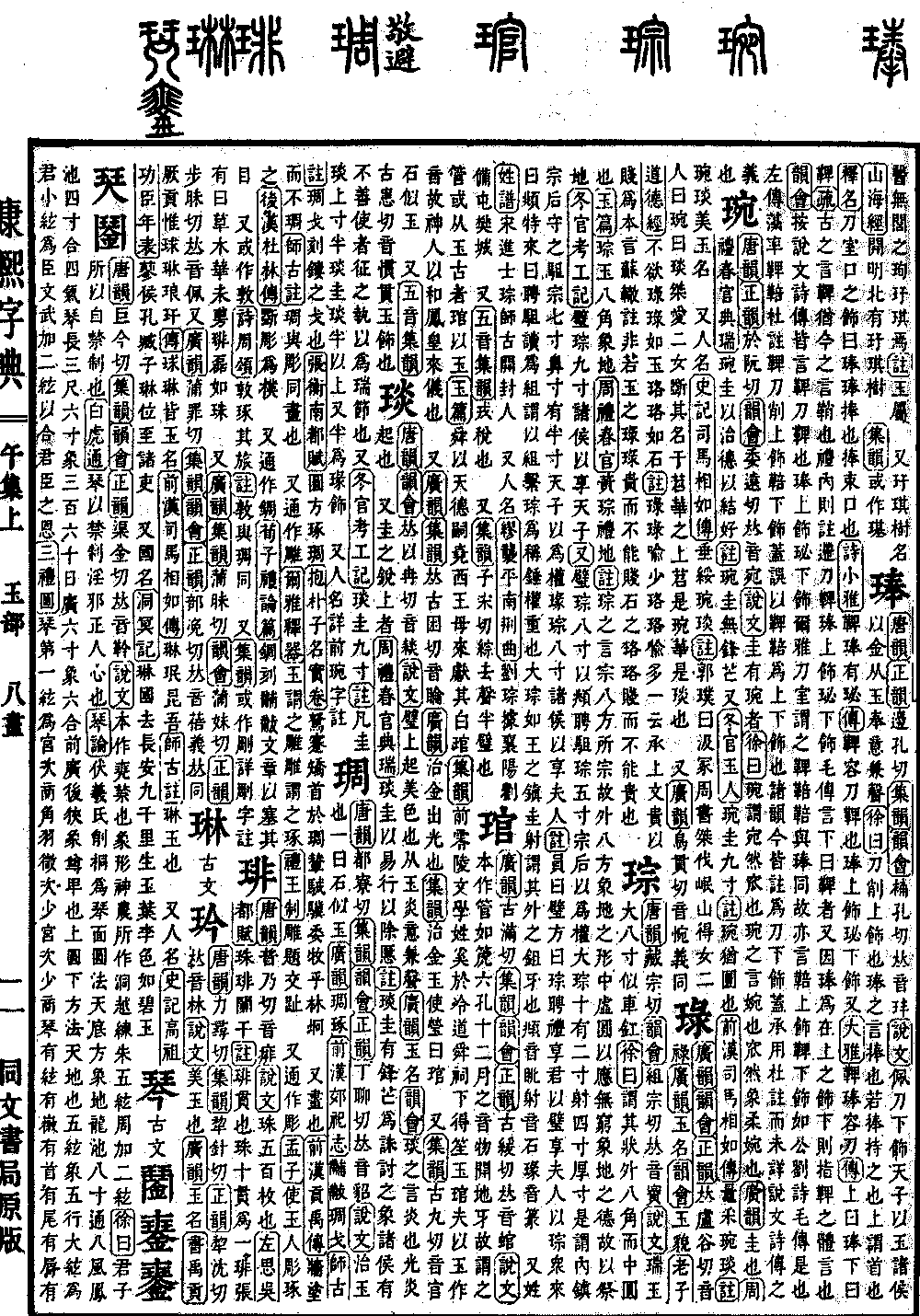
Page 735, Entry 02
According to Tang Rhymes (Tangyun) and Correct Rhymes (Zhengyun), pronounced wan (rising tone); according to Rhyme Collection (Yunhui), pronounced wan (rising tone).
As stated in Explaining Graphs and Analyzing Characters (Shuowen): A jade tablet (gui) that has a carved shape.
Xu states: Wan means to be curved and concave. The word wan is related to the word gentle; it describes a curved shape that resembles something soft and gentle.
According to Broad Rhymes (Guangyun): A jade tablet.
As stated in Rites of Zhou (Zhouli), Spring Officials, Statutes of Insignia: The wan jade tablet is used to govern virtue and to cement friendly relations.
Commentary: The wan jade tablet has no sharp points or edges.
Furthermore, in Winter Officials, The Jade Artisan: The wan jade tablet is nine inches.
Commentary: Wan means round.
As stated in History of the Former Han (Qianhan Shu), Biography of Sima Xiangru: Morning splendor of wan and yan jades.
Commentary: Wan and yan are names of beautiful jade.
Also a personal name.
As stated in Records of the Grand Historian (Shiji), Biography of Sima Xiangru: Hanging ribbons of wan and yan jades.
Commentary: Guo Pu says: In the Zhou Documents (Zhou Shu) found in the Jizhong tomb, it is recorded that Jie of Xia attacked Mount Min and obtained two women named Wan and Yan. Jie loved the two women and engraved their names on the flowering rush plants; the flowering rush was called Wan, and the blossom was called Yan.
Also, according to Broad Rhymes (Guangyun), pronounced wan (falling tone). The meaning is the same.