Chou Collection, Lower Volume
Radical: Woman (nǚ)
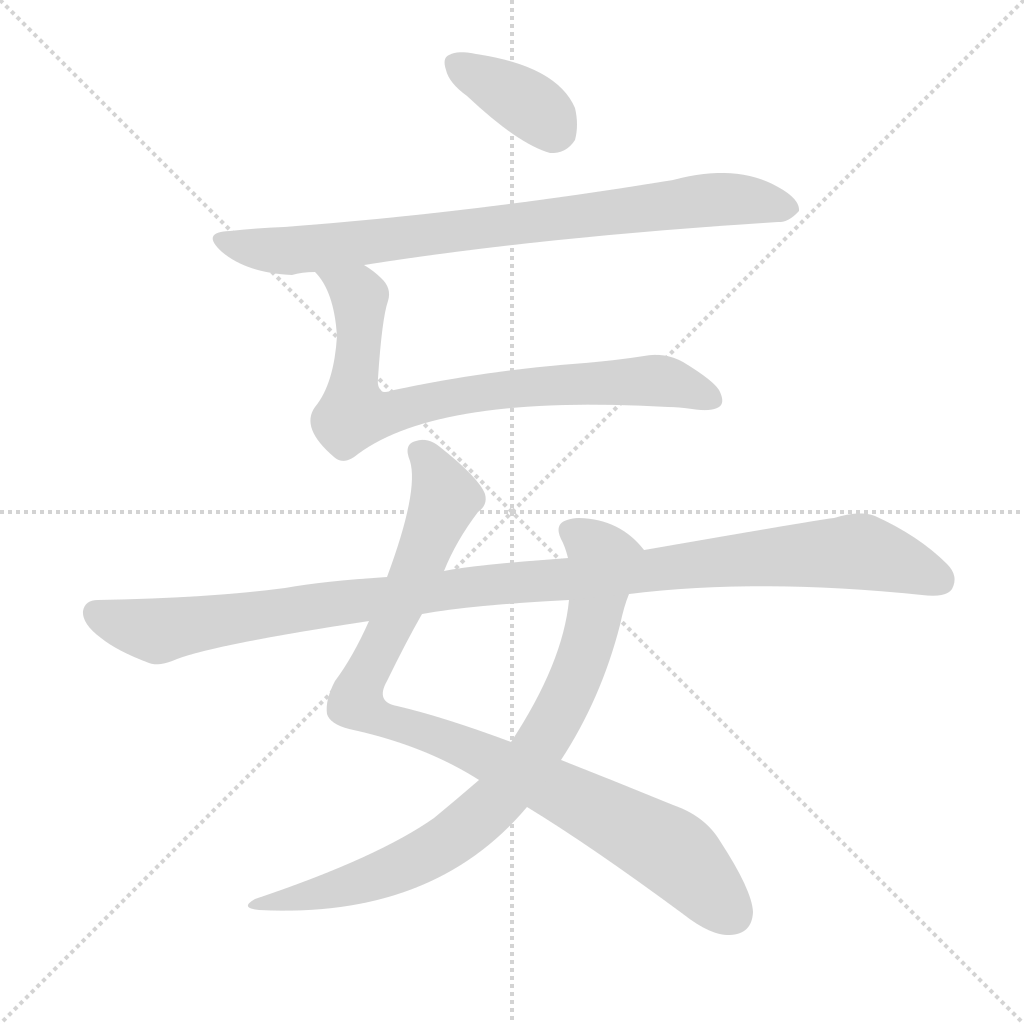
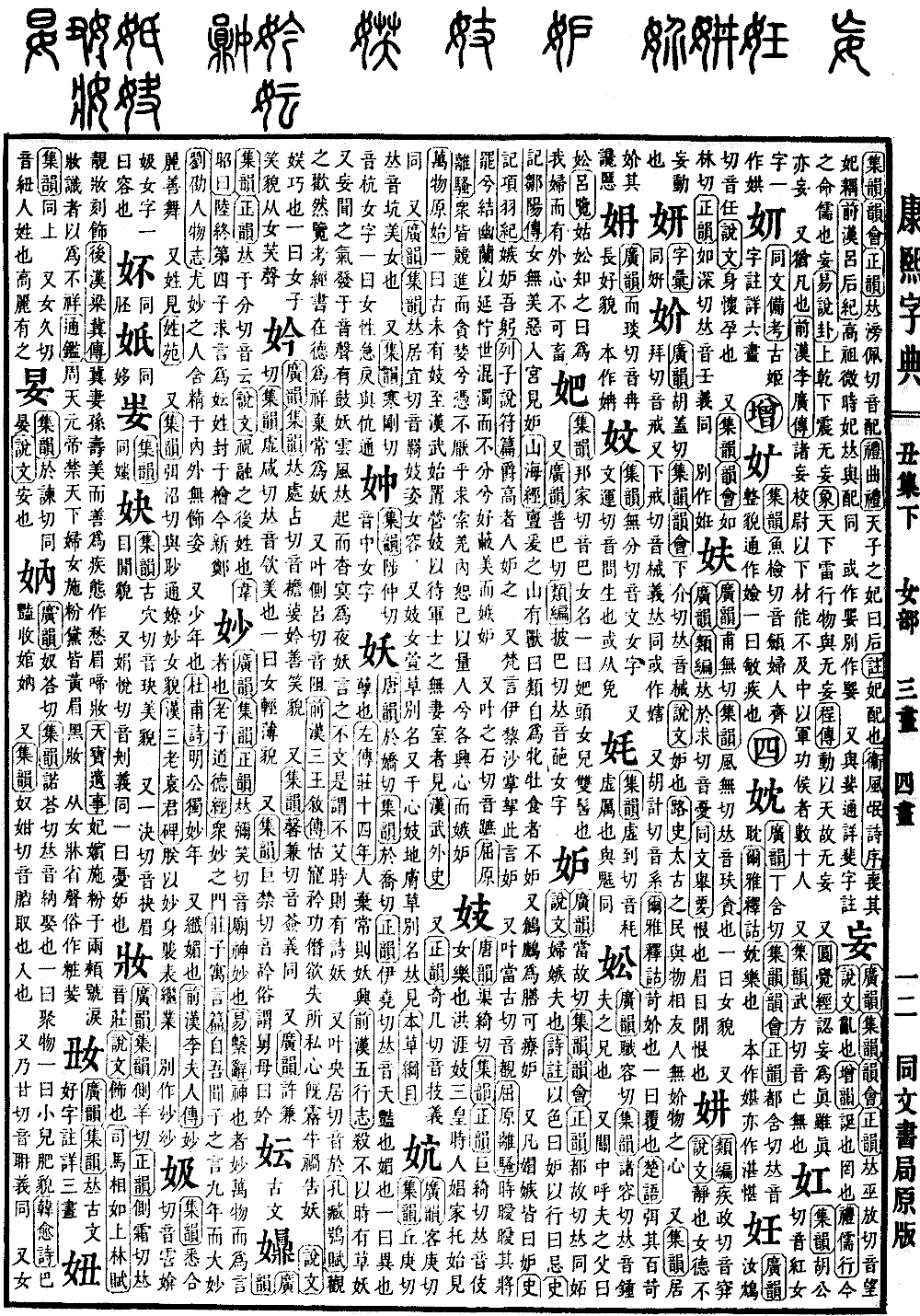
Wang; Kangxi strokes: 6; Page 256, Entry 01
Broad Rhymes (Guangyun), Collected Rhymes (Jiyun), Rhyme Meetings (Yunhui), and Orthodox Rhymes (Zhengyun) state it is pronounced wang.
Analytical Dictionary of Characters (Shuowen) defines it as disorder.
Supplemented Rhymes (Zengyun) defines it as falsehood or deceit.
Book of Rites (Liji), Confucian Conduct: The scholars of today are reckless.
Book of Changes (Yijing), Hexagram Names: Above is Heaven (qian), below is Thunder (zhen); this is the Hexagram of Innocence (wuwang). The Image states: Thunder moves across the heavens, and all things are thus without falsehood. Cheng's Commentary states: To act in accordance with Heaven is to be without falsehood.
Yuanjue Scripture: To mistake the false for the true means that even the true becomes false.
Also signifies ordinary. Former Han History (Qianhan Shu), Biography of Li Guang: Among the various ordinary colonels and below, those whose abilities were below average but who were ennobled due to military merit numbered several tens.
Collected Rhymes (Jiyun) also states it is pronounced wang. It means none.
Verification: In the Book of Changes (Yijing), section on Explaining the Hexagrams (Shuogua), it cites the Hexagram of Innocence. Since the cited text does not appear in the section on Explaining the Hexagrams, the citation has been corrected to refer to the Hexagram Names.