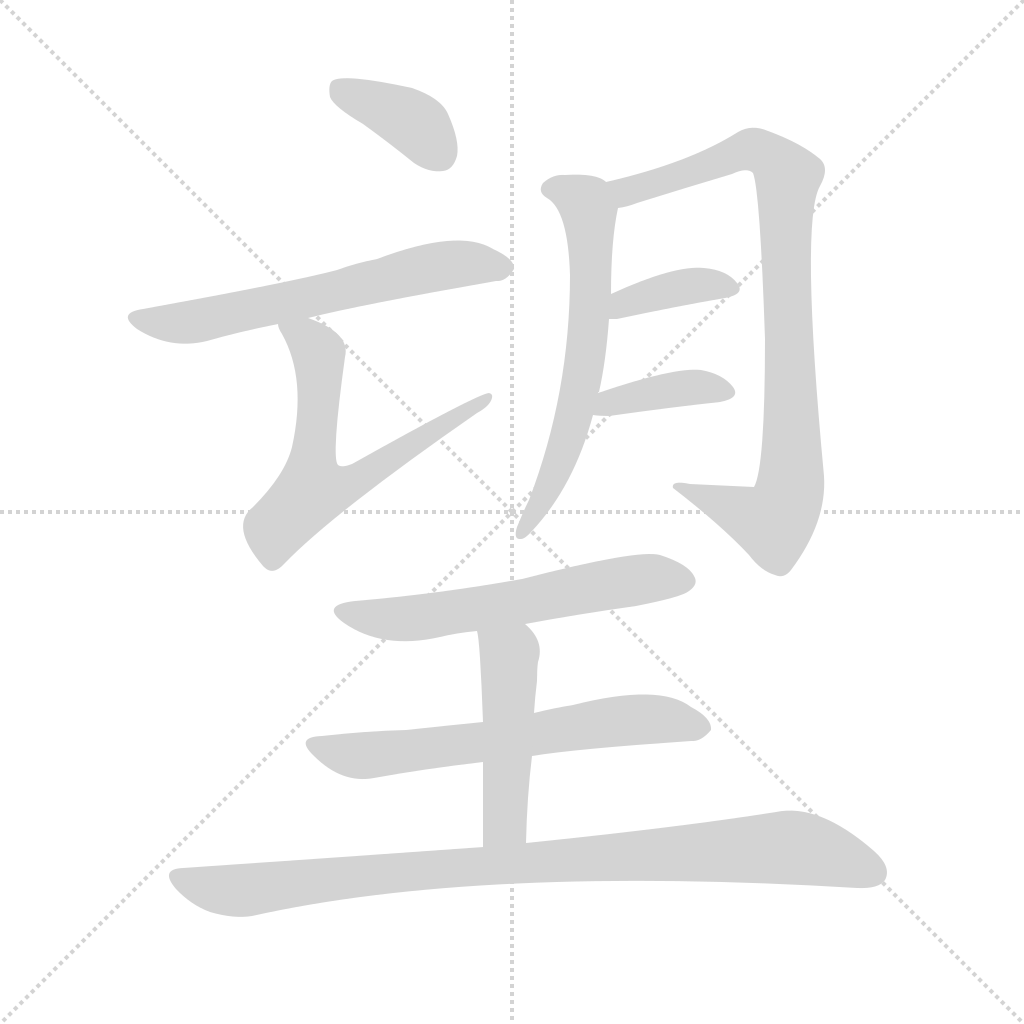
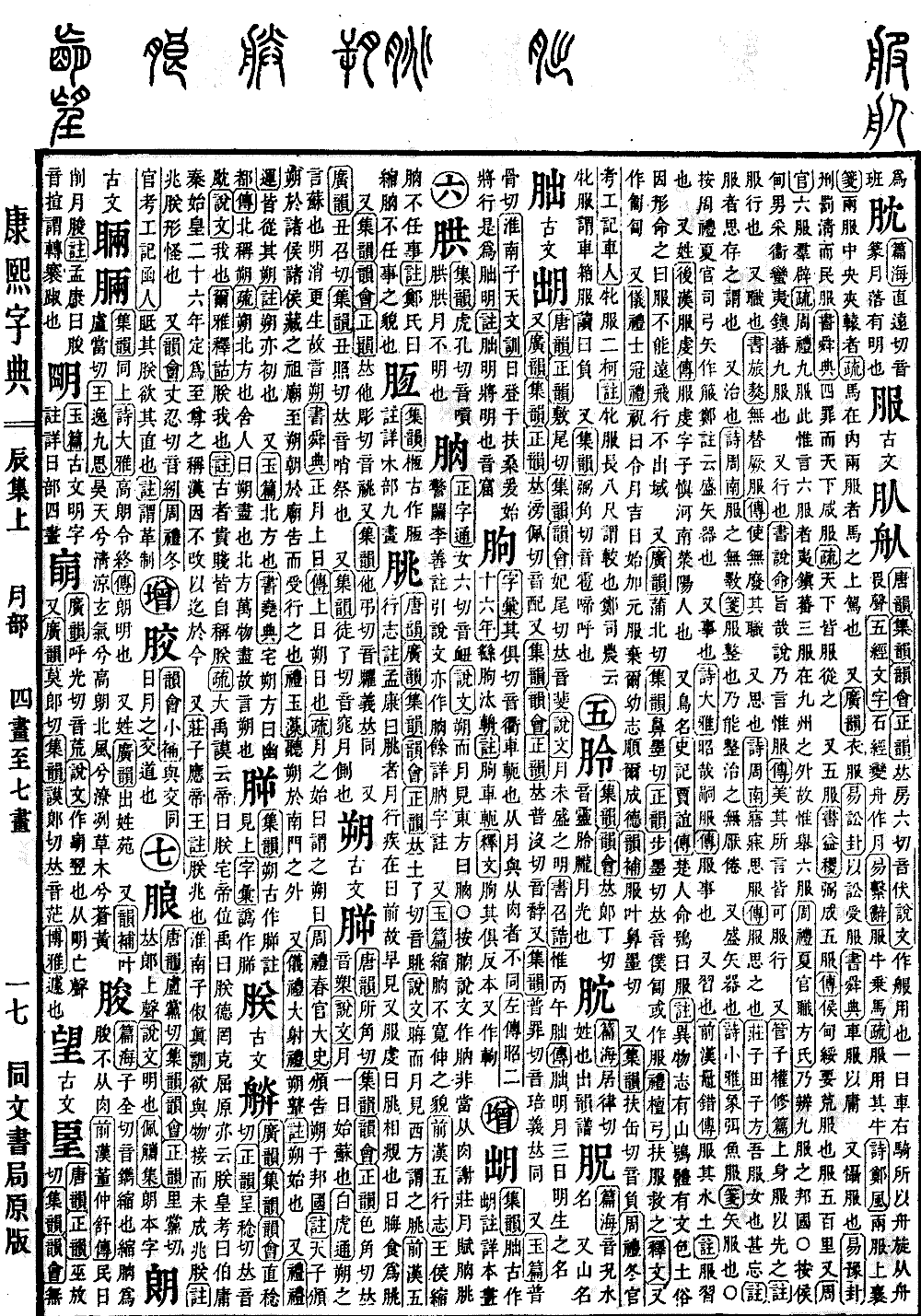
Chen Collection, Upper Volume
Radical: Moon (yuè)
Kangxi Strokes: 11
Page 505, Entry 29
Ancient script. Pronounced wang (falling tone).
Shuowen Jiezi says: A person who has fled and is living abroad; to look forward to their return. The character is formed with the radical for vanish (wáng) and the abbreviated sound component for full moon (wàng).
Shiming says: To look (wàng) is to be in a daze (wǎng); when looking into the distance, one appears to be in a daze.
Book of Odes (Shijing): Looking into the distance but unable to see.
Also, Book of Odes (Shijing): Fine reputation and prestige.
Commentary: One who is looked up to by the masses.
Also, Mencius (Mengzi): To leave out of shame.
Zhao Qi commentary: The appearance of feeling ashamed.
Zhu Xi commentary: The appearance of leaving without looking back.
Also, Guangya: To peer or spy.
Also, Yunhui: To be respected and admired by others. It also means to have expectations or to cast blame. It also means to have resentment or dissatisfaction.
It is also the name of a type of sacrificial rite.
Book of Documents (Shangshu): To perform remote sacrifices to mountains and rivers.
Commentary: All are sacrifices performed at the same time known as the remote sacrifice (wàng jì).
Gongyang Zhuan: What is the remote sacrifice? It is the sacrifice performed by looking toward the object of worship.
Also, pronounced wang (level tone). The meaning is the same.
Book of Odes (Shijing): That which is looked up to by the multitude.
Explication: Read as wang (level tone) for the sake of the rhyme.
Also, Shiming: The name for when the moon is full. Large months have this on the sixteenth day, small months on the fifteenth day. The sun is in the east and the moon is in the west, facing each other from afar, which is the time of looking at one another.
Book of Changes (Yijing): The moon is nearly full.
Zuo Zhuan: The moon does not emit light itself; it relies on the illumination of the sun to produce light. When half is illuminated it is the crescent moon, when fully illuminated it becomes the full moon (wàng yuè).
Yunhui: The character form originally included the component for heaven (rén), but it was mistakenly written with the component for king (wáng).
Shuowen Jiezi: The character for the sun and moon looking at each other was written as full moon (wàng), and the character for gazing was written as look (wàng). Nowadays both meanings are covered by the character for look (wàng), and the original meaning intended by the ancients has been lost.