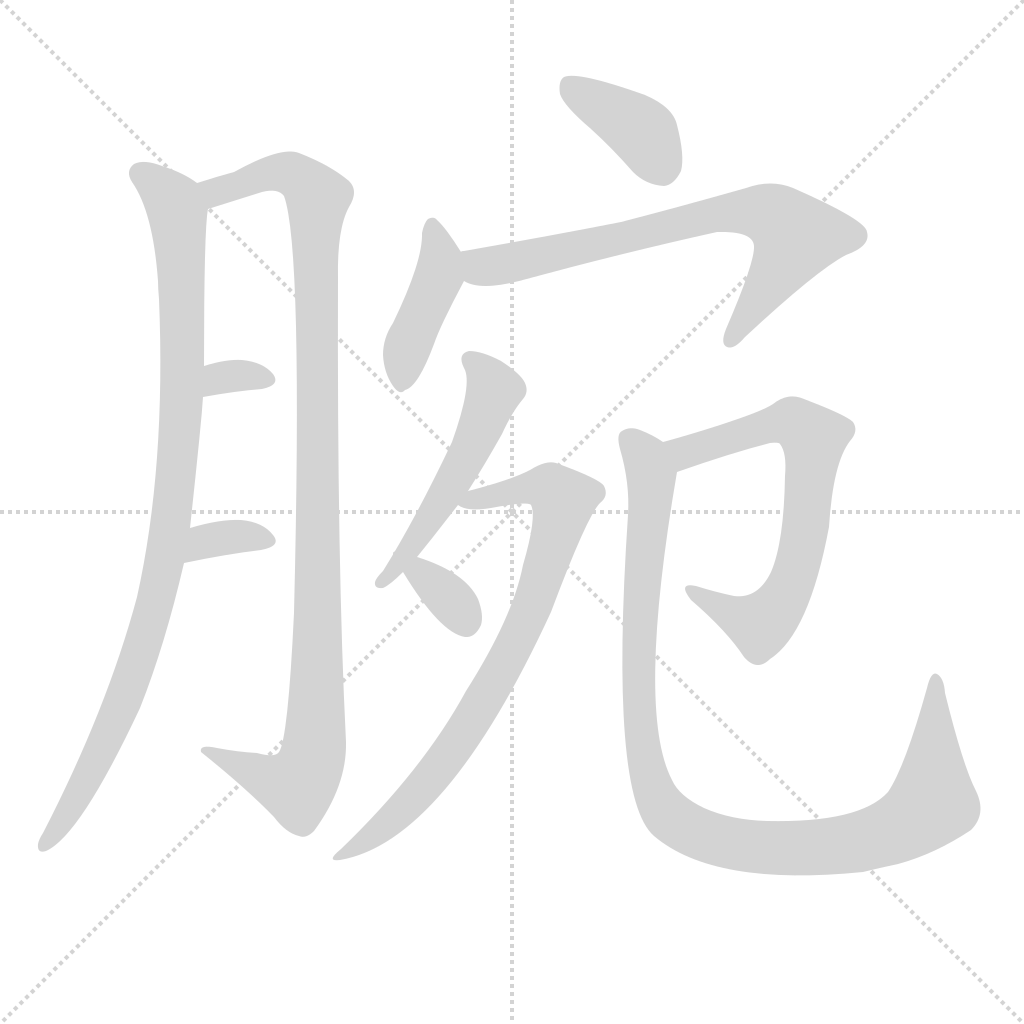
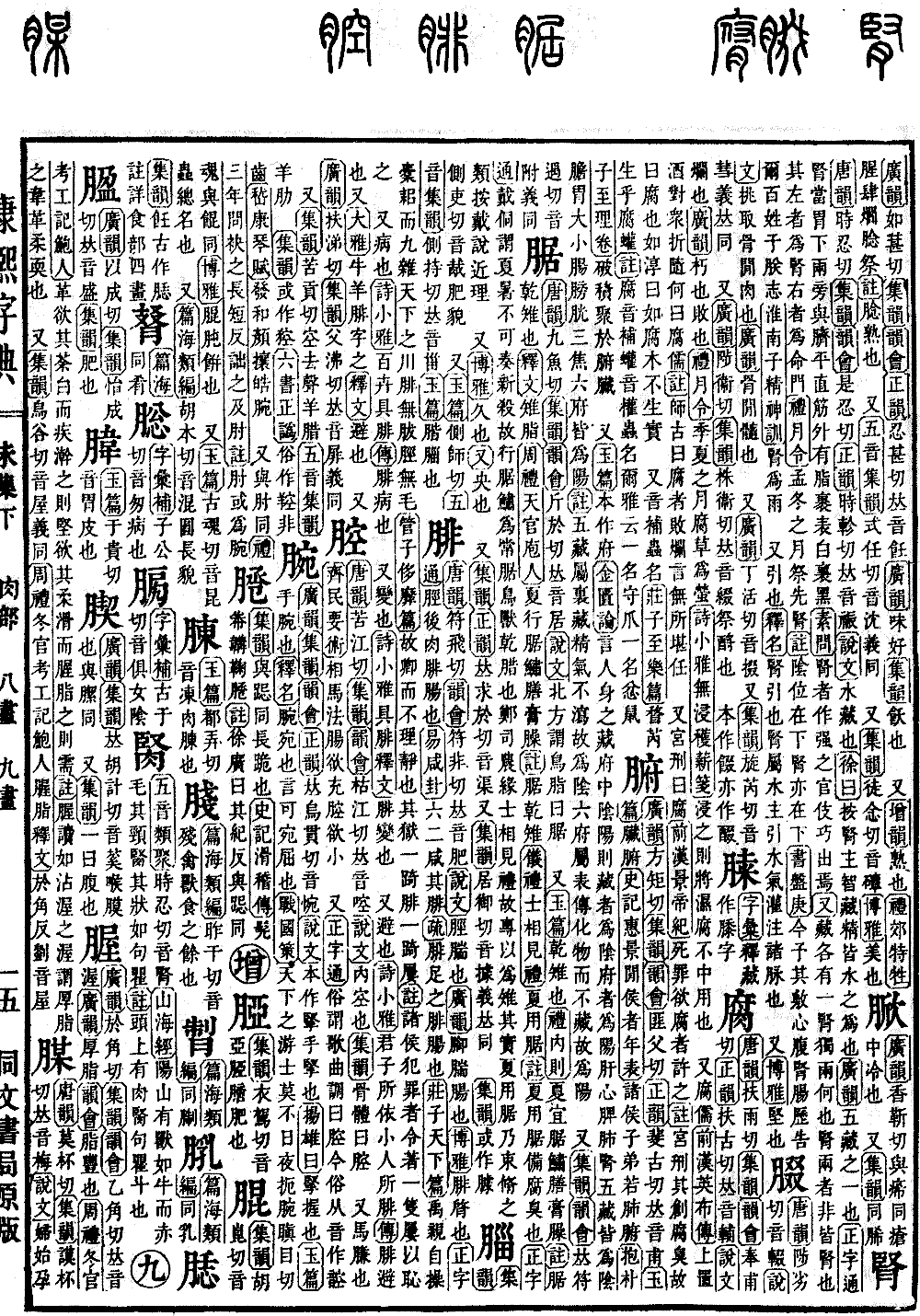
Wei Collection, Lower Volume
Radical: Meat (ròu)
Kangxi stroke count: 14
Page 987, Entry 11
Broad Rhymes (Guangyun), Collected Rhymes (Jiyun), Rhyme Compilation (Yunhui), Correct Rhymes (Zhengyun): Pronounced wan (falling tone).
Explanation of Graphs (Shuowen): Originally written as the character pronounced jian. It refers to the connection of the hand. Yang Xiong said: It means to grasp.
Jade Chapters (Yupian): It is the wrist.
Explanation of Names (Shiming): The wrist (wan) is flexibility (wan). This means it can be bent or turned.
Strategies of the Warring States (Zhanguoce): There is no traveling scholar under heaven who does not, day and night, clutch their wrist, glare with wide eyes, and gnash their teeth.
Xi Kang, Rhapsody on the Zither (Qinfu): Displaying a gentle countenance, baring white wrists.
Also written in a variant form (wan). Records of the Grand Historian (Shiji), Biography of Assassins: With one shoulder bared, clutching the wrist and advancing. The commentary states: Wan is the ancient form of the character for wrist.
Textual Research: The original text contained a note stating it is also interchangeable with elbow. However, in the Book of Rites (Liji), section Three-Year Mourning, the commentary notes that the sleeve length is folded back to the elbow, and some editions use the word for wrist. I note that the two sentences regarding sleeve length belong to the section on Deep Robes, and the note about the elbow or wrist refers to textual discrepancies between editions, not that the wrist and elbow are the same. The elbow is the joint of the arm, while the wrist is the joint behind the hand; their pronunciations and meanings are entirely different. I have revised the note about the elbow to indicate it is interchangeable with the variant form of wan. The eighteen characters beginning with the Book of Rites citation have been replaced with the reference from the Biography of Assassins in the Records of the Grand Historian, noting that wan is the ancient form of the character for wrist.