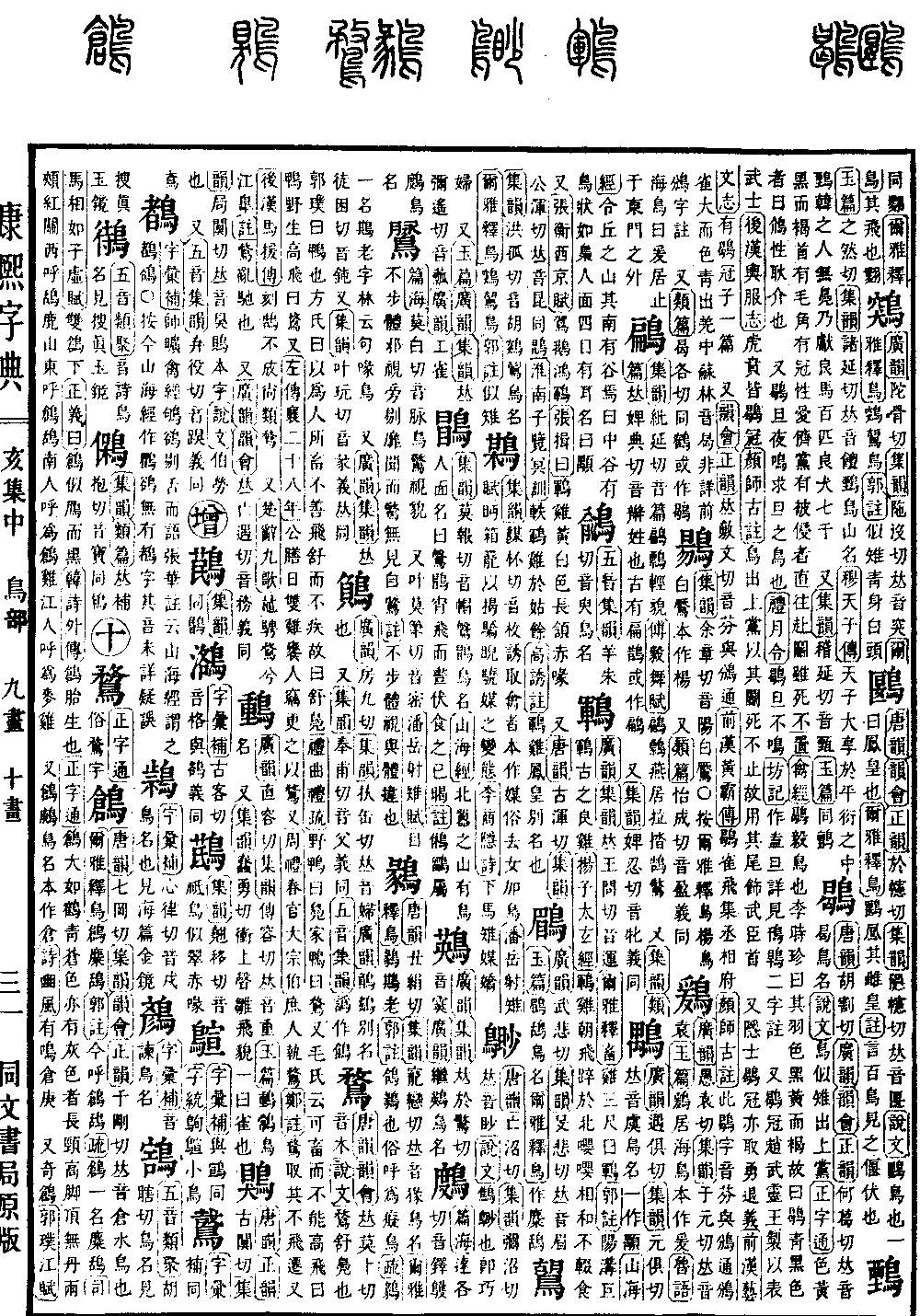
Hai Collection, Lower Volume
Radical: Bird (niǎo)
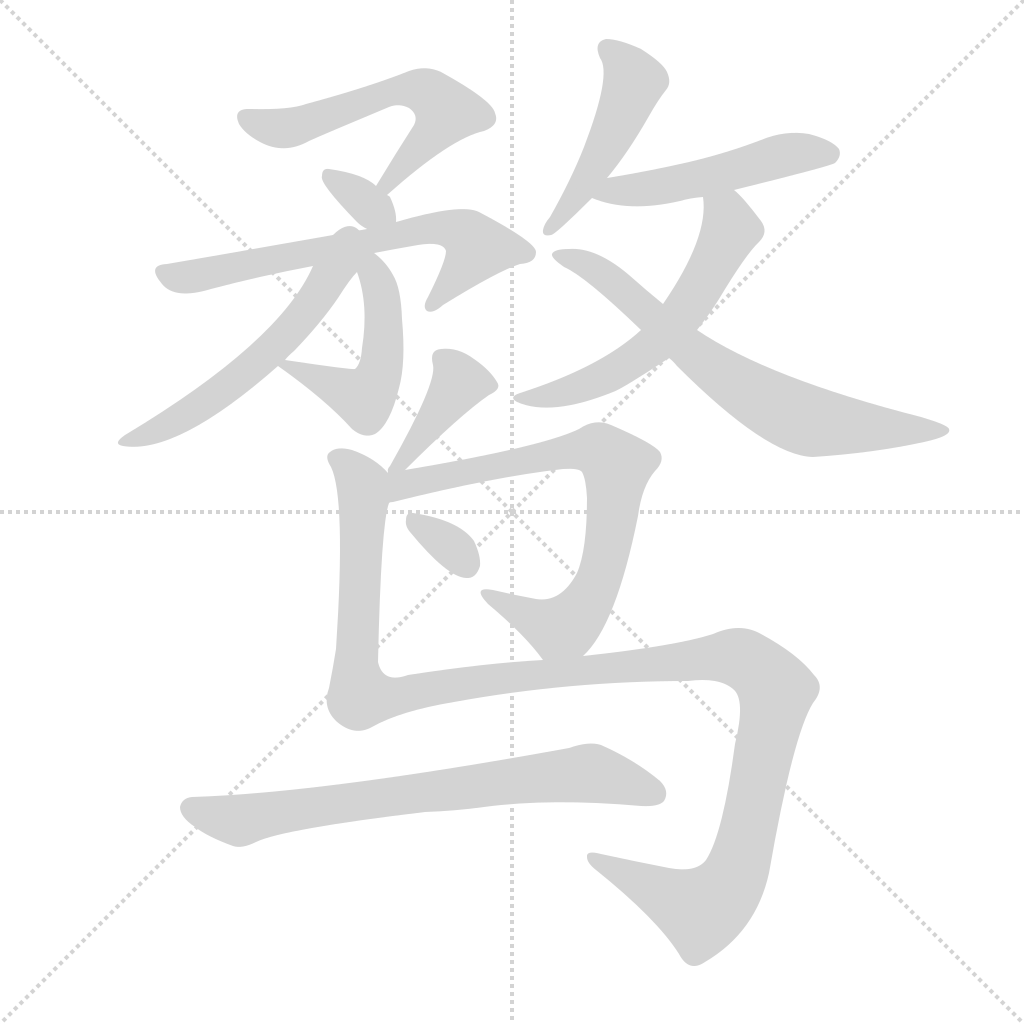
Wu (20 strokes)
Page 1495, Entry 02
According to Tang Rhymes (Tangyun) and Rhyme Collection (Yunhui), the pronunciation is mu. According to Explaining Graphs and Analyzing Characters (Shuowen), the term denotes a tame duck. Guo Pu states: It is a duck. Mr. Fang states: Because it is raised by humans, does not fly well, and moves in a relaxed manner without speed, it is called a relaxed duck. According to the Commentary on the Book of Rites (Liji), specifically the section on Rules of Deportment (Quli): A wild duck is called a fu, while a domestic duck is called a wu. Furthermore, Mr. Mao states: A bird that can be raised but cannot fly high is called a duck, while one that is wild and flies high is called a wu. Also, in the Zuo Commentary (Zuo Zhuan), twenty-eighth year of Duke Xiang: The prince was served a pair of chickens daily, but the kitchen staff surreptitiously replaced them with a duck. Also, in the Rites of Zhou (Zhouli), section on the Spring Officials, Great Minister of Rites: Commoners hold a duck. Zheng commentary: A duck is chosen for its nature of not migrating by flight. Also, in the Biography of Ma Yuan from the History of the Later Han (Hou Hanshu): Even if one fails to carve a swan, it still resembles a duck. Also, in the Nine Songs of the Songs of Chu (Chuci): Galloping in confusion along the riverbanks. Commentary: This refers to running in a chaotic manner. Also, according to Broad Rhymes (Guangyun) and Rhyme Collection (Yunhui), the pronunciation is wu. The meaning is the same.