Hai Collection, Upper Volume
Radical: Horse (mǎ)
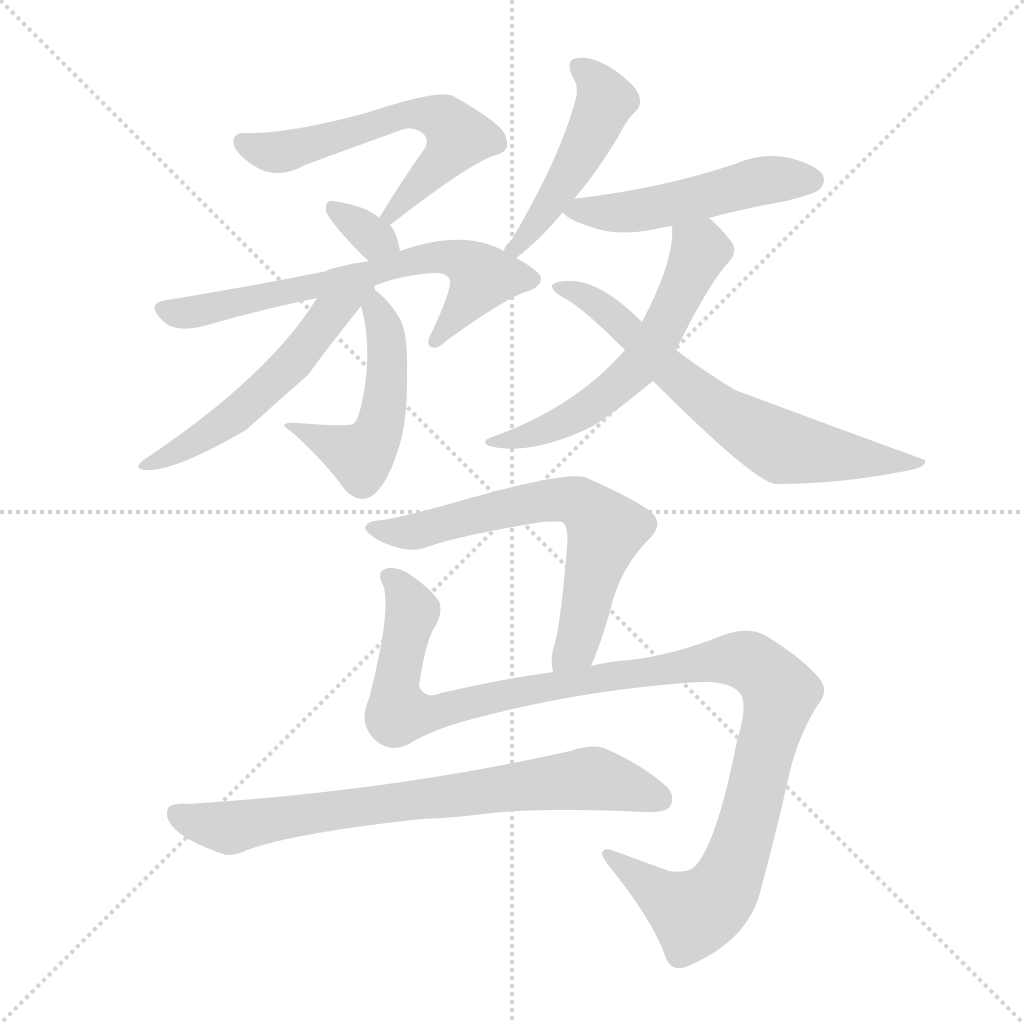
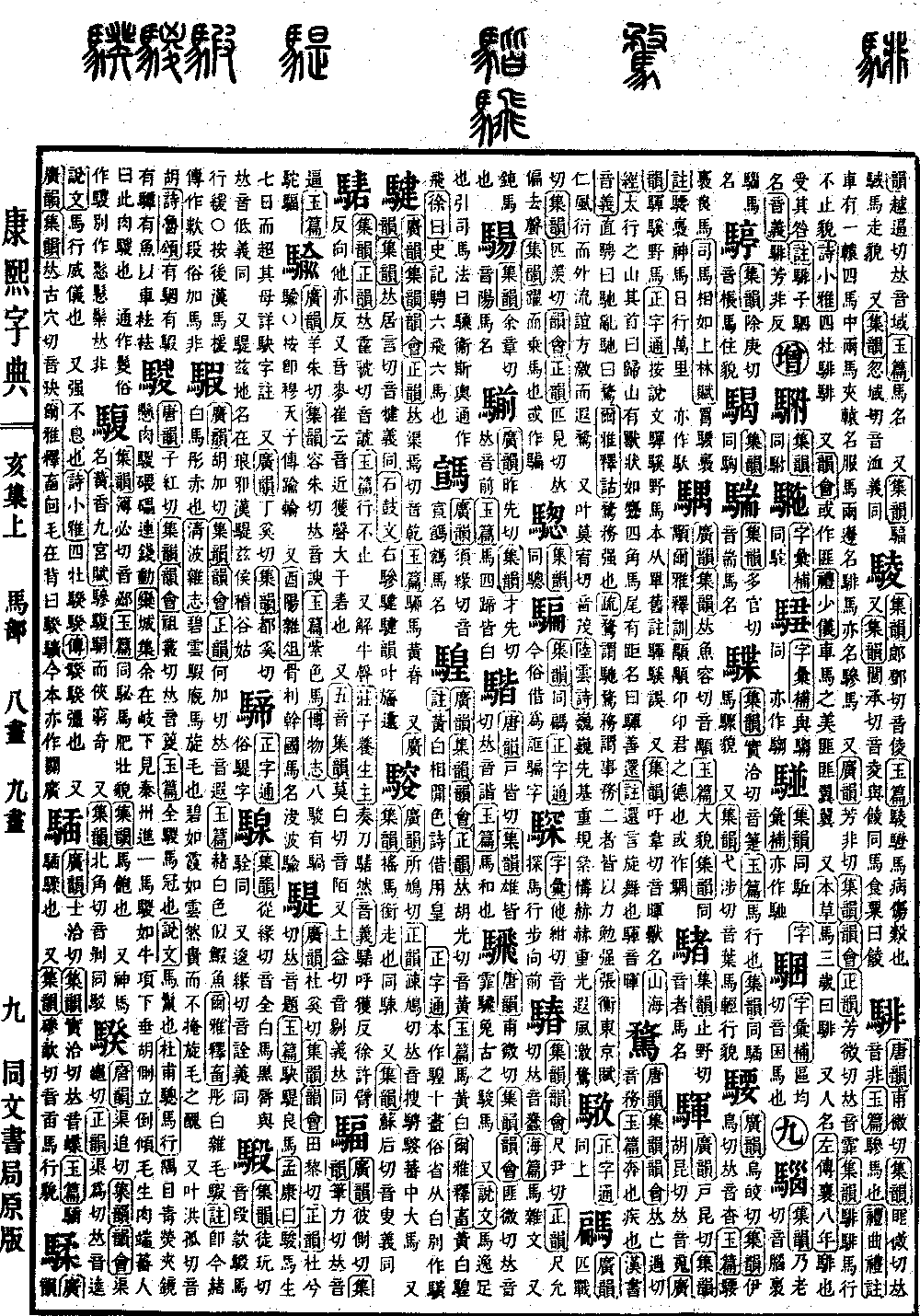
Entry: 騖
Kangxi stroke count: 19
Page 1441, Entry 02
Tang Rhymes (Tangyun), Collected Rhymes (Jiyun), and Rhyme Compendium (Yunhui): Pronounced wu.
Jade Chapter (Yupian): To gallop, to move rapidly.
Book of Han (Hanshu), Sound and Meaning (Yinyi): Moving straight forward is called chi; moving in a disorderly manner is called wu.
Approaching Elegance (Erya), Explaining Ancient Terms (Shigu): Wu means to strive with strength.
Commentary (Shu): Wu refers to galloping, while the other term refers to affairs; both imply exerting force.
Zhang Heng, Ode to the Eastern Capital (Dongjing Fu): The wind of benevolence spreads and flows outward, righteousness rushes and spreads far.
Also pronounced mao (falling tone).
Lu Yun, Poem: The majestic ancestral foundation, double patterns accumulated and constructed. Glorious and bright heavy light, the distant wind rushes and spreads.