Wu Collection, Lower Volume
Radical: Grain (hé)
Kangxi Strokes: 7
Page 849, Entry 08
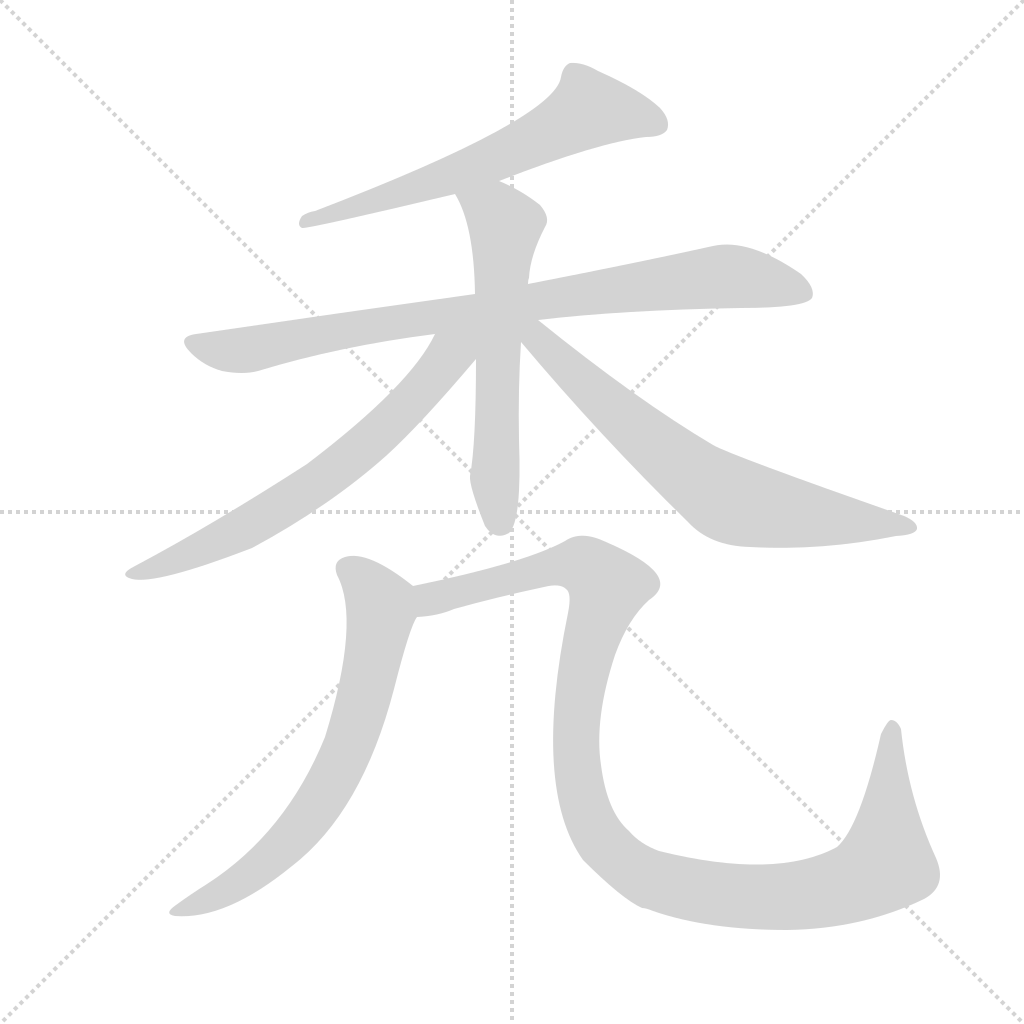
Pronounced tu (falling tone).
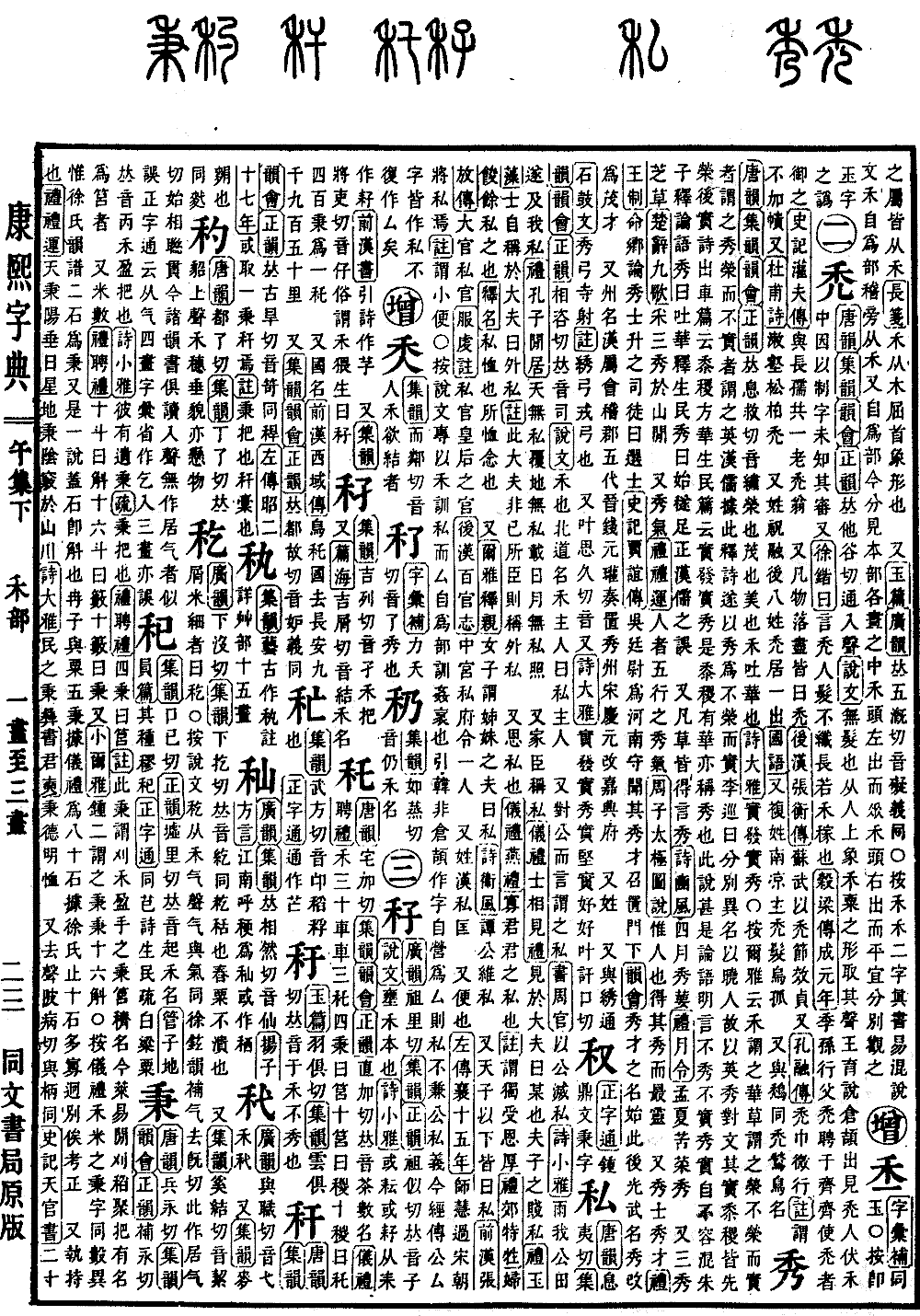
Shuowen Jiezi (Explanation of Simple and Compound Characters): Lack of hair. The character is formed from the person radical, with the top resembling the shape of a grain ear, which serves as the phonetic indicator. Wang Yu stated: When Cangjie was creating characters, he saw a bald person lying among grain sprouts and therefore created this character, though it is uncertain if this is accurate.
Xu Kai stated: This refers to a bald person whose hair is not long or fine, appearing like grain sprouts.
Gongyang Commentary (Guliang Zhuan), First Year of Duke Cheng: Jisun Xingfu was bald; when he was sent on a mission to the state of Qi, Qi sent a bald person to drive his carriage.
Records of the Grand Historian (Shiji), Biography of Guan Fu: Shared an old bald man with Changru.
Also, generally, when things have lost all their foliage or covering, it is called bald.
Book of the Later Han (Houhanshu), Biography of Zhang Heng: Su Wu used a bare, bald staff to demonstrate his loyalty.
Kong Rong Biography: Wore a bald turban while traveling incognito. Note: This means wearing no headcloth.
Du Fu Poetry: The pines and cypresses washing down the mountain valley are all bare.
Also a surname. The descendants of Zhurong had eight surnames, and Tu was one of them. Derived from Discourses of the States (Guoyu).
Also a compound surname. The ruler of Southern Liang, Tufa Wugu.
Also identical to the character meaning a type of bird. Tuqiu is the name of a bird.