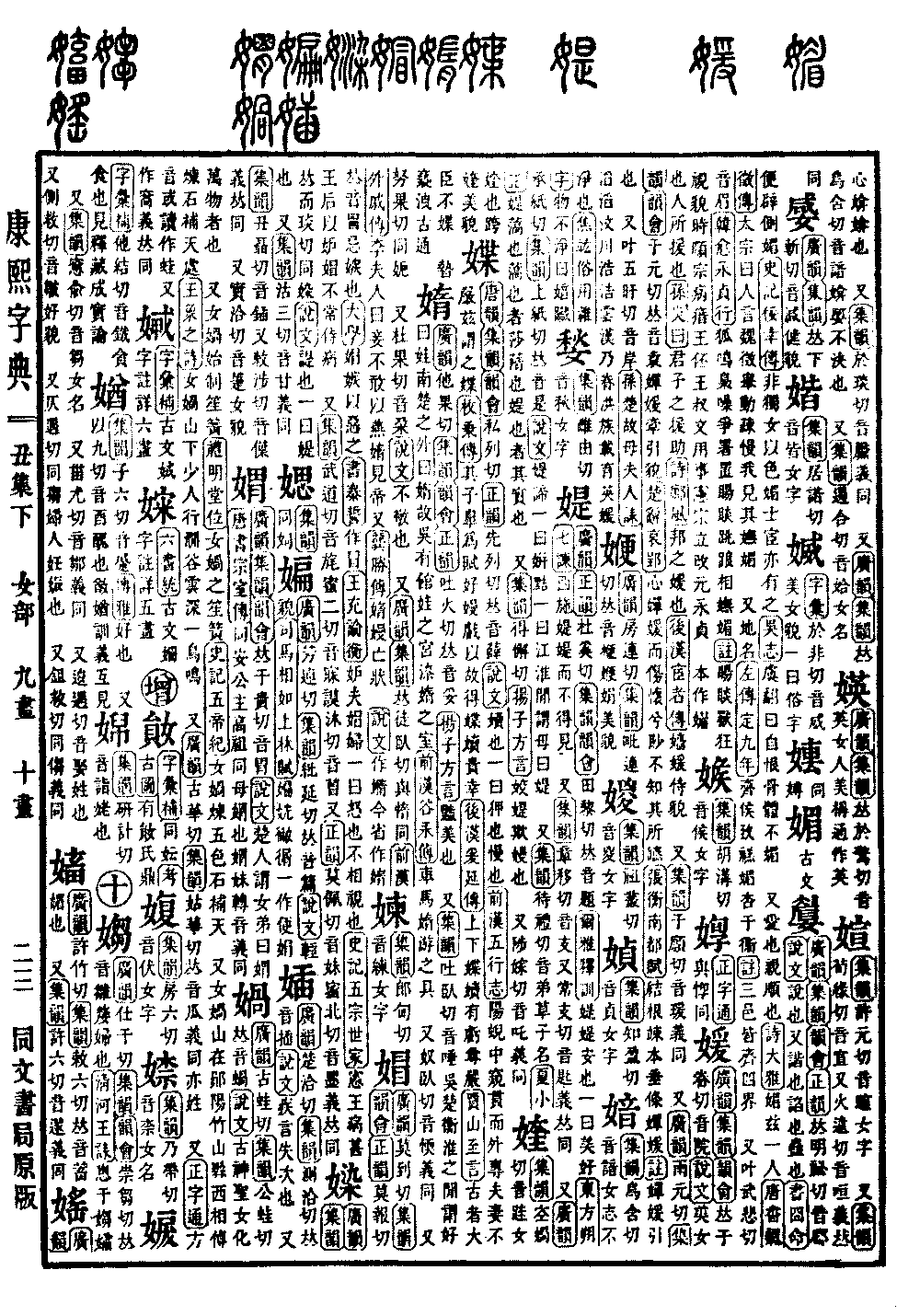
Chou Collection, Lower Volume
Radical: Woman (nǚ)
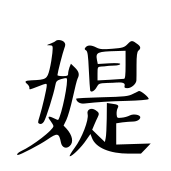
Character: Ti
Kangxi stroke count: 12
Page 267, Entry 17
Pronounced ti
Book of Etymology (Erya), Chapter on Explaining Teachings: Ti-ti means peaceful. Another definition is beautiful.
Seven Remonstrances (Qi Jian) by Dongfang Shuo: Xishi is beautiful, yet she cannot be seen.
Pronounced zhi
Pronounced chi
Meaning is the same as above.
Pronounced shi (rising tone)
Explanation of Graphs and Analysis of Characters (Shuowen): Ti-di, another meaning is beautiful and clever. Another meaning is that in the regions of the Yangtze and Huai rivers, mother is called ti.
Pronounced di (falling tone)
Name of a plant seed.
Book of Etymology (Erya): Hao, refers to the monkey sedge, its fruit is called ti. The commentary cites the Summer Little Calendar (Xia Xiaozheng) saying: Ti is its fruit.
Pronounced xie (falling tone)
Regional Dialects (Fangyan) by Yang Xiong: Jiao-ti means to deceive or treat with contempt.
Pronounced zha
Meaning is the same as above.
Textual research: The Summer Little Calendar states ti is hao. Hao is sedge, and ti is its fruit. Note: The Summer Little Calendar uses a different character variant for ti, not this one. The text using this character is from the Book of Etymology. Therefore, it has been amended to read: Book of Etymology states hao, the monkey sedge, its fruit is called ti. The commentary cites the Summer Little Calendar saying ti is its fruit.