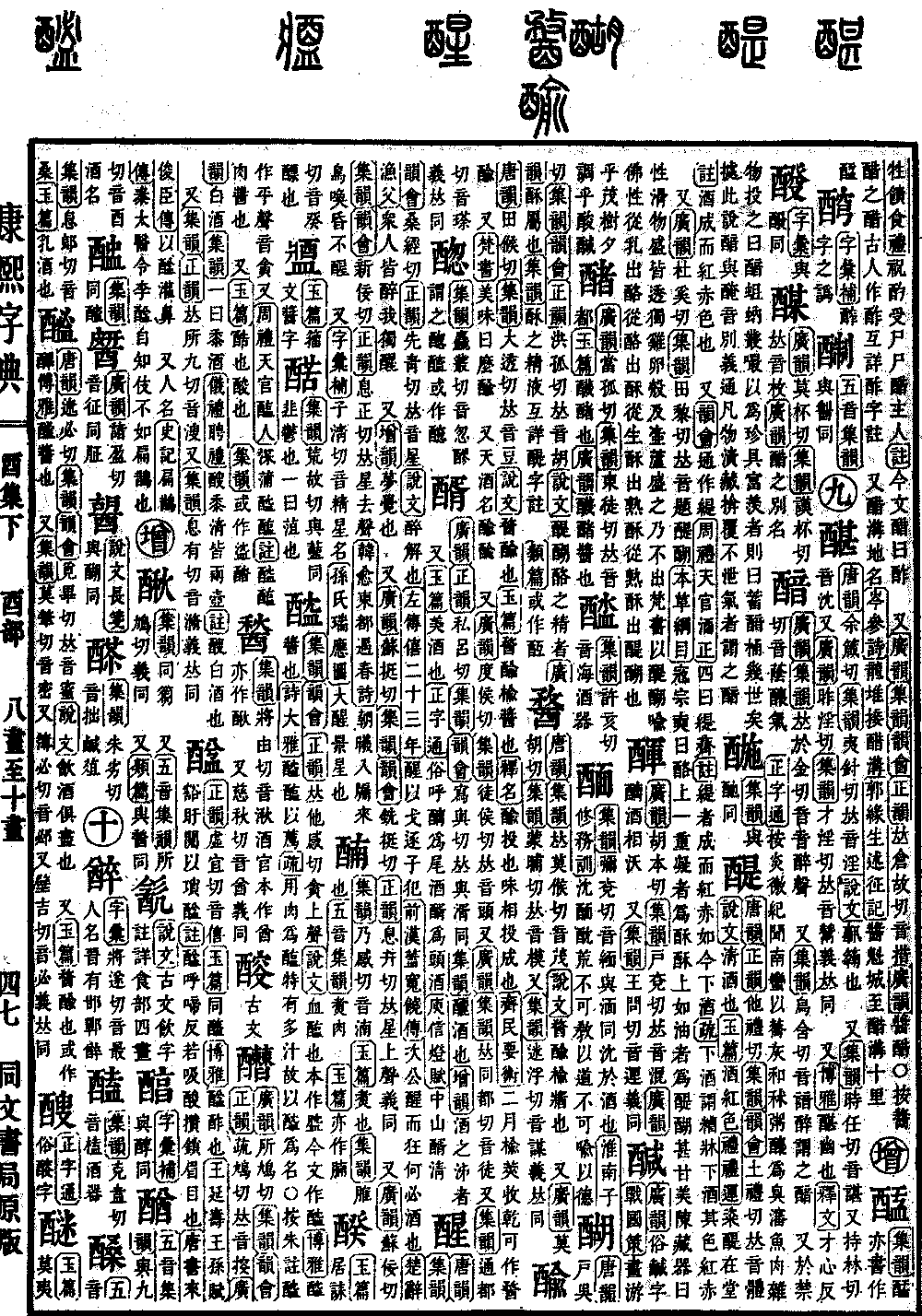
You Collection, Lower Volume
Radical: Wine Vessel (yǒu)
Kangxi Strokes: 16
Page 1285, Entry 09
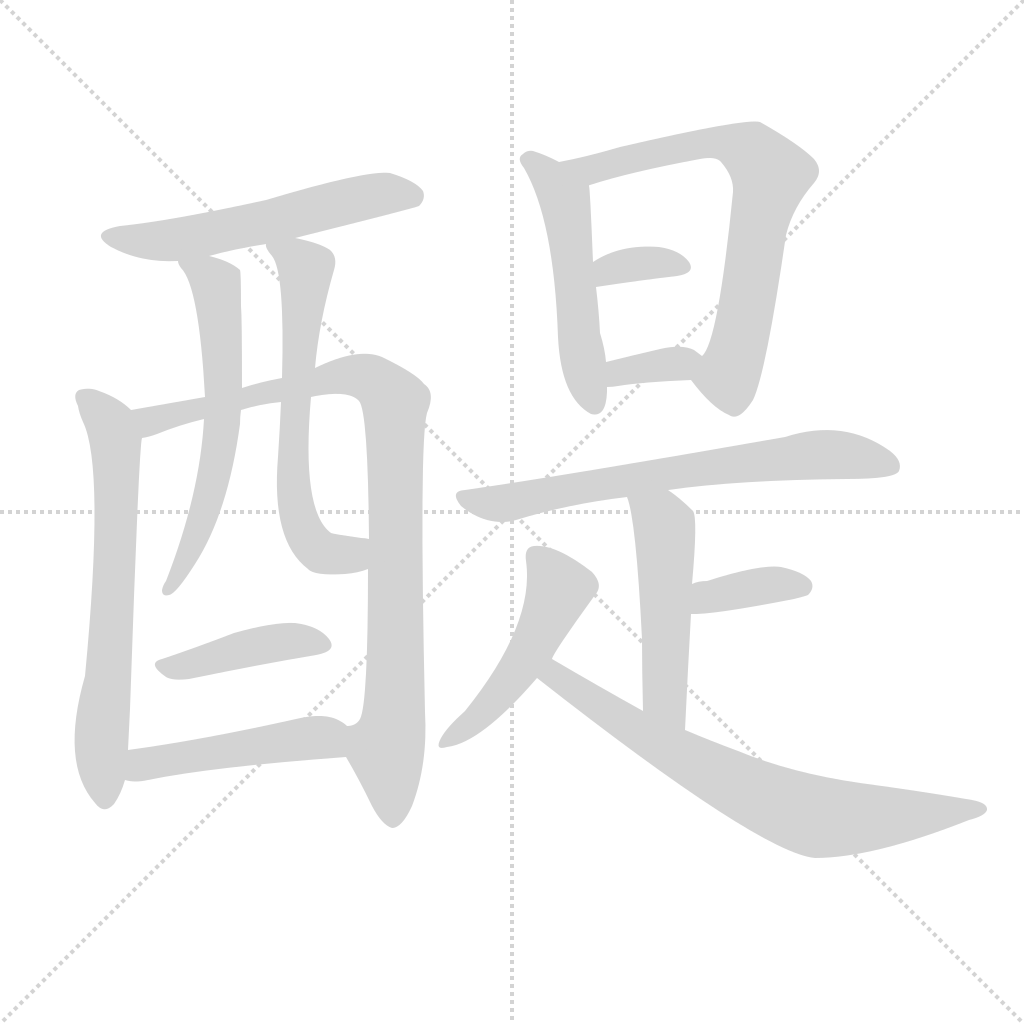
Pronounced tǐ
According to the Shuo Wen Jiezi (Shuo Wen), this refers to clear wine.
According to the Yu Pian (Yu Pian), it refers to the reddish color of wine.
In the Book of Rites (Liji), specifically the Liyun section: The millet wine known as ti is placed in the hall.
Commentary: When the wine is finished, it takes on a reddish color.
Variant form: Also written as ti.
In the Rites of Zhou (Zhouli), specifically the Tianguan section, section on the Wine Administrator: The fourth is ti wine.
Commentary: Ti wine is finished and reddish, similar to what is known as xiajiu.
Sub-commentary: Xiajiu refers to the wine drained from the bottom of the lees-pressing bed, which is reddish in color.
Pronounced tí
Ti hu (a type of clarified cream or butter).
According to the Compendium of Materia Medica (Bencao Gangmu), Zong Shi stated: The top layer of coagulated cream is called su, and the oil-like substance above the su is called ti hu, which is extremely sweet and delicious. Zang Qi stated: Its nature is slippery, and it penetrates everything it is stored in, with the exception of eggshells and gourds, from which it does not leak. Buddhist texts use ti hu as a metaphor for the Buddha-nature. It is derived from milk to make cream, from cream to make su, from raw su to make cooked su, and from cooked su to make ti hu.