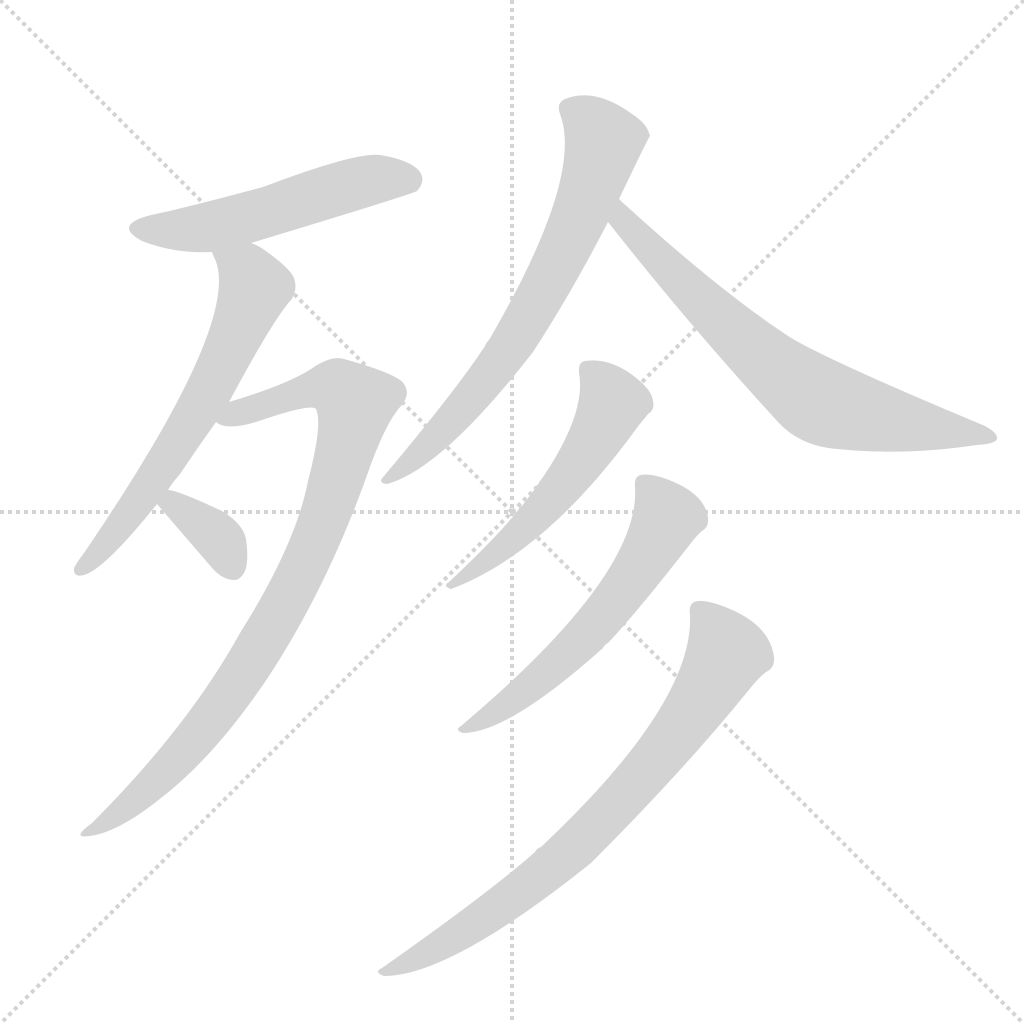
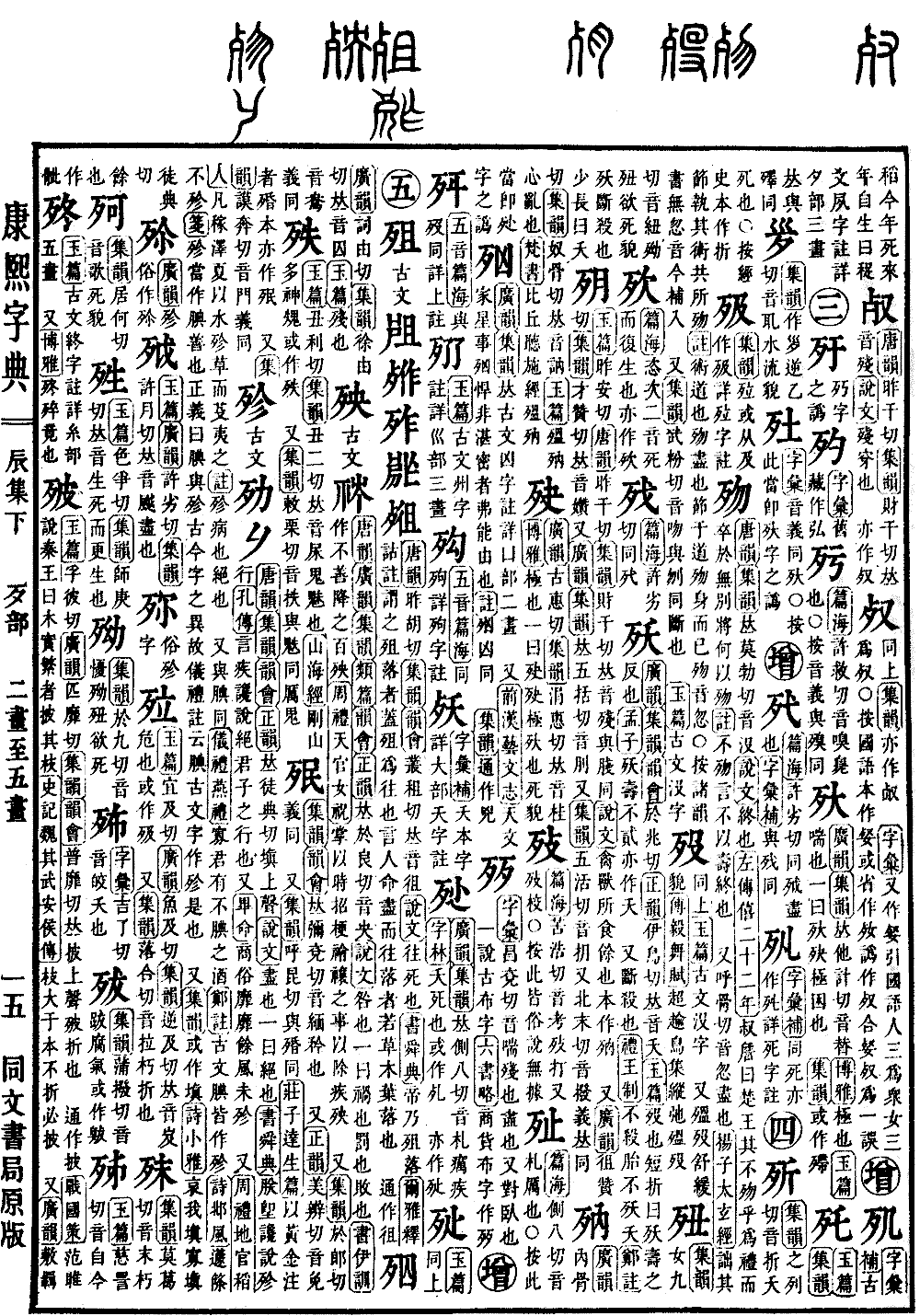
Chen Collection, Lower Volume
Radical: Bad (dǎi)
Kangxi Strokes: 9
Page 579, Entry 45
Pronounced tian (rising tone).
Shuowen Jiezi explains it as: exhausted, finished. Another explanation is to exterminate.
Book of Documents (Shangshu), Chapter Shun Dian: I detest those who speak slander and exterminate virtue. Kong's commentary states this refers to hating slander and cutting off the virtuous conduct of a gentleman.
Chapter Bi Ming: The customs of the Shang dynasty were extravagant, and the legacy of that influence had not yet been extinguished.
Rites of Zhou (Zhouli), Earth Officers, Rice Officer: Regarding the cultivation of crops in marshlands, in the summer use water to soak the weeds and then clear them away. Commentary: Tian means to cause something to become weak and diseased, or to exterminate.
Also interchangeable with the character tian.
Book of Etiquette and Ceremonial (Yili), Yan Li: Our ruler has prepared some thin wine. Zheng's commentary says that in ancient texts, the character tian was always written as tian.
Book of Odes (Shijing), Beifeng: The flattering people are not good. Commentary: Tian should be read as tian, meaning good. The orthodox commentary says: tian and tian are simply different forms used in ancient and modern times, so the commentary on the Book of Etiquette and Ceremonial stating that the ancient text for tian was written as tian is correct.
Dictionary of Rhymes (Jiyun) records: Sometimes also written as a variant form (tian).
Book of Odes (Shijing), Xiaoya: Pity my lonely and destitute state. Pronounced tian (rising tone).