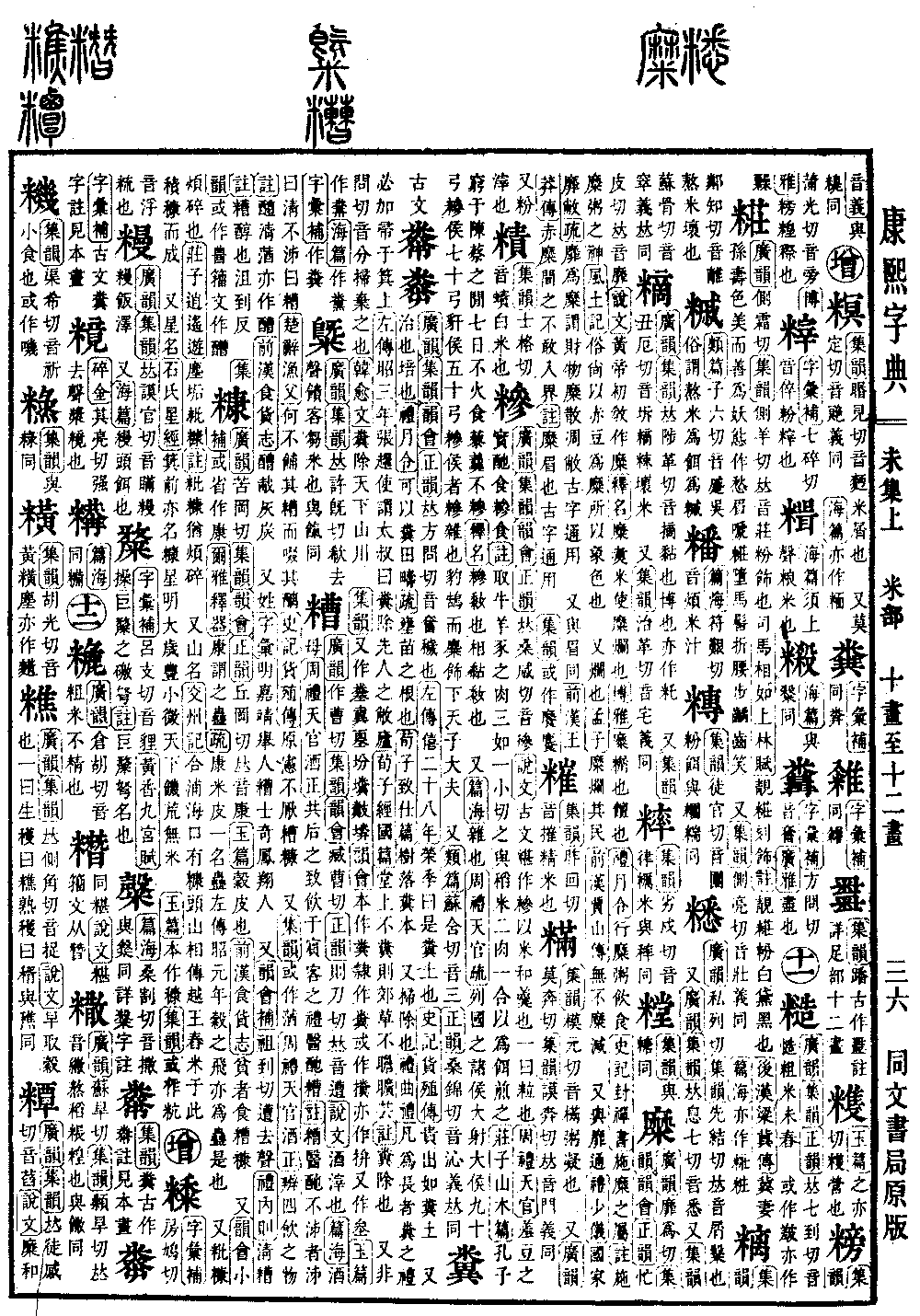
Wei Collection, Upper Volume
Radical: Rice (mǐ)
San
Kangxi strokes: 17
Page 912, Entry 01
Broad Rhymes (Guangyun), Collected Rhymes (Jiyun), Rhyme Compendium (Yunhui), and Correct Rhymes (Zhengyun) state the pronunciation is san (rising tone).
According to Explaining Graphs and Analyzing Characters (Shuowen), the ancient form of the character for rice-mixed porridge is written as san, referring to mixing rice into broth or soup. Another interpretation refers to grains of rice.
Rites of Zhou (Zhouli), Office of Heaven: The contents of the bowls for prepared food include thin porridge and rice-mixed cakes. The commentary explains: Take equal parts of beef, mutton, and pork, mince them, mix with two parts rice and one part meat to form cakes, then fry until cooked.
Zhuangzi, Mountain Tree chapter: Confucius was besieged between the states of Chen and Cai and was unable to light a fire to cook for seven days; there were no grains of rice mixed into his vegetable soup.
Explanation of Names (Shiming): The term san implies adhesion, referring to things sticking together.
Also, in the Sea of Texts (Pianhai), it refers to being mixed or miscellaneous.
Rites of Zhou (Zhouli), Office of Heaven commentary: When the various feudal lords held the Great Archery Ritual, the Great Target was ninety bows, the San Target was seventy bows, and the Han Target was fifty bows. The San Target means miscellaneous. It was decorated with leopard and eagle skins and trimmed with elk hide, signifying a rank lower than that of the Son of Heaven and the high ministers.
Also, in the Classified Texts (Leipian), pronounced san. In Correct Rhymes (Zhengyun), pronounced qin. The meanings are the same.