You Collection, Upper Volume
Radical: Speech (yán)
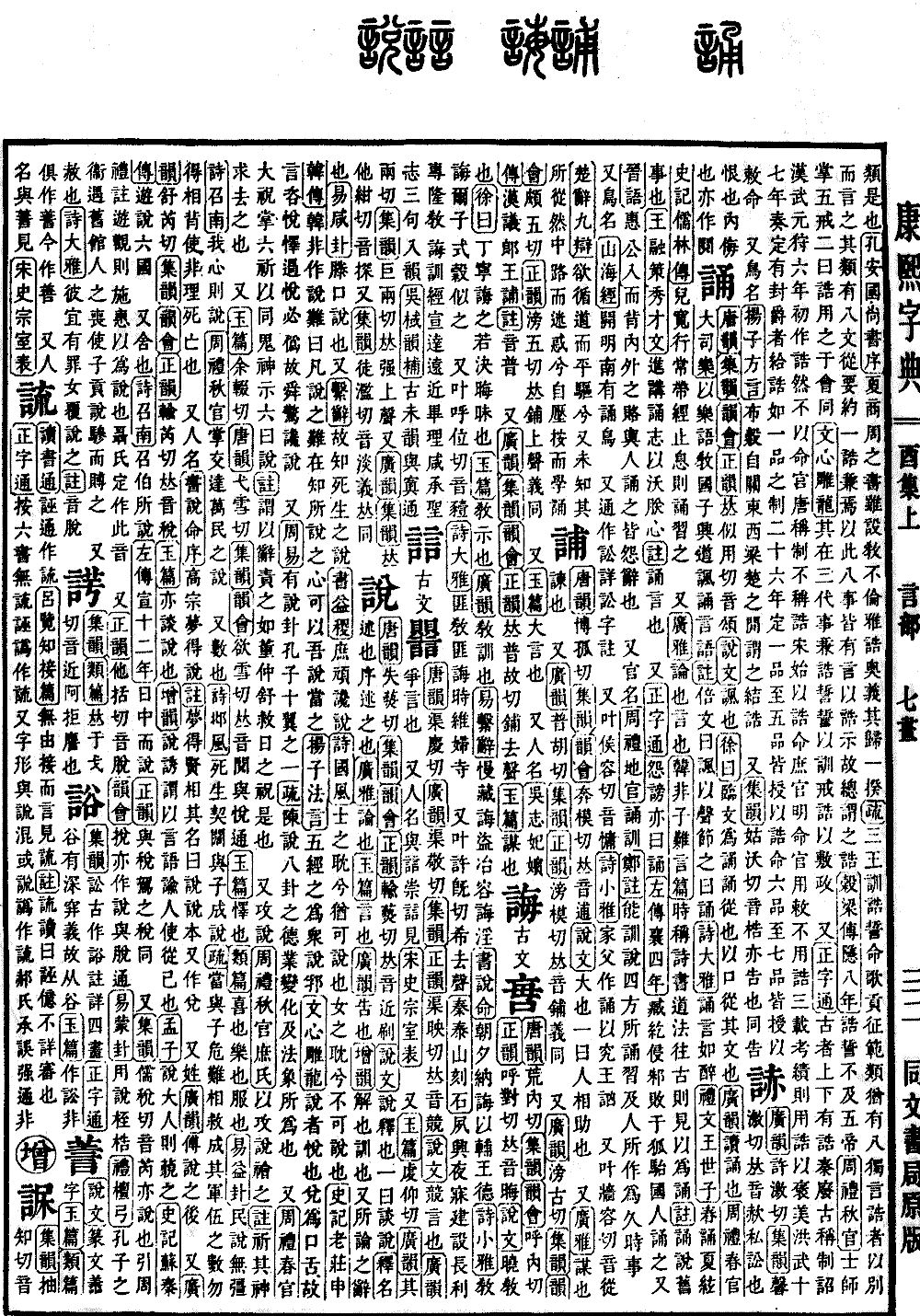
誦
Kangxi brush strokes: 14
Page 1164, Entry 02
Pronounced sòng.
According to the Explaining and Analyzing Characters (Shuowen Jiezi), it means to recite. Xu Shen says: To recite while looking at the text. The character is composed of the concept of following; it means to have the mouth follow the written text.
According to the Extensive Dictionary of Sounds and Meanings (Guangyun), it means to read or recite.
Book of Rites (Zhouli), Spring Office, Great Director of Music: Teach the youths of the state with music and language: promote the way by reciting and speaking. Commentary says: To recite from memory is called feng, to recite with modulated voice is called song.
Book of Odes (Shijing), Greater Odes: Reciting words as if drunk.
Book of Rites (Liji), Records of the Son of Heaven Wen: Recite in the spring, play stringed instruments in the summer.
Records of the Grand Historian (Shiji), Biographies of Confucian Scholars: Er Kuan always carried the classics with him; whenever he stopped to rest, he would recite and study them.
Also, according to the Erudite Refinements (Guangya), it means to discuss or to speak.
Han Feizi, Difficulties in Persuasion: When one cites the Book of Songs (Shijing) or the Book of Documents (Shujing) to discuss the laws of the ancients, others view this as mere repetition. Commentary says: Song here refers to speaking about past events.
Wang Rong, Essay for the Selection of Talents: Advancing to lecture and recite one's aspirations, in order to nourish my heart. Commentary says: Song means to speak.
According to the Correct Character Guide (Zhengzitong), it can also mean to complain or slander.
Zuo Tradition (Zuo Zhuan), Fourth Year of Duke Xiang: Zang He invaded Zhu and was defeated at Hutai; the people of the state slandered him for it.
Discourses of the States (Jin Yu): When Duke Hui entered the state, he went back on the bribes given inside and outside. When people spoke of this, it was all with words of resentment.
Also a title of an official. Book of Rites (Zhouli), Earth Office: Song Xun (Recitation Instructor). Zheng's commentary says: One who is able to instruct and explain what is recited and learned in the four directions, as well as the long-standing affairs created by people.
Also the name of a bird. Classic of Mountains and Seas (Shanhaijing): South of Mount Kaiming, there is the Song bird.
Also written interchangeably with the character for litigation (sòng). See the entry for the character for litigation.
Also pronounced róng (level tone). Book of Odes (Shijing), Lesser Odes: Jia Fu composed this recitation to investigate the king's troubles.
Also pronounced cóng (level tone). Chu Elegies (Chu Ci), Nine Arguments: Wishing to follow the path and drive straight ahead, yet not knowing what to follow. Confused halfway along the path, pressing myself down to learn and recite.