Xu Collection, Lower Volume
Radical: Food (shí)
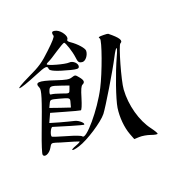
Character: si
Kangxi strokes: 11
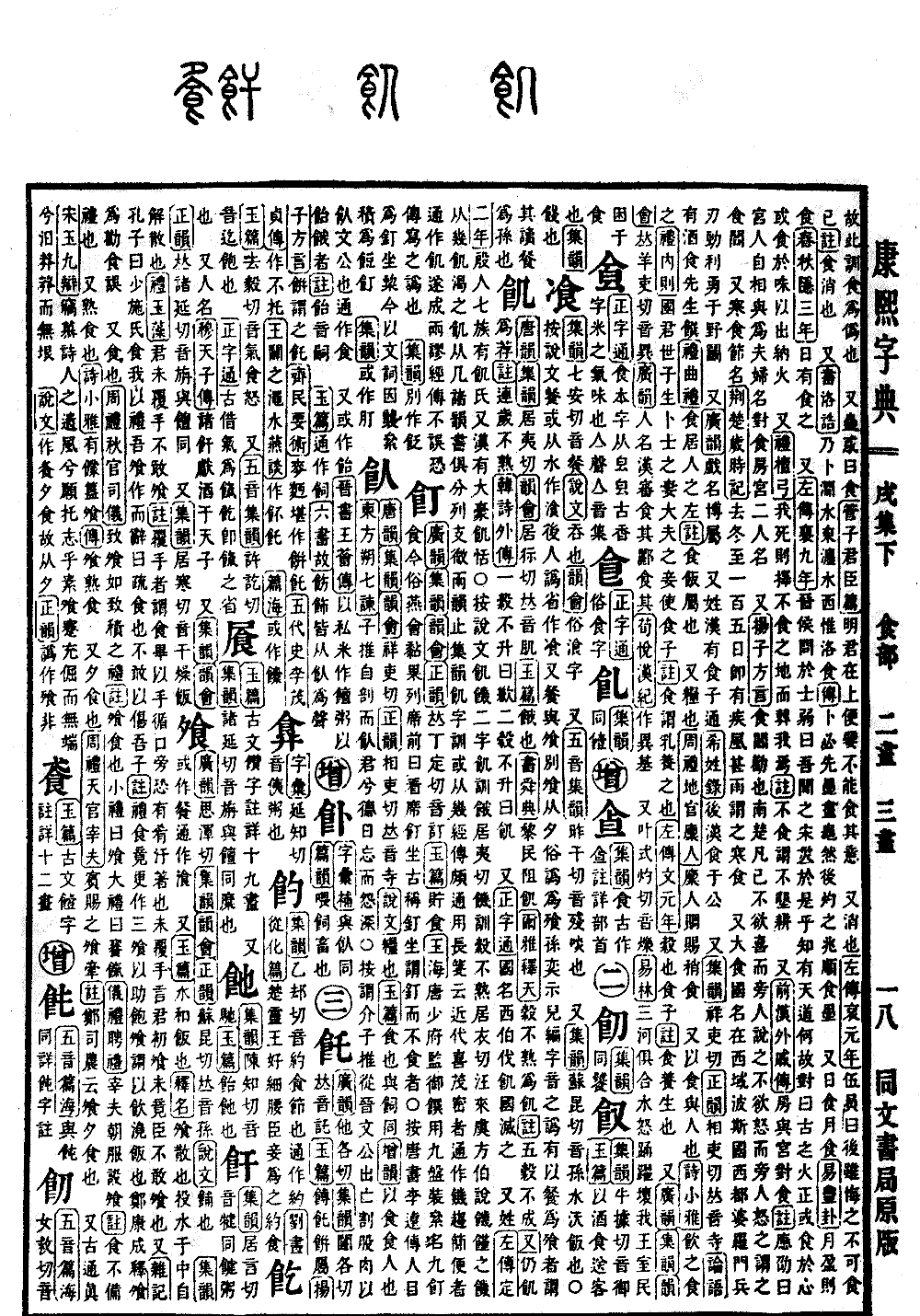
Page 1416, Entry 10
Pronounced si.
According to the Explaining and Analyzing Characters (Shuowen Jiezi), it refers to grain or food. According to the Jade Chapters (Yupian), the meaning is to eat. It is the same as the character for feed. According to the Augmented Rhymes (Zengyun), it refers to providing food for someone to eat.
In the Seven Remonstrances (Qijian) by Dongfang Shuo: Zi Tui cut his own flesh to feed his lord, but virtues are forgotten daily while grievances run deep. Note: This refers to the time when Jie Zhitui followed Duke Wen of Jin into exile and cut the flesh from his own thigh to feed the Duke. It is also used interchangeably with the character for eat.
It is also sometimes written in a variant form (yí). In the History of Jin (Jinshu), Biography of Wang Hui: He used his private rice to make thin porridge to feed those who were starving. Note: The variant form is pronounced si.
According to the Jade Chapters (Yupian), it is used interchangeably with the character for feed.
According to the Principles of the Six Writings (Liushugu), the characters meaning to order or to adorn both use this character as a phonetic component.
Textual Research: In the Seven Remonstrances (Qijian) by Dongfang Shuo, the original text says: Zi Tui cut his own flesh to feed his lord, but virtues are forgotten daily while grievances run deep. We hereby note that the original text has been amended from cut open to cut.