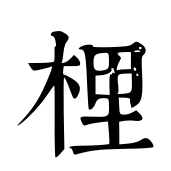
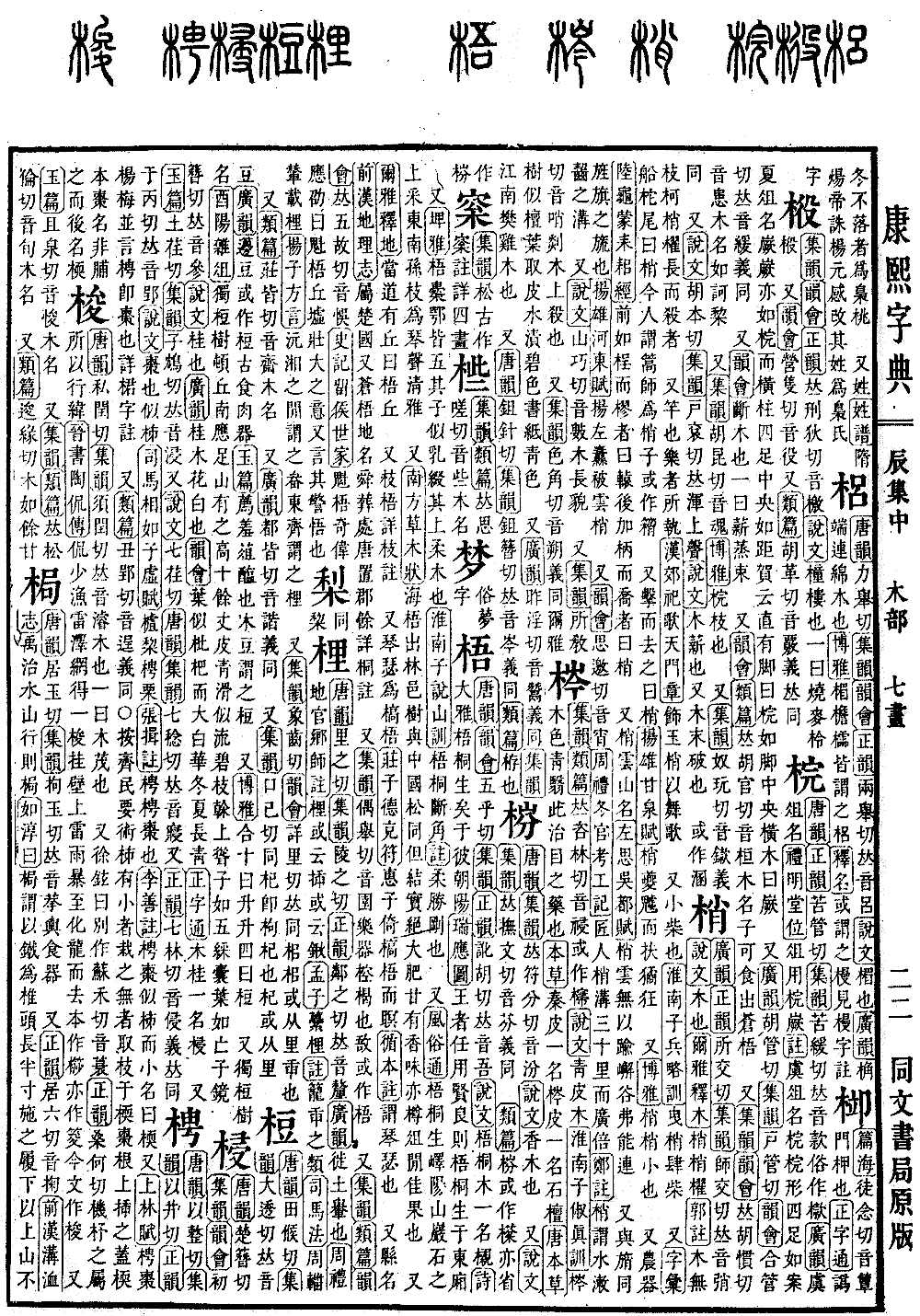
Chen Collection, Middle Volume. Radical: Tree (mù). Kangxi strokes: 11. Page 530, Entry 13.
Pronounced li (rising tone).
In Tang Rhymes (Tangyun), Collected Rhymes (Jiyun), and Correct Rhymes (Zhengyun), it is defined as a tool for moving soil or a cart. In the commentary to the District Officer and Village Master sections of the Rites of Zhou (Zhouli), it is noted that this implement is also called a spade or shovel. In the Mencius (Mengzi), it is mentioned in the context of baskets and shovels, with the commentary defining it as a type of wicker basket. The Methods of Sima (Simafa) records that Zhou dynasty baggage carts carried these implements. In the Dialect (Fangyan) by Yang Xiong (Yangzi), the text notes that in the regions between the Yuan and Xiang rivers, it is called a basket, while in eastern Qi it is called a li.
Also, according to Collected Rhymes (Jiyun) and Rhyme Collection (Yunhui), the pronunciation is xiang (rising tone). It is a variant form, sometimes written using the character for inner (li).
Also, according to Categorized Compendium (Leipian), the pronunciation is zhai (level tone). It refers to a type of tree.
Also, according to Broad Rhymes (Guangyun), the pronunciation is xie (level tone). The meaning is the same as above.
Also, according to Collected Rhymes (Jiyun), the pronunciation is qi (rising tone). It is a variant of the wolfberry plant, also known as gouqi. The character for this plant may sometimes be written using the character for inner (li).