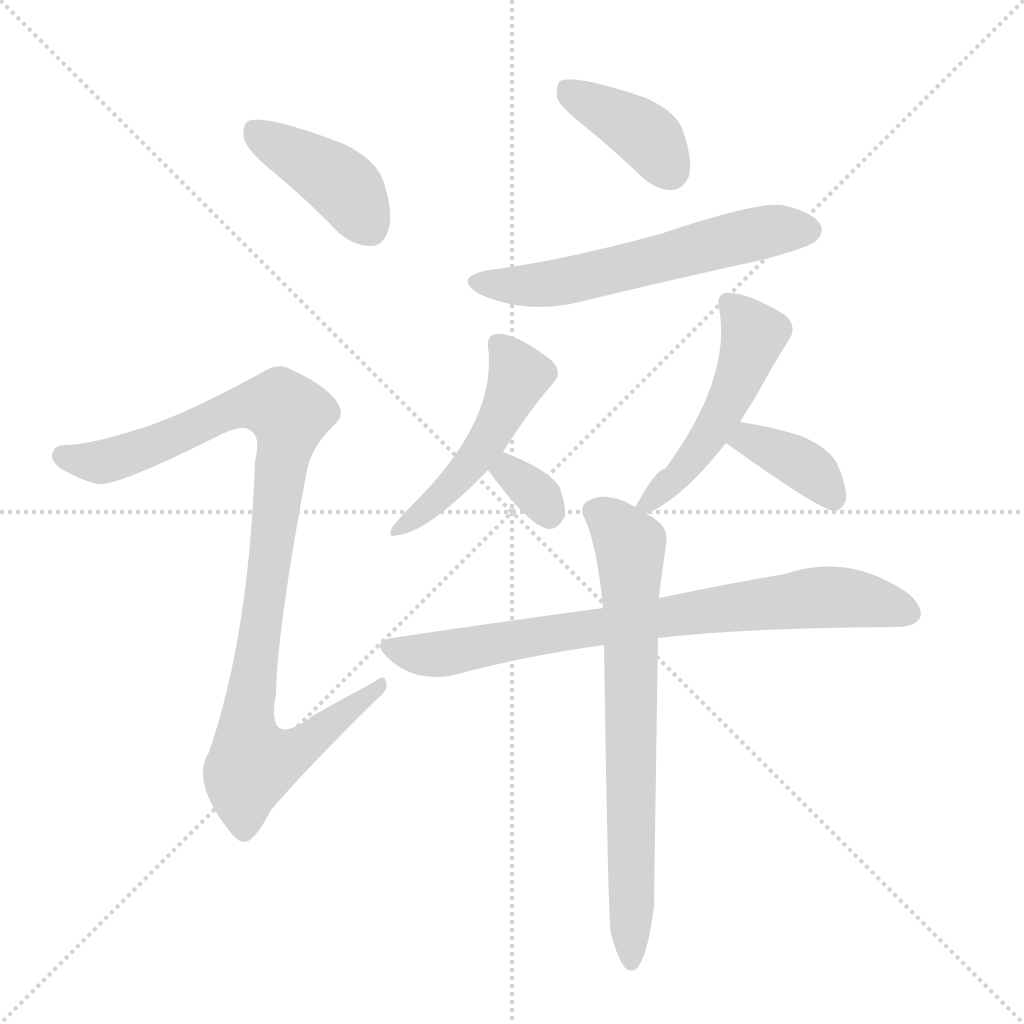
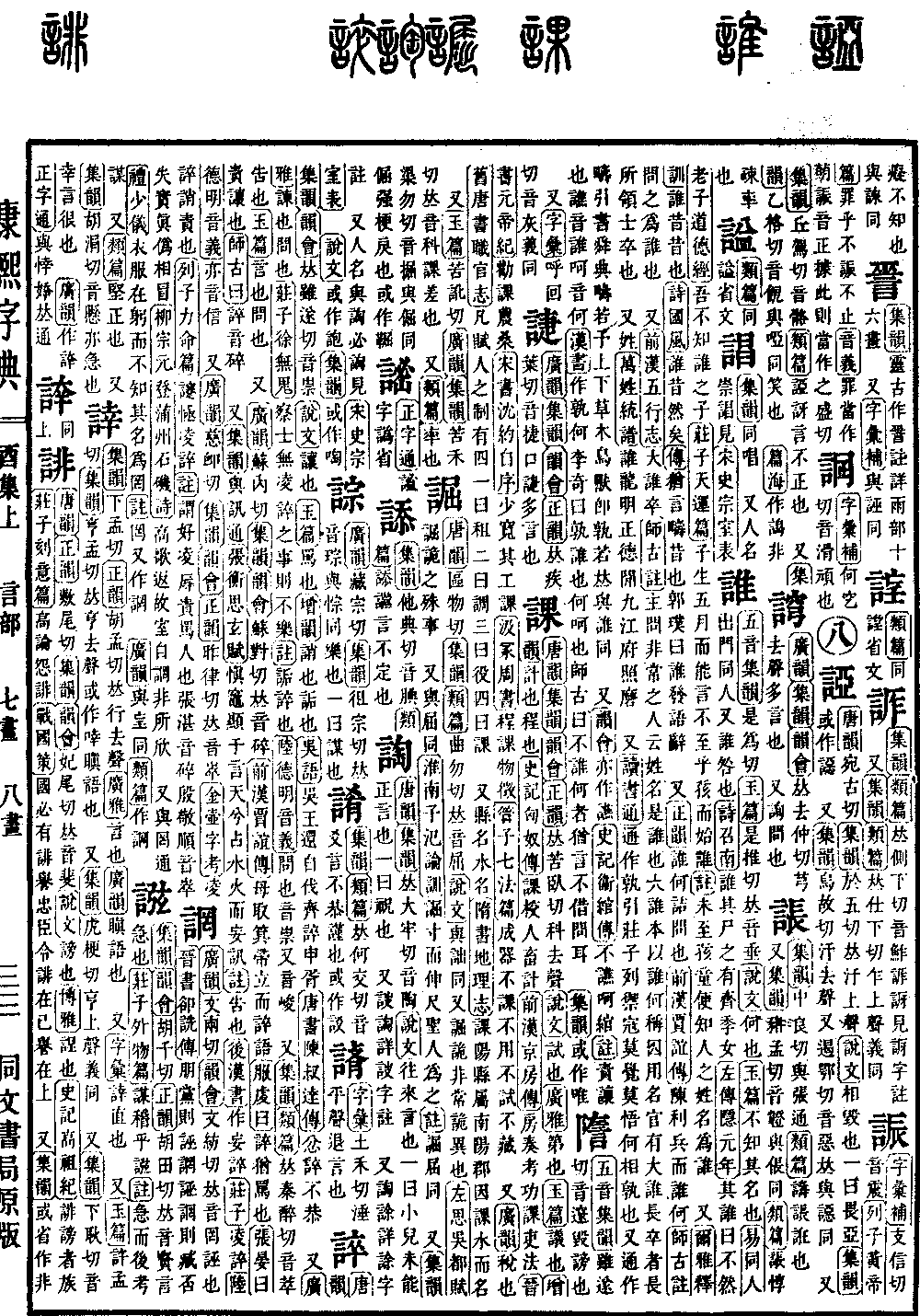
You Collection, Upper Volume
Radical: Speech (yán)
Page 1165, Entry 15
Pronounced sui (falling tone).
Shuowen Jiezi (Explanation of Simple and Compound Characters): To rebuke.
Yupian (Jade Chapters): To scold.
Zengyun (Expanded Rhymes): To mock, to insult.
Discourses of the States (Guoyu): The King of Wu returned from attacking Qi and rebuked Shenxu.
Book of Tang (Tangshu): Resentful, insulting, and disrespectful.
Guangya (Broad Refinement): To remonstrate, to ask.
Zhuangzi: A perceptive scholar, if there are no affairs of bullying or scolding, will not be happy.
Commentary: To insult and scold.
Lu Deming, Sound and Meaning (Yinyi): To ask. Pronounced chong. Also pronounced jun.
Pronounced cui (falling tone). To tell.
Yupian (Jade Chapters): To speak, to ask.
Pronounced sui (falling tone).
Book of Han (Hanshu): Do not take the winnowing basket or broom and stand there speaking abusively.
Fu Qian says: To scold.
Zhang Yan says: To blame and rebuke.
Yan Shigu says: Pronounced sui.
Also interchangeable with xun (to inquire/interrogate).
Zhang Heng, Rhapsody on Thinking (Si Fu): Carefully observe the signs in the celestial realm, investigate water and fire, and do not make reckless inquiries.
Commentary: To tell.
Book of the Later Han (Hou Hanshu): Written as reckless scolding.
Zhuangzi: Bullying and scolding.
Lu Deming, Sound and Meaning (Yinyi): Also pronounced xin.
Pronounced zu (entering tone).
Jinhu Zikao (Exegesis of Characters in the Golden Vessel): Bullying and scolding, mocking and blaming.
Liezi: Bullying and scolding.
Commentary: Refers to enjoying the act of bullying, insulting, and scolding others. Zhang Zhan pronounces it sui; Yin Jingshun pronounces it zu.