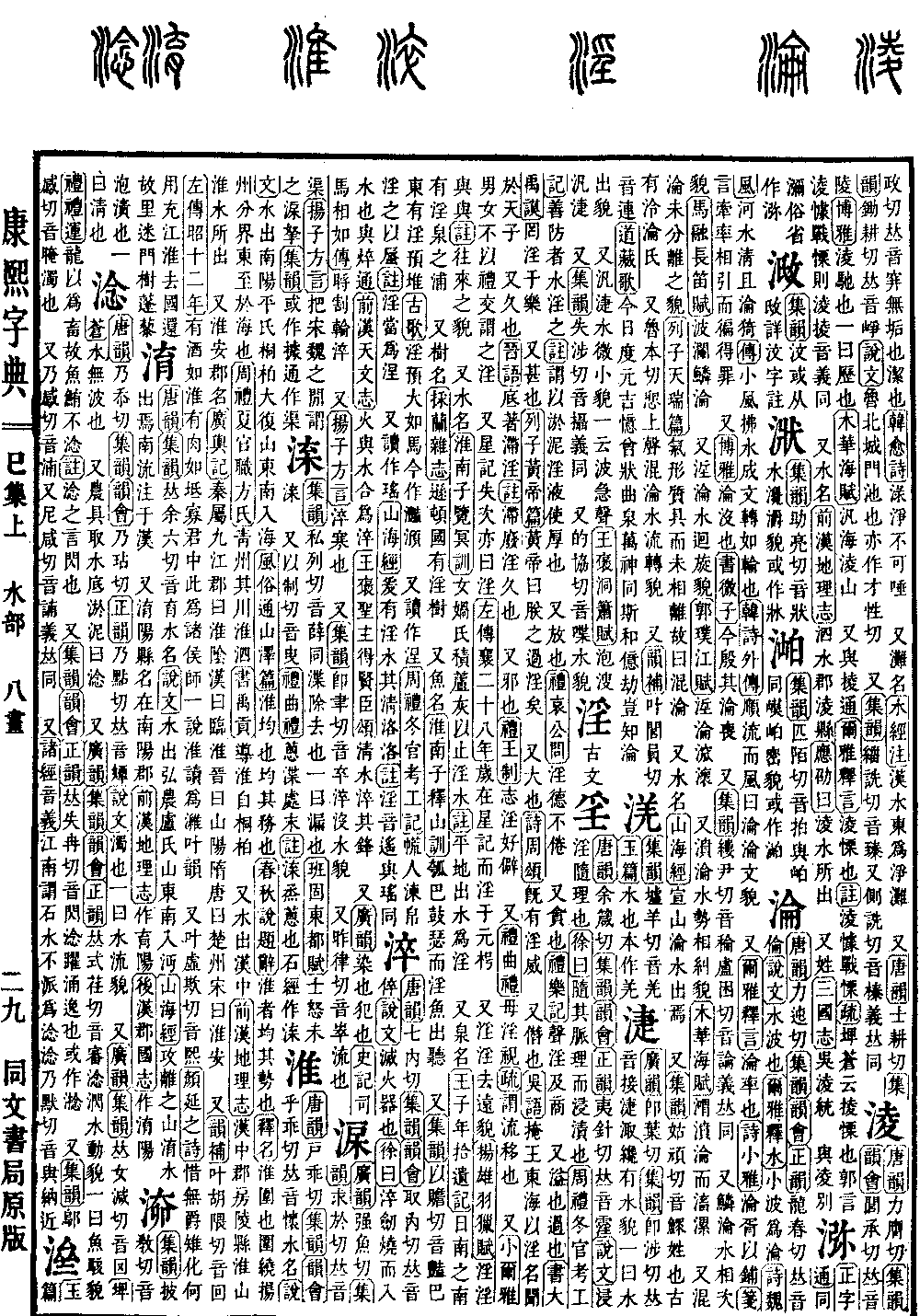
Si Collection, Upper Volume
Radical: Water (shuǐ)
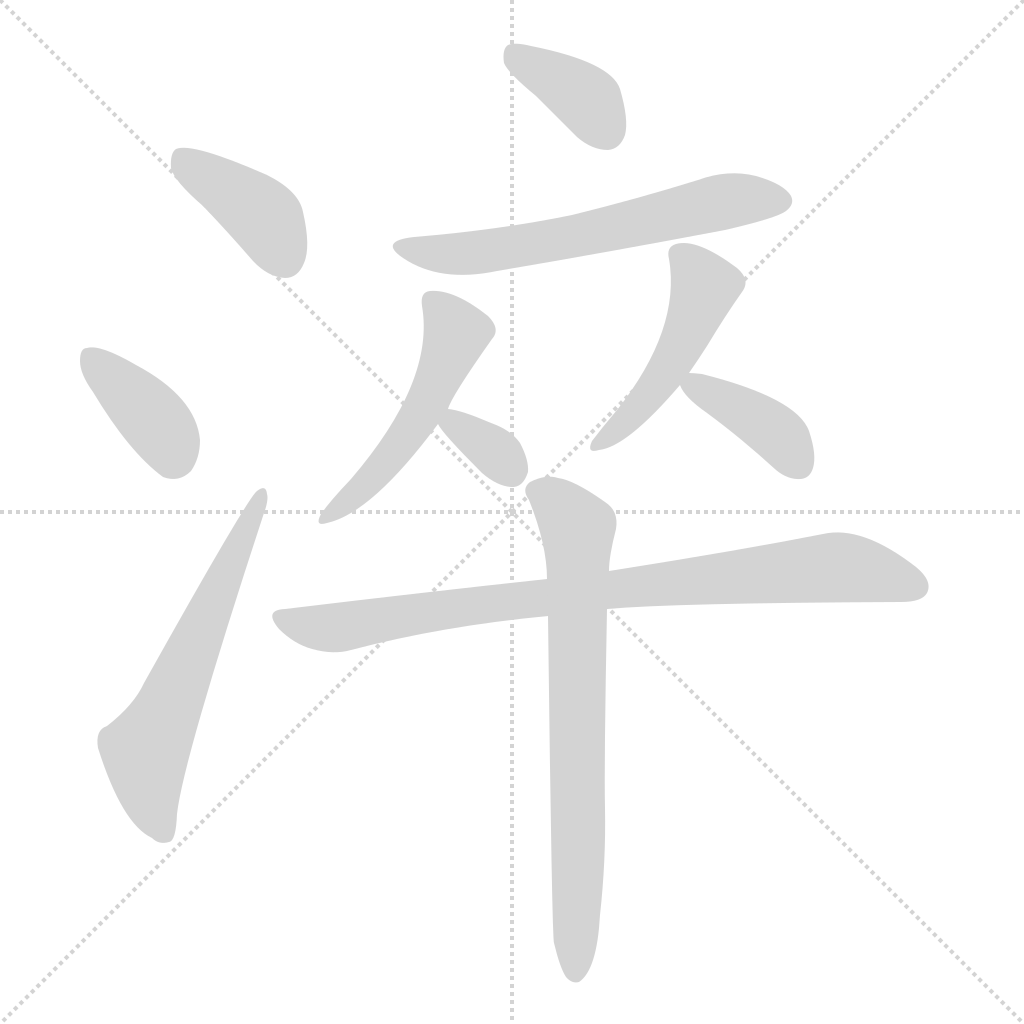
淬
Kangxi stroke count: 12
Page 631, Entry 11
Pronounced cui (falling tone).
Shuowen Jiezi (Explaining Single-component Characters and Analyzing Compound Characters) defines it as a tool for extinguishing fire. Xu Kai states that it refers to immersing a red-hot sword into water. It is interchangeable with the character cui (variant).
Book of Han (Hanshu), Treatise on Astronomy, states that the convergence of fire and water is called cui.
Wang Bao, Ode on the Sagely Ruler Obtaining Virtuous Ministers: Use clear water to temper its blade.
Guangyun (Broad Rhymes) also defines it as meaning to immerse, stain, or offend.
Records of the Grand Historian (Shiji), Biography of Sima Xiangru: Cutting meat and staining it on a carriage wheel (or referring to the wheel being immersed in water).
Yangzi, Regional Dialects (Fangyan): Cui means cold.
Also, according to Jiyun (Collection of Rhymes), pronounced zu (entering tone). It describes the appearance of something sinking into water.
Also, pronounced zu (entering tone). It means flowing.
The character lui was originally written incorrectly with the structure containing the eye radical and the component lü.