Mao Collection, Upper Volume
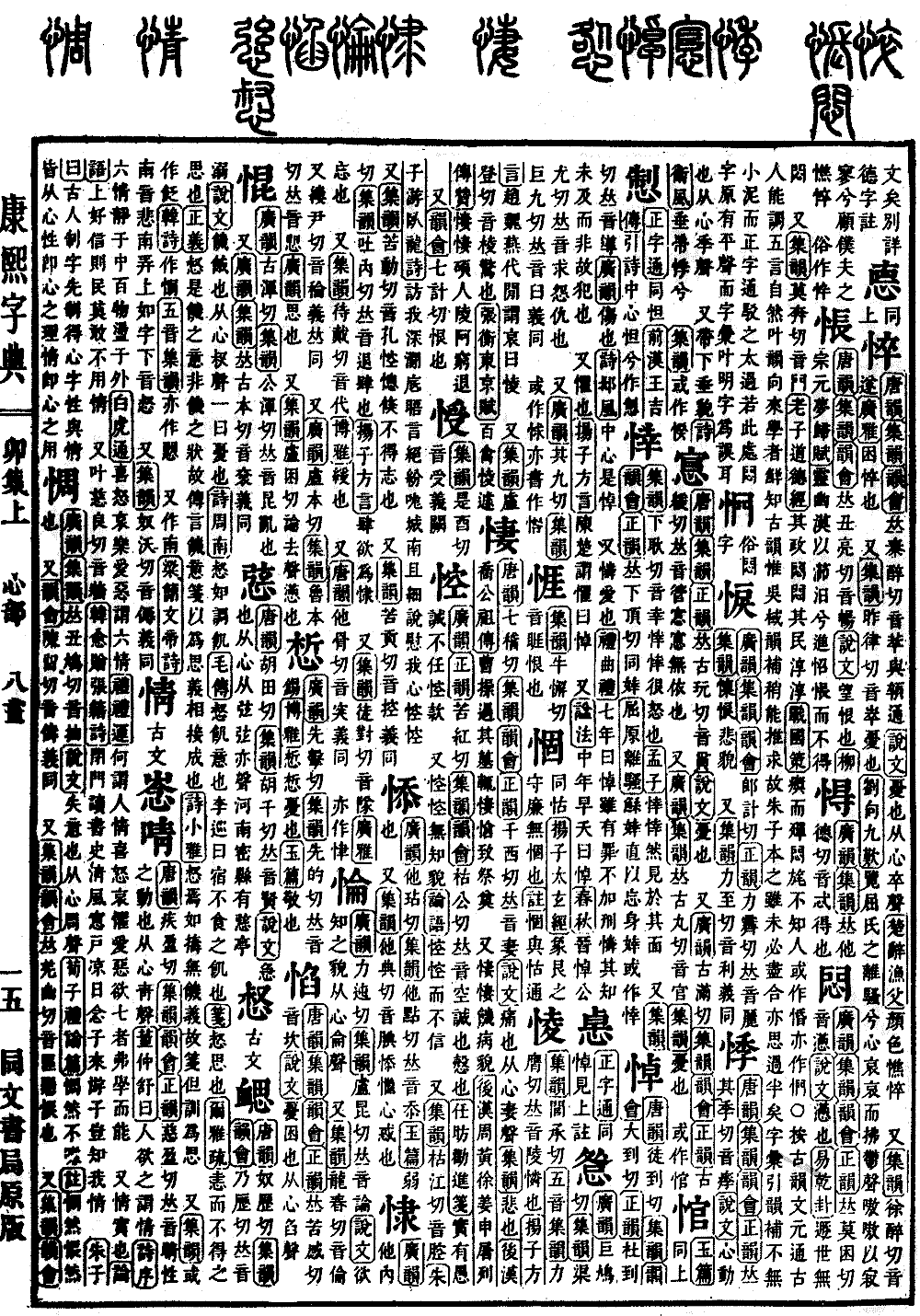
Radical: Heart (xīn)
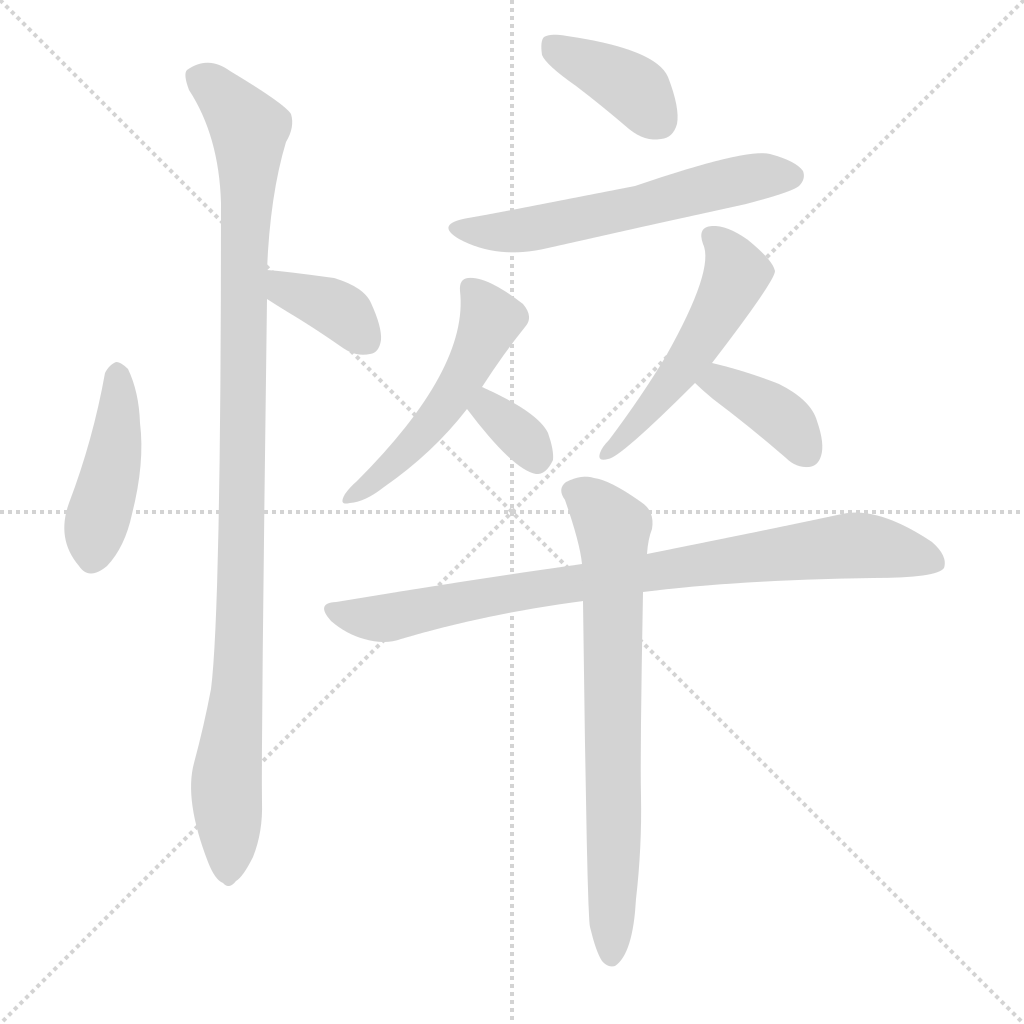
悴
Kangxi stroke count: 12
Page 389, Entry 02
Tang Rhyme (Tangyun), Collected Rhymes (Jiyun), and Rhyme Meeting (Yunhui): Pronounced cui (falling tone). Interchangeable with the character for haggard.
Shuowen Jiezi (Explaining Single-component Characters and Analyzing Compound Characters): To be sorrowful. Formed from the radical for heart and the phonetic element for finish.
Chu Ci (Songs of Chu): The complexion is haggard.
Also in Collected Rhymes (Jiyun): Pronounced sui (falling tone).
Guangya (Broad Refinement): To be distressed and haggard.
Also in Collected Rhymes (Jiyun): Pronounced zu (entering tone). To be sorrowful.
Liu Xiang, Nine Sighs (Jiutan): Surveying the Li Sao of the Qu lineage, my heart is mournful and depressed. Sounds are clamorous yet lonely; looking back, my carriage driver is haggard. Commonly written as a variant form (cuo).