You Collection, Upper Volume
Radical: Speech (yán)
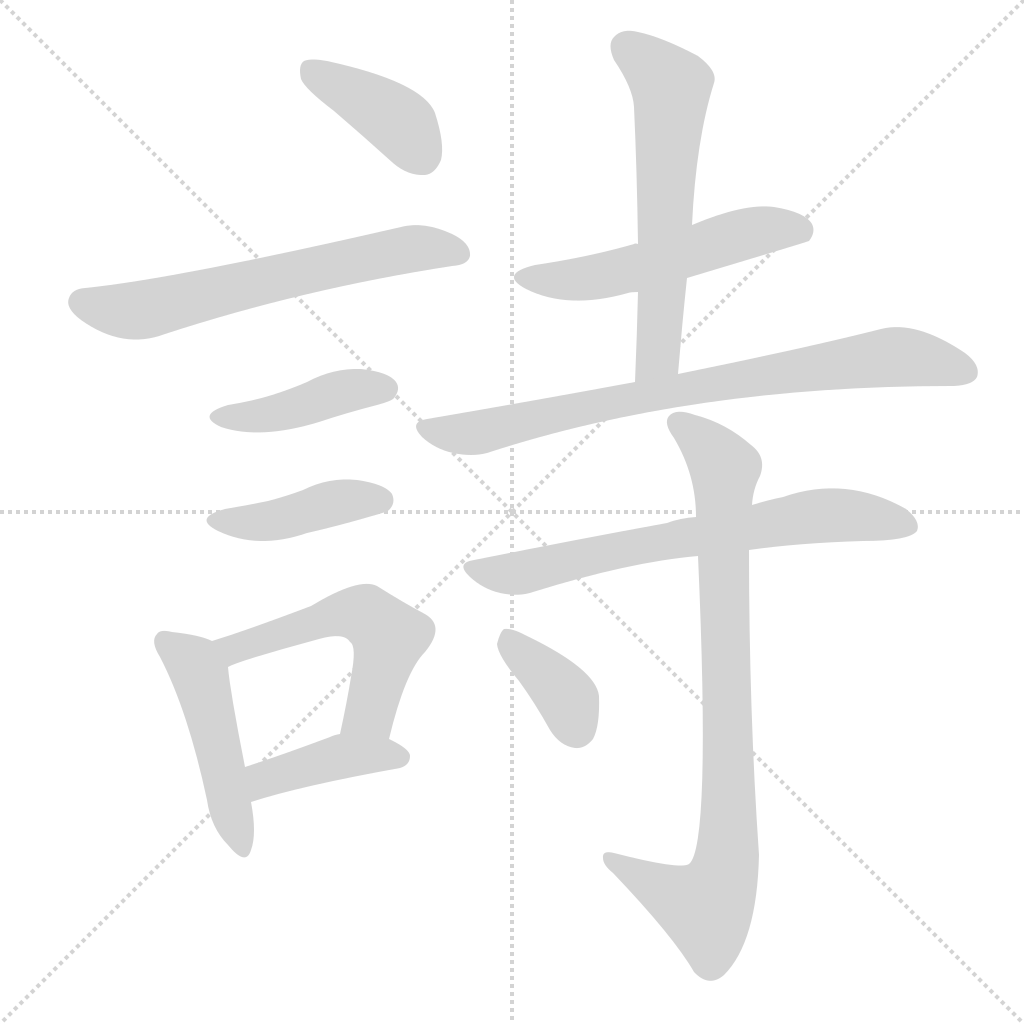
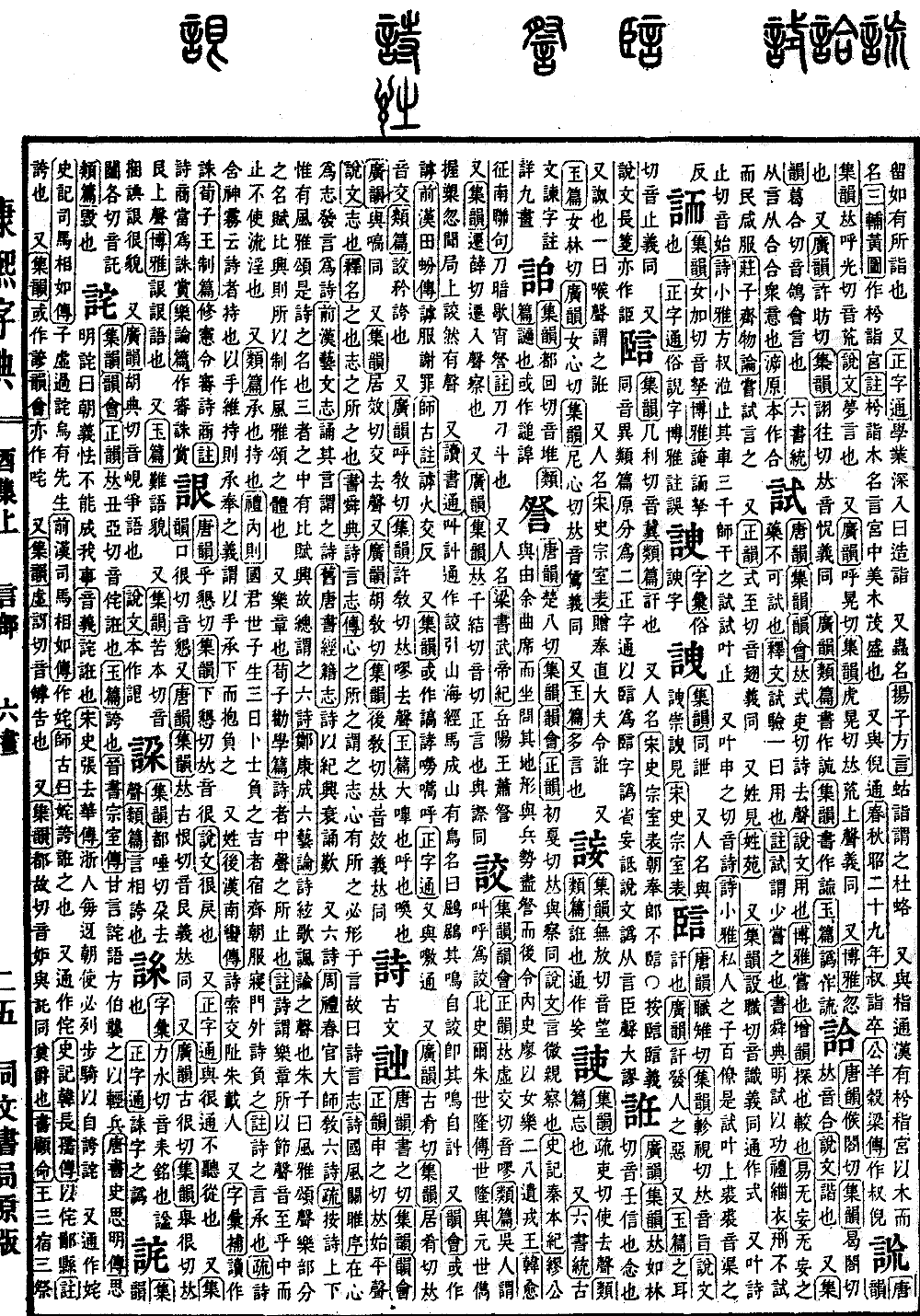
Poetry; Kangxi strokes: 13; Page 1157, Entry 15
Ancient form. Pronounced shi (level tone).
Shuowen Jiezi says: to express one's aspirations. Shi Ming says: to go; it is what the aspirations are directed toward.
Book of Documents (Shujing), Canon of Yao: Poetry expresses aspirations. Commentary: What the heart is directed toward is called an aspiration. When the heart has a target, it must be manifested in speech; therefore it is said that poetry expresses aspirations.
Classic of Poetry (Shijing), Guo Feng, Guan Ju Preface: When held in the heart it is an aspiration; when spoken it is poetry.
History of the Former Han (Qian Hanshu), Treatise on Literature and Arts: To recite these words is called poetry.
Old Book of Tang (Jiu Tangshu), Treatise on Classics and Books: Poetry is used to record the rise and fall of states and to chant of joy.
Also the Six Poetic Styles. Rites of Zhou (Zhouli), Spring Office, Grand Master: Teach the six poetic styles. Commentary: According to the text, only Feng, Ya, and Song are the names of poetic styles. Within these three, there are the methods of comparison, narration, and arousal, hence they are collectively called the six poetic styles. Zheng Kangcheng, Treatise on the Six Arts: Poetry is the sound of chanted songs and moral remonstrance. Zhuxi says: Feng, Ya, and Song are the names of parts of musical compositions. Narration, comparison, and arousal are the techniques used to compose Feng, Ya, and Song.
Also musical chapters. Xunzi, Exhortation to Learning: Poetry is where the harmonious sound ceases. Commentary: Poetry refers to musical chapters, which regulate the sounds, stopping at the middle point to prevent them from becoming lewd or excessive.
Also, from the Classified Collection (Leipian), to sustain or to hold.
Book of Rites (Liji), Inner Chapters: When a state ruler's heir is born, after three days, a diviner-official carries the infant. One who has obtained a favorable divination fasts, wears morning court dress outside the sleeping quarters, and holds the infant. Commentary: The word for hold means to sustain. Commentary: The Apocryphal Book of Poetry (Shi Han Shen Wu) says: Poetry means to hold. To maintain with one's hands is the meaning of supporting; it refers to using one's hands to carry and embrace the child.
Also a surname. Book of the Later Han (Hou Hanshu), Record of the Southern Barbarians: Shi Suo, a man from Zhu in Jiaozhi.
Also, from the Supplement to the Collection of Characters (Zi Hui Bu), read as zhu (punish). Xunzi, Royal Regulations: Adjust the laws and orders, and verify the punishments and rewards. Commentary: Punishments and rewards, which should be read as punishment and reward. In the Treatise on Music, it is written as verify punishments and rewards.