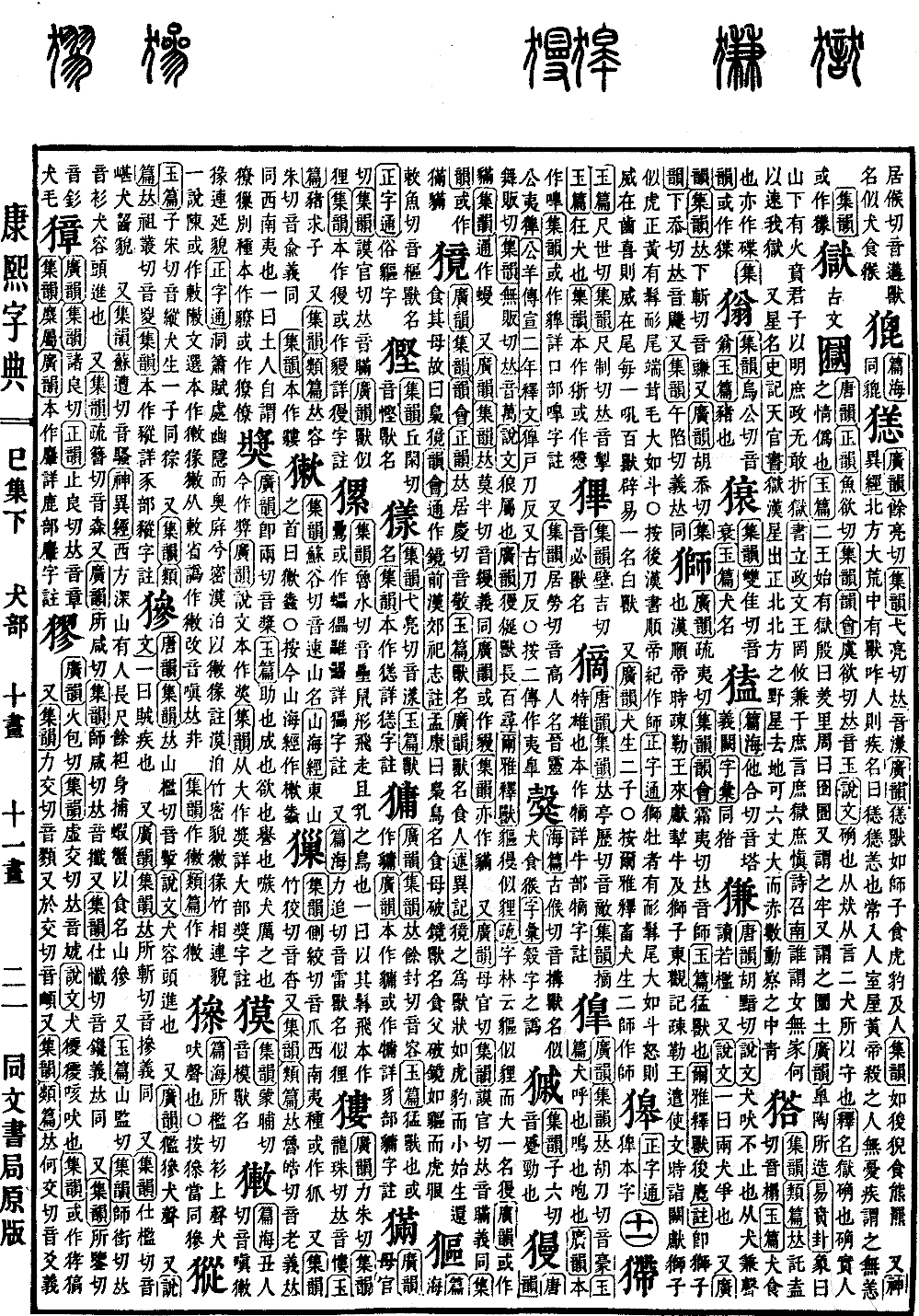
Si Collection, Lower Volume
Radical: Dog (quǎn)
Lion
Kangxi stroke count: 14
Page 717, Entry 01
Pronounced shi.
In Jade Chapters (Yupian): A fierce beast.
In Approach to the Classics (Erya), Explanation of Beasts: The suanni. Commentary: This is the lion. During the reign of Emperor Shun of the Han Dynasty, the King of Shule offered a gift of oxen and lions. Records of the Eastern Pavilion (Dongguan Ji) states: The King of Shule sent an envoy named Wenshi to the imperial court to present a lion; it resembles a tiger, is golden yellow with whiskers and a beard, and has a tuft of hair at the end of its tail as large as a peck. Note: The Records of the Later Han (Hou Hanshu), Annals of Emperor Shun, writes this character as the homophone meaning teacher.
In Correct Meaning Thoroughfare (Zhengzitong): The lion; the male has a beard and whiskers, with a tail as large as a peck. When angry, its power lies in its teeth; when pleased, its power lies in its tail. With every roar, all other beasts retreat. Also known as the white beast.
Also, pronounced shi. A dog giving birth to two offspring. Note: The Approach to the Classics (Erya), Explanation of Domestic Animals: When a dog gives birth to two, it is called shi, written with the character meaning teacher.