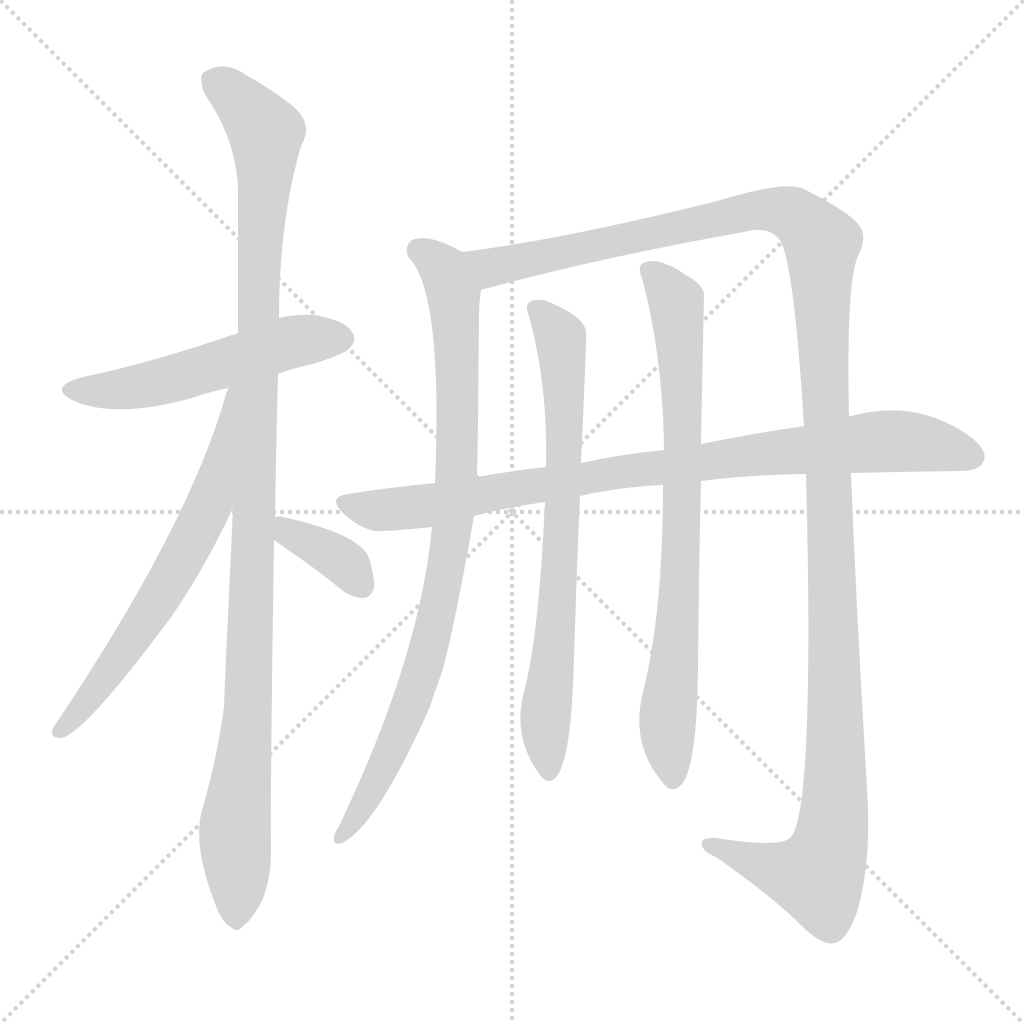
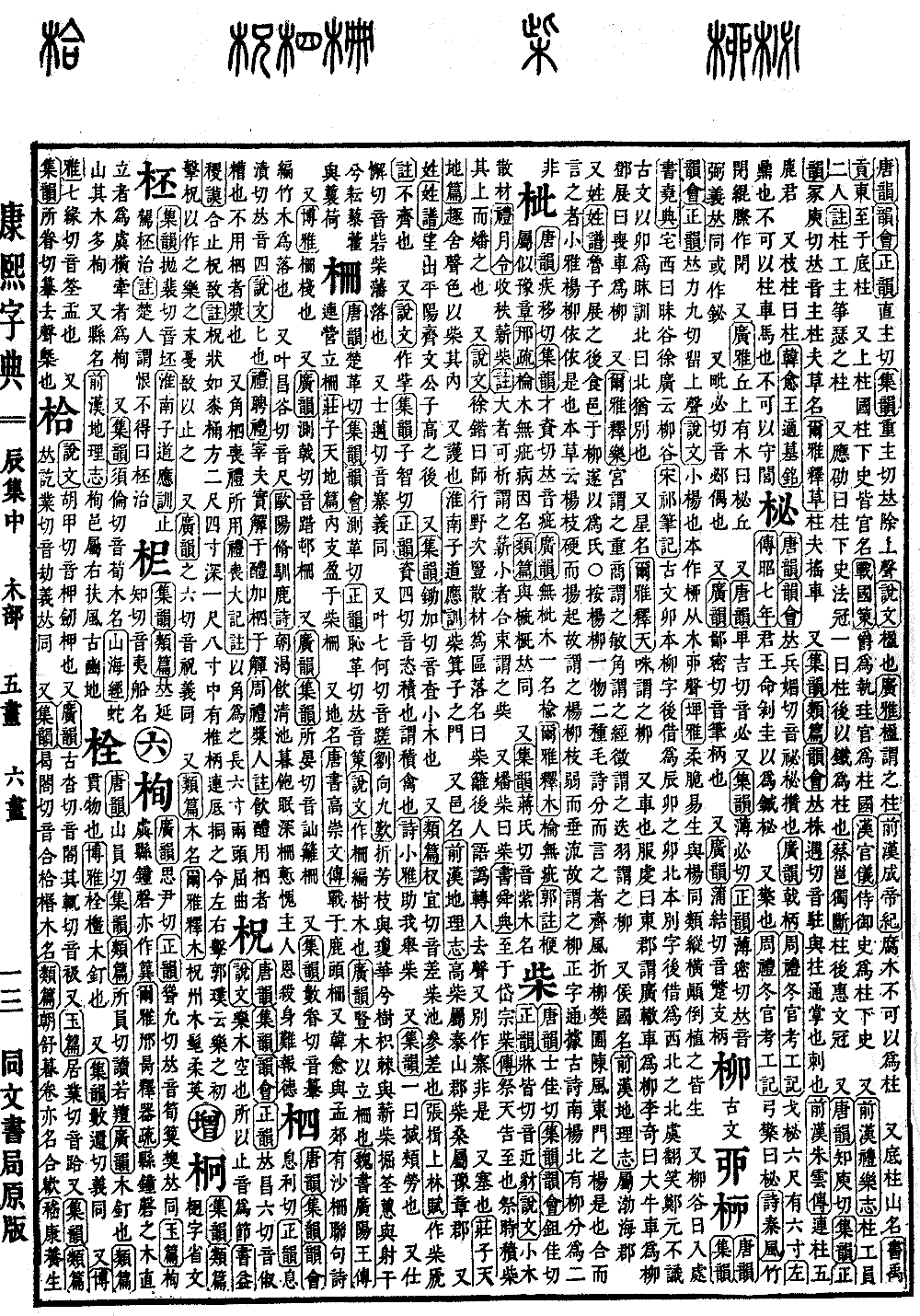
Chen Collection, Middle Volume. Radical: Tree (mù). Character: 柵. Kangxi strokes: 9. Page 521, Entry 07.
According to the Tang Rhyme (Tangyun), the sound is ce; according to the Collected Rhymes (Jiyun) and the Rhyme Compilation (Yunhui), the sound is ce; according to the Correct Rhyme (Zhengyun), the sound is chi. It is pronounced ce.
According to the Explaining Graphs and Analyzing Characters (Shuowen), it is written as 栅, meaning to weave or arrange wood. According to the Broad Rhyme (Guangyun), it means to set wood upright to form a barrier. In the Book of Wei (Weishu), Biography of the Prince of Guangyang: Connecting camps and establishing barriers. In the Zhuangzi, Chapter on Heaven and Earth: The interior is filled with piles of brushwood and barriers.
Also a place name. In the Old Book of Tang (Tangshu), Biography of Gao Chongwen: A battle at Lutou Barrier. Also, Han Yu and Meng Jiao have a poem titled Joint Verses on the Sandy Barrier (Shazhan Lianju).
Also, according to the Erudite Refinements (Boya), a barrier is a wooden stockade.
Also, according to the Broad Rhyme (Guangyun), it is pronounced ji. A village barrier.
Also, according to the Broad Rhyme (Guangyun) and the Collected Rhymes (Jiyun), it is pronounced shan. A fence or barrier.
Also, according to the Collected Rhymes (Jiyun), it is pronounced shu. Weaving bamboo and wood to form a barrier.
Also, rhyming as chi. In Ouyang Xiu’s Poem on a Tamed Deer: In the morning, thirsty, I drink from the clear pond; at dusk, satiated, I sleep in the deep barrier. Ashamed of the master’s kindness, it is difficult to repay such virtue with my life.