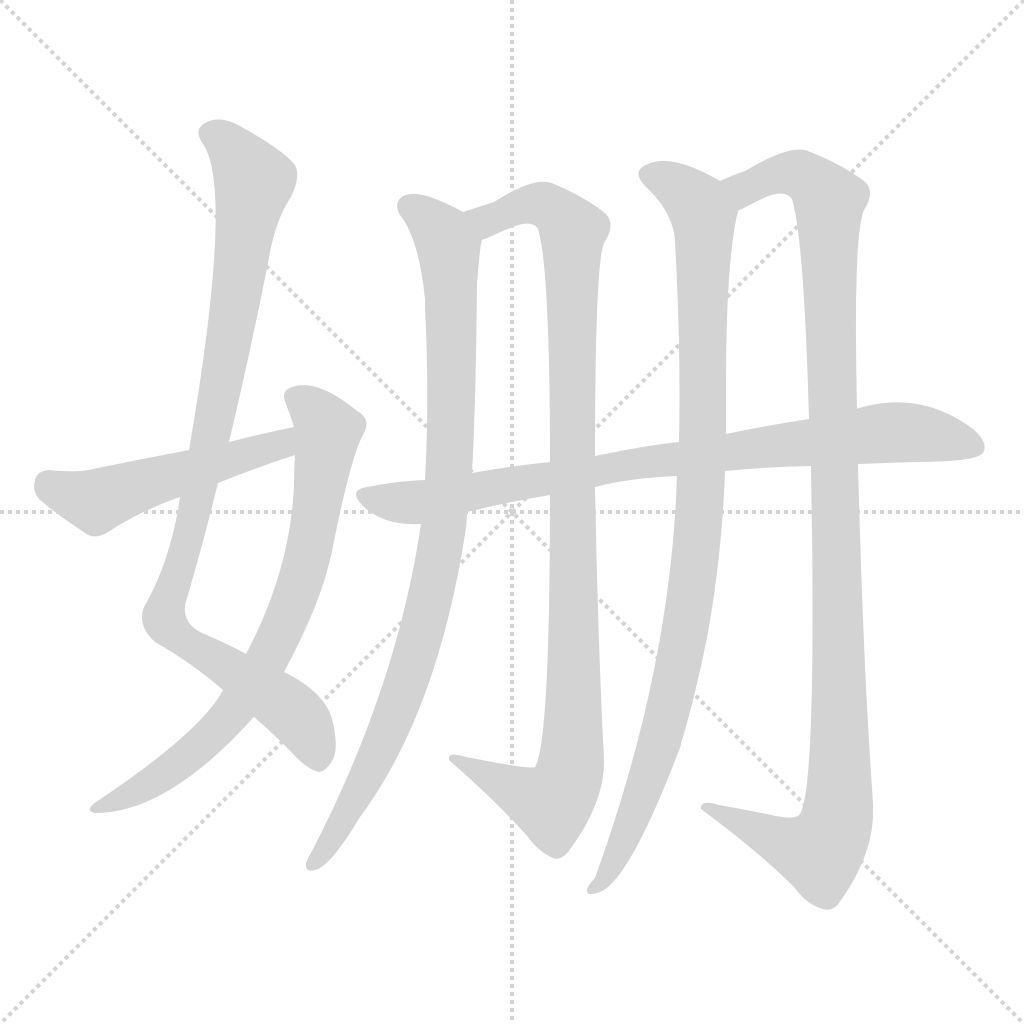
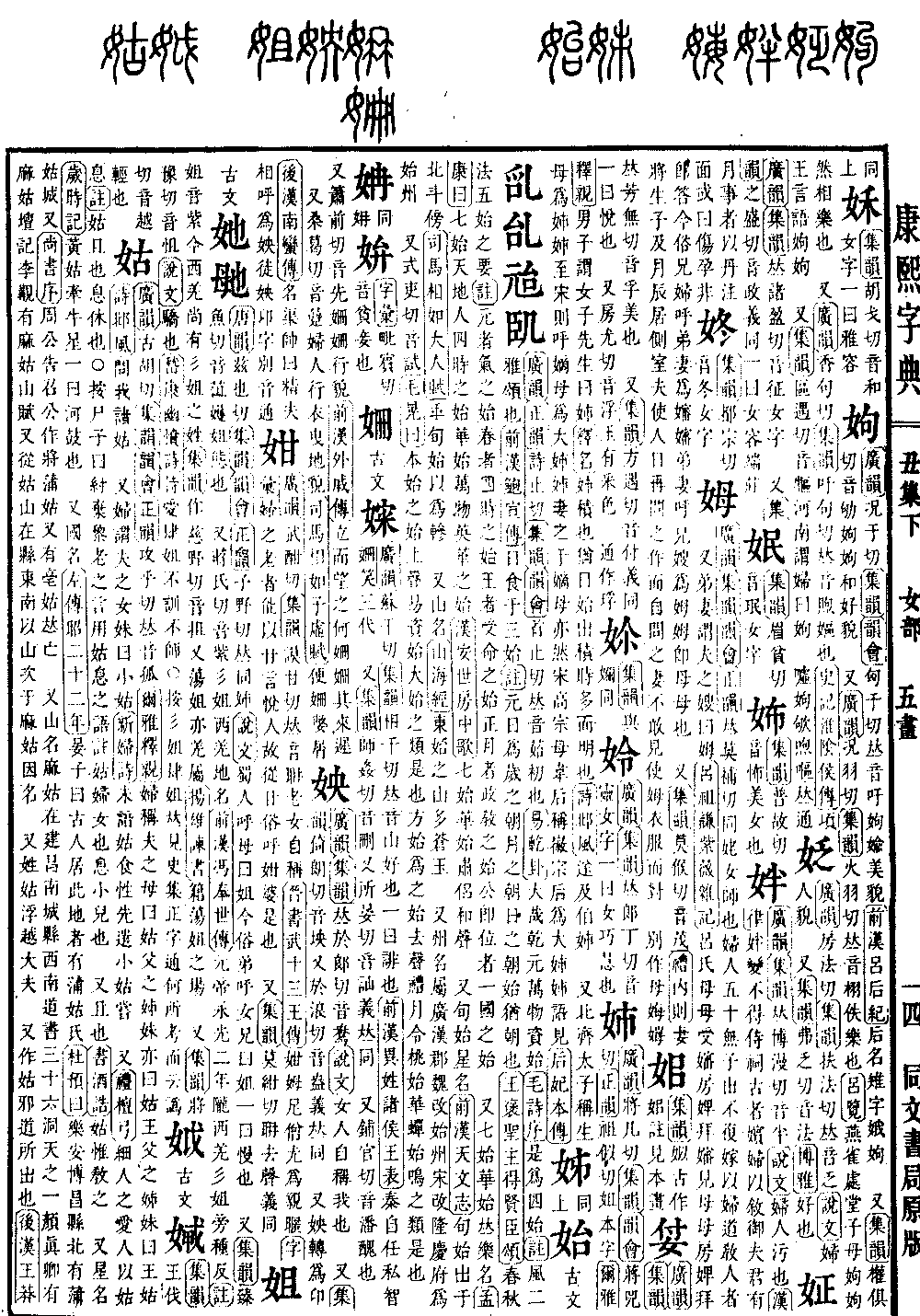
Chou Collection, Lower Volume
Radical: Woman (nǚ)
Kangxi stroke count: 8
Page 258, Entry 01
Ancient character form. In Broad Rhymes (Guangyun), pronounced shan. In Collected Rhymes (Jiyun), pronounced shan. Meaning: beautiful. Another interpretation is to slander. From the Table of Feudal Kings of Different Surnames in the History of the Former Han (Qianhan Shu), the Qin dynasty acted solely on private whim, slighting and mocking the Xia, Shang, and Zhou dynasties.
Also, in Collected Rhymes (Jiyun), pronounced shan. Also pronounced shan. Meaning is the same.
Also pronounced pan. Meaning: ugly.
Also pronounced xian. In the form of shan shan, it describes the appearance of walking. From the Biographies of Imperial Relatives in the History of the Former Han (Qianhan Shu), standing and watching her, why is she arriving so late.
Also pronounced xie. Refers to the appearance of a woman walking with her clothes trailing on the ground. From the Shanglin Rhapsody (Shanglin Fu) by Sima Xiangru, describing the swaying of clothes and a light, graceful gait.
Textual Research:
From the Biographies of Imperial Relatives in the History of the Former Han (Qianhan Shu), the text is revised to include the word for why based on the original.
In the Zixu Rhapsody (Zixu Fu) by Sima Xiangru, the title is corrected to the Shanglin Rhapsody (Shanglin Fu) based on the original.