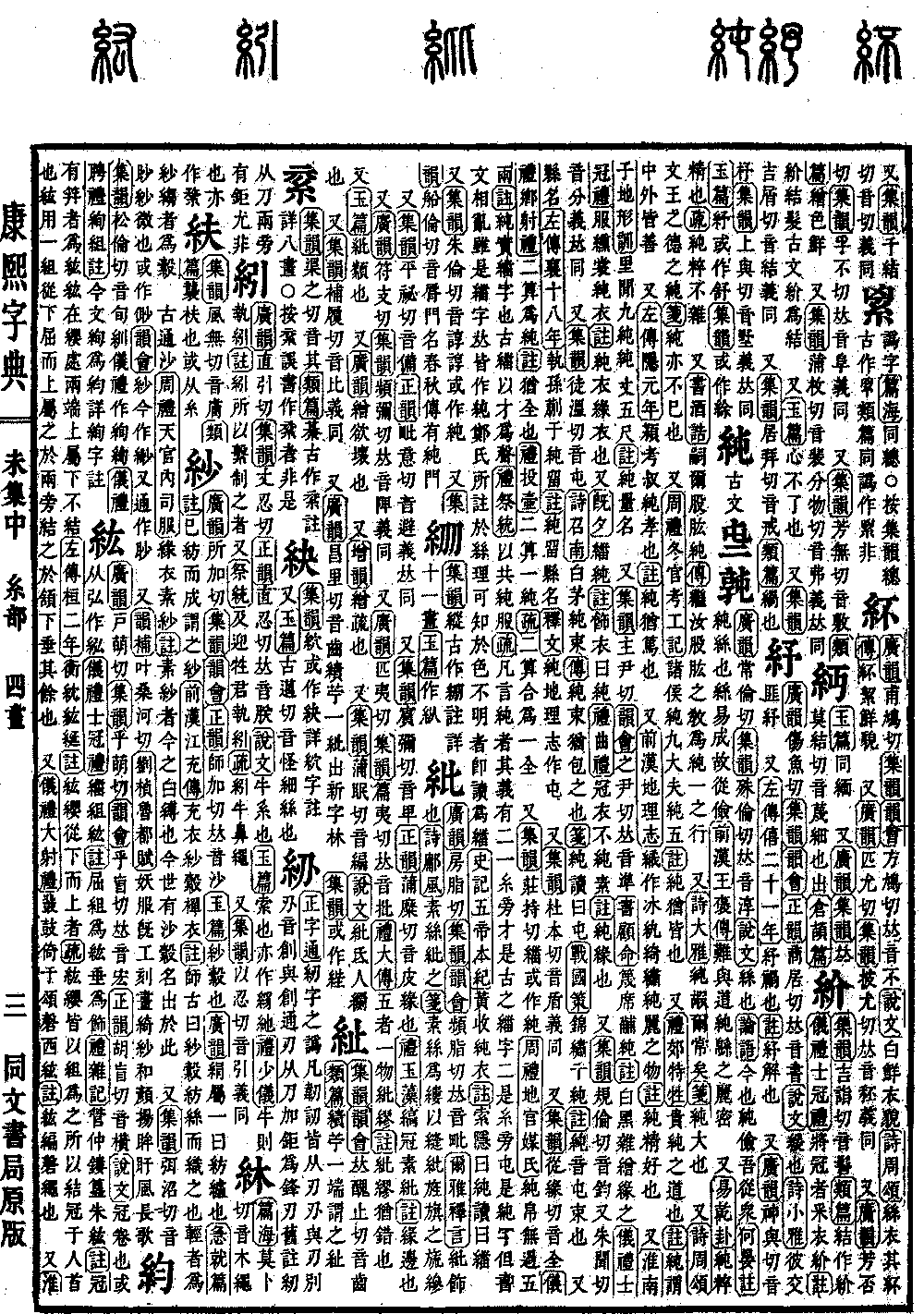
Wei Collection, Middle Volume
Radical: Silk (mì)
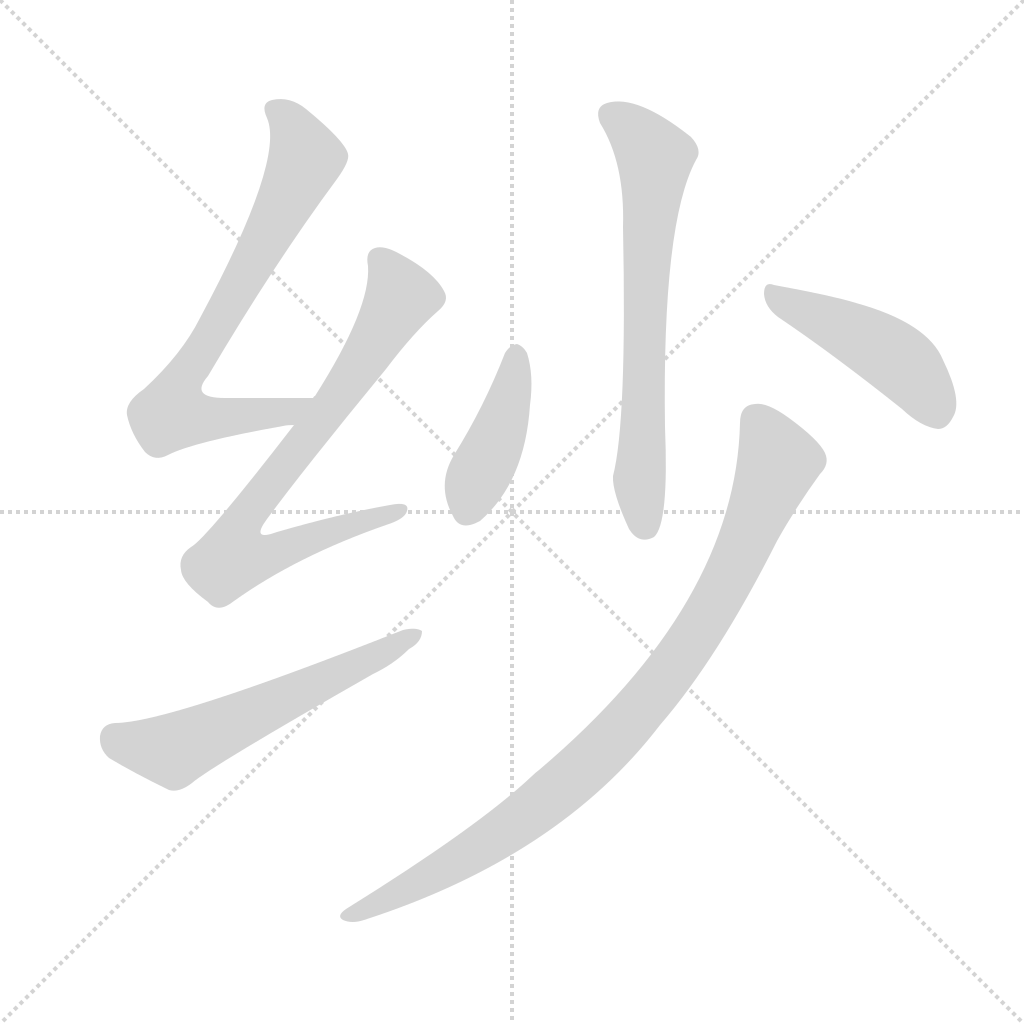
紗
Kangxi strokes: 10
Page 917, Entry 02
Guangyun: Pronounced sha. Jiyun, Yunhui, and Zhengyun: Pronounced sha.
Yupian: Sha is a type of light silk fabric (hu).
Guangyun: A type of silk (juan). Another definition is to spin flax.
Jijupian Commentary: That which is already spun into fabric is called sha.
Book of Han (Hanshu), Biography of Jiang Chong: Chong wore a light, unlined garment of sha and light silk.
Commentary: Shigu stated: Sha and light silk are made by spinning and weaving silk. The light variety is called sha, the crinkled variety is called light silk. Historically used interchangeably with the character for sand (sha).
Rites of Zhou (Zhouli), Offices of Spring, Internal Director of Ceremonies: Trimmed garments of plain white sha.
Commentary: Plain white sha is what is known today as plain white unadorned silk. The sha and light silk of the present day derive their names from this.
Jiyun: Pronounced miao. Sha means delicate or slight. Sometimes written in a variant form.
Yunhui: Sha is now written as miao, and also used interchangeably with miao.
Yunbu: Rhymes with he. Liu Zhen, Rhapsody on the Capital of Lu (Lu Du Fu): The exquisite costumes are already crafted, with carved and painted intricate sha. With gentle countenances and raised eyes, they breathe in the breeze and sing long songs.
Textual Research: Historically used interchangeably with the character for sand (sha). In the Rites of Zhou, Offices of Spring, Internal Director of Ceremonies, it is written as plain white sha. The commentary states that plain white sha is what is known today as plain white unadorned silk. Corrected the two instances of sha to sand (sha) in accordance with the original text.