Si Collection, Upper Volume
Radical: Water (shuǐ)
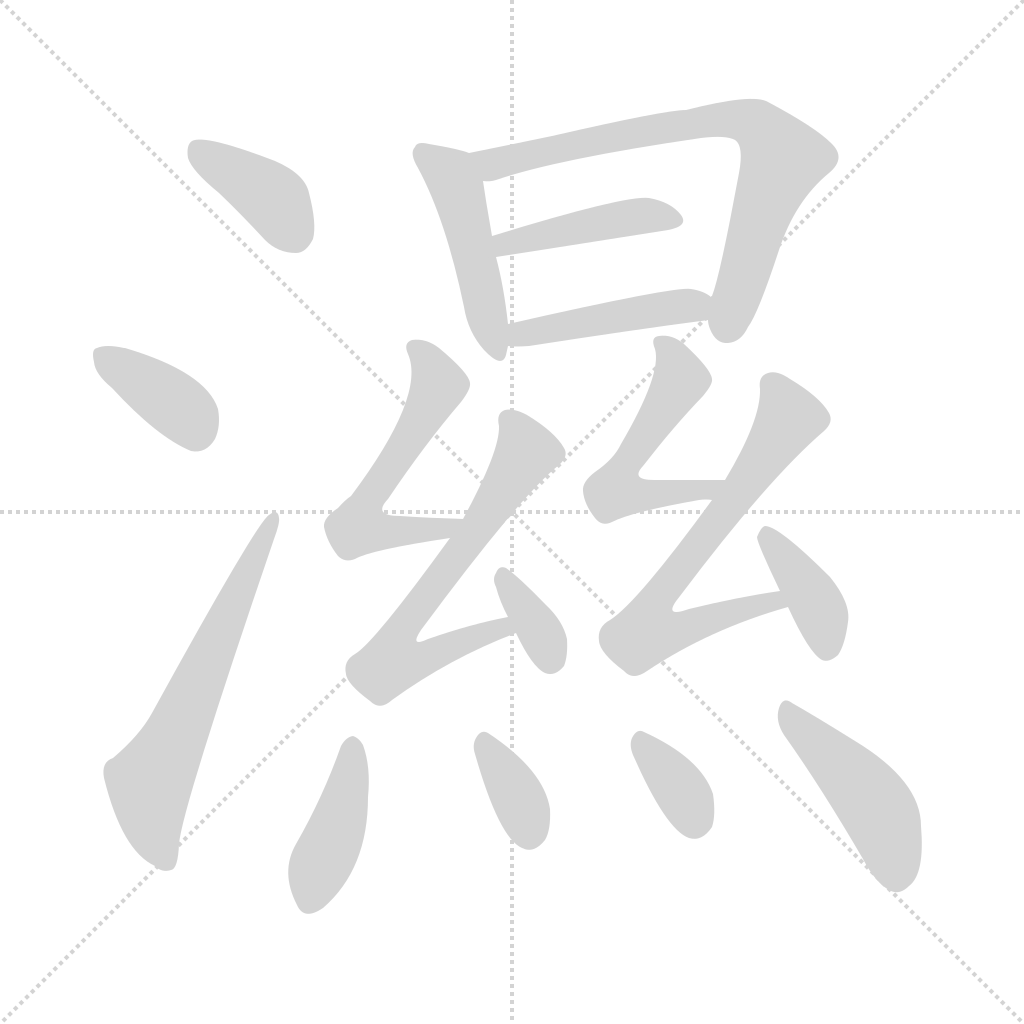
濕
Kangxi strokes: 18
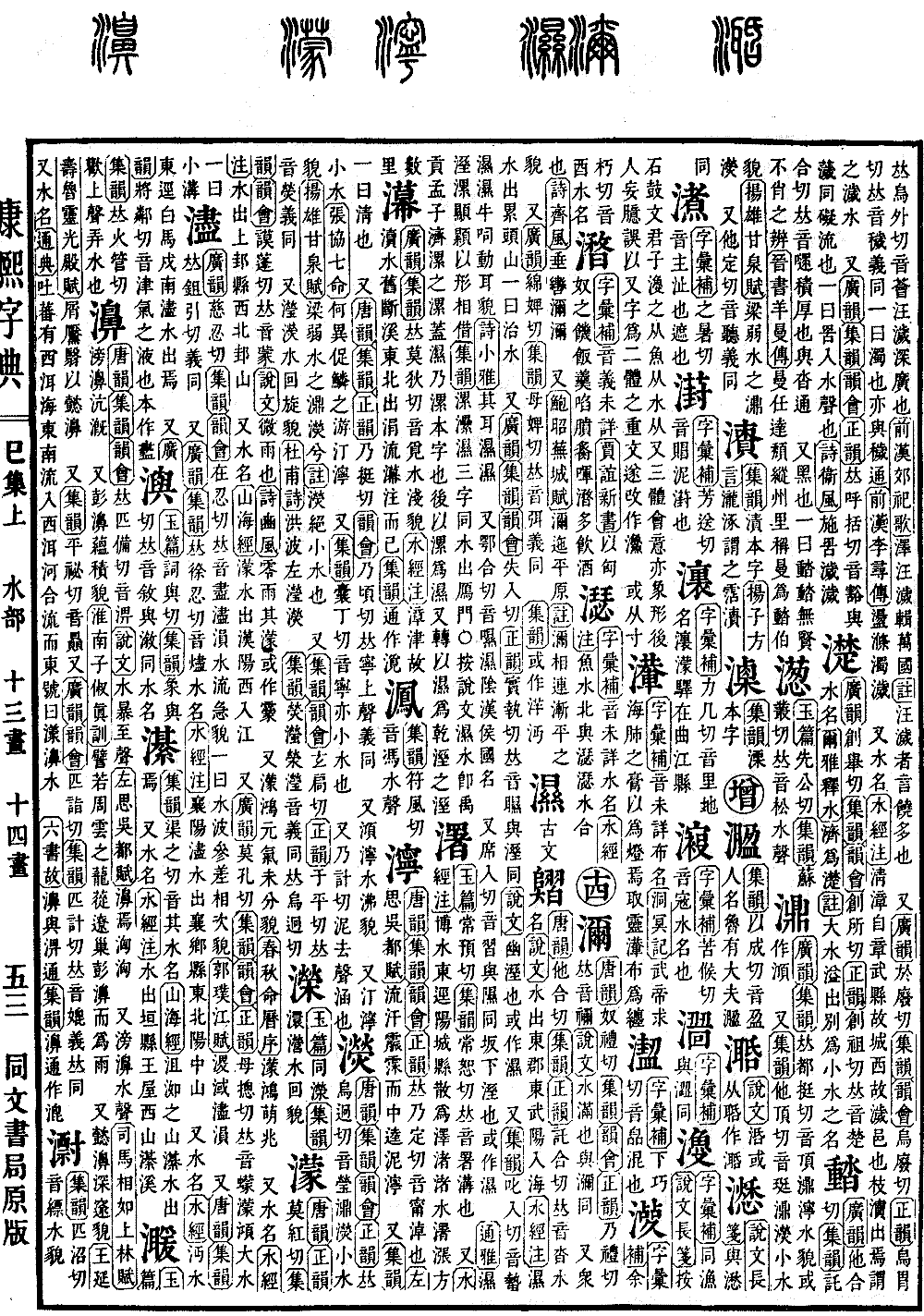
Page 655, Entry 22
Ancient form. Pronounced tà. The name of a river. According to the Analytical Dictionary of Characters (Shuowen), the river originates in Dongwu Yang of Dong Commandery and flows into the sea. According to the Commentary on the Classic of Water (Shuijingzhu), the Wet River (Shishuǐ) originates from Leitou Mountain. Another source says it is the Zhi River.
Also pronounced shī. According to the Analytical Dictionary of Characters (Shuowen), it means moist or damp. Sometimes written in a variant form.
Also pronounced zhé. Wet-wet describes the appearance of an ox moving its ears. From the Book of Odes (Shijing), Lesser Odes section: Its ears moving.
Also pronounced è. Shiyin was the name of a marquisate during the Han Dynasty.
Also pronounced xí. Equivalent to low-lying marshy land (xí). Refers to the damp area below a slope. Sometimes written in a variant form. According to the General Refinements (Tongya), the characters for wet, damp, and the Luo River are used interchangeably due to their similar shapes. According to the Collection of Rhymes (Jiyun), these three characters are the same. The river originates from Yanmen.
Note: According to the Analytical Dictionary of Characters (Shuowen), the Wet River is the same as the Luo River mentioned in the Tribute of Yu (Yu Gong) and the Mencius. It is likely that this character is the original form of the Luo River. Later, the character for Luo was used for the Wet River, and subsequently, the character for wet was used to denote the concept of dry and wet. The original character was formed with the silk radical, not the sub radical.