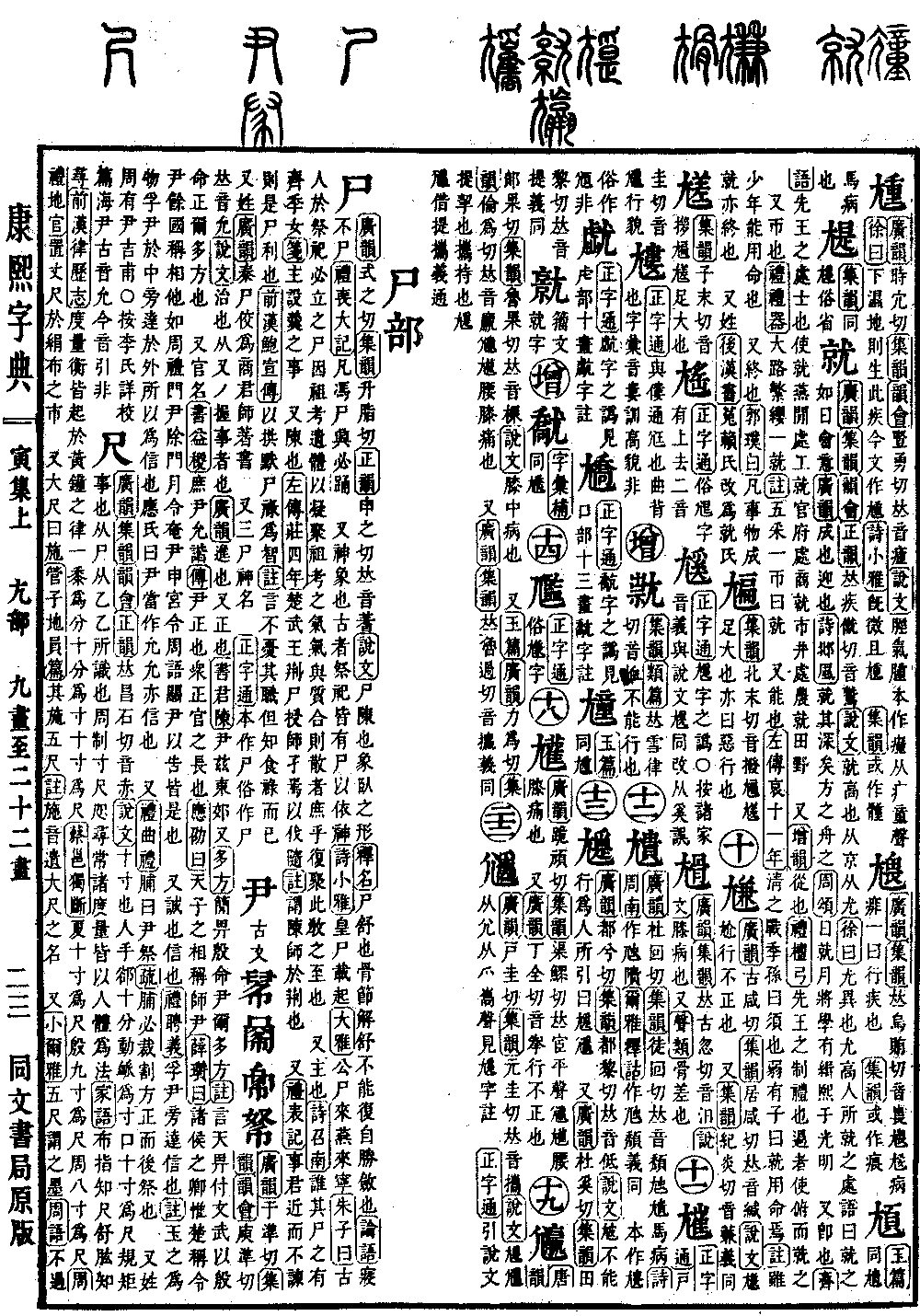
Yin Collection, Upper Volume
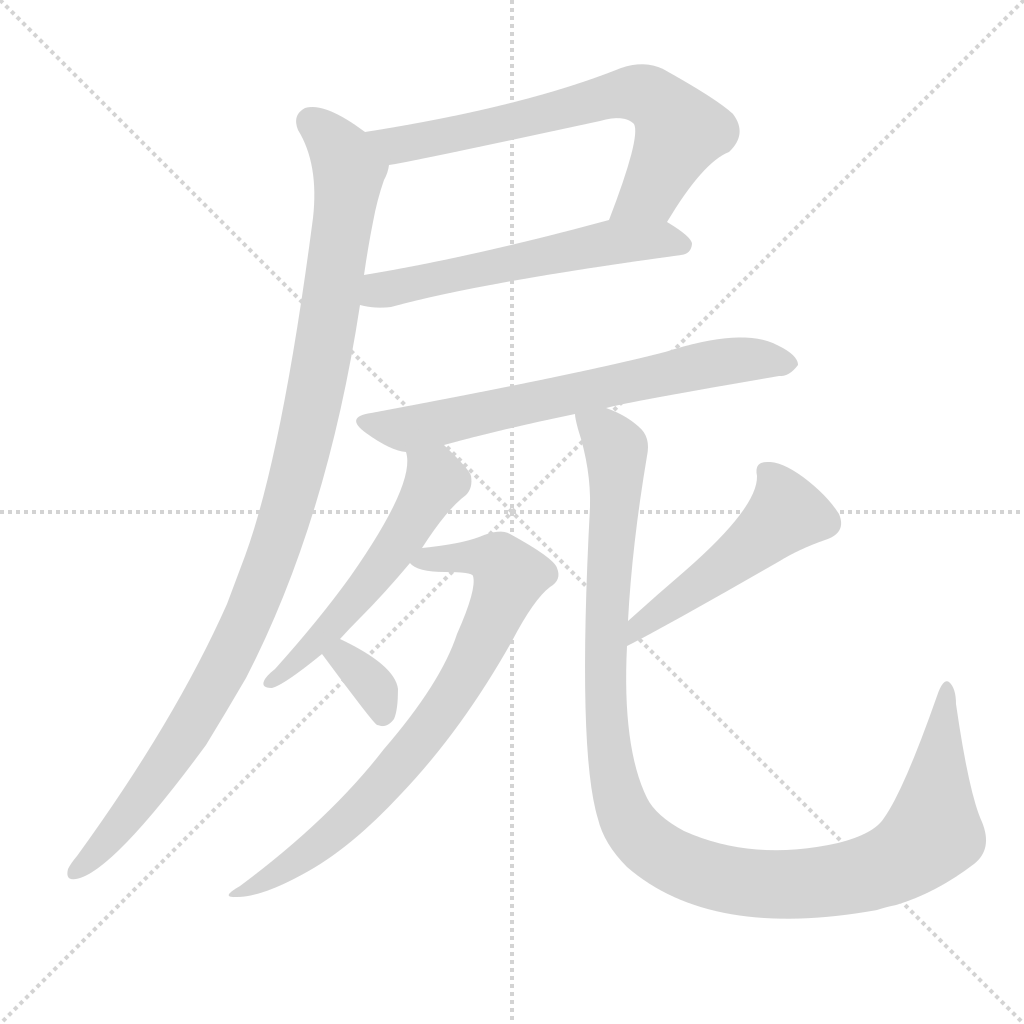
Radical: Corpse (shī)
Kangxi Strokes: 9
Page 299, Entry 06
Pronounced shī.
According to the Explaining Graphs and Analyzing Characters (Shuowen Jiezi), it refers to one who is deceased; composed of the radical for corpse and the character for death, forming an ideographic compound.
According to the Book of Rites (Liji), when in a bed it is called a corpse, and when in a coffin it is called a shroud.
According to the Zuo Commentary (Zuozhuan), in the third year of Duke Wen, the Earl of Qin crossed the Yellow River, burned his boats, and buried the corpses at Xiao before returning.
According to the Zhengzitong, in ancient times the character for corpse was written as the variant form.
According to the Book of Changes (Yijing), in the Shi hexagram, it is said that the disciples carried the corpse; in the Stone Classics (Shijing), it is abbreviated as the simpler form. The two forms are interchangeable, but the character used for the representative of the deceased in sacrificial rites should not be replaced by this character. See the detailed entry for the radical character. This character is composed of the radical for corpse and the character for make.