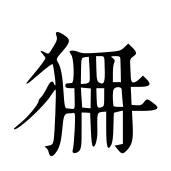
Si Collection, Lower Volume
Radical: Dog (quǎn)
Kangxi Strokes: 10
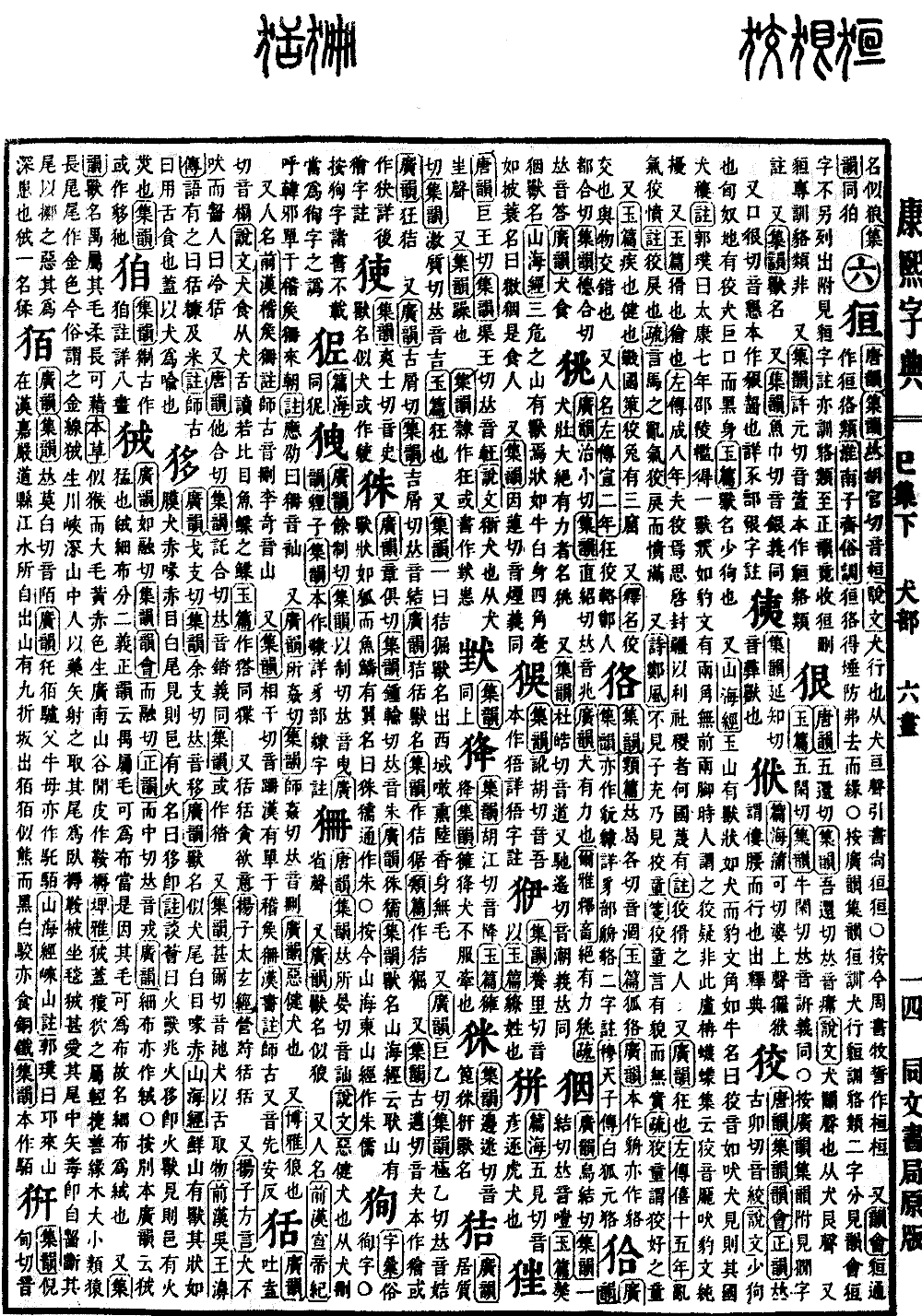
Page 710, Entry 23
According to Tang Rhyme (Tangyun) and Collection Rhymes (Jiyun), the pronunciation is shan (falling tone). According to Explaining Graphs and Analyzing Characters (Shuowen), it refers to a fierce and strong dog. The character is formed with the dog radical and a phonetic component with some strokes omitted.
Additionally, according to Broad Rhymes (Guangyun), it is the name of a wild beast that resembles a wolf. It is also used as a personal name. In the History of the Former Han (Qianhan Shu), Records of Emperor Xuan, it is noted that a minister of the Xiongnu Chanyu Huhanye named Hou Shan came to pay tribute. The commentary by Ying Shao states that Shan is pronounced like the word for slander.
Furthermore, according to Broad Rhymes (Guangyun), the pronunciation is jian (level tone). According to Collection Rhymes (Jiyun), the pronunciation is jian (level tone), which sounds the same as the character for a type of canine. According to Broad Rhymes (Guangyun), it refers to a fierce and strong dog. It is also, according to the Er Ya (Boya), a term for a wolf. It is also used as a personal name. Regarding the commentary on the History of the Former Han (Qianhan Shu), the commentary by Yan Shigu states the pronunciation is the same as the character for a type of canine. The commentary by Li Qi states the pronunciation is shan (level tone).
Finally, according to Collection Rhymes (Jiyun), the pronunciation is gan (level tone), which sounds the same as the character for a type of canine. In the Han dynasty, there was a minister of the Chanyu named Hou Shan. The commentary to the Book of Han (Hanshu) by Yan Shigu states that another reading is xian (level tone) followed by an (level tone).